You pick up your prescription, ready to go home. The pharmacist hands you a different pill than the one your doctor wrote. Or worse, the insurance card reader beeps red, and you’re told the medication isn’t covered anymore. This confusion happens because of two complex but critical concepts in healthcare: insurance formularies and drug substitution policies.
If you’ve ever wondered why your medication costs changed overnight or why you have to try three cheaper drugs before getting the one that actually works, you are dealing with these systems. They are designed to save money for insurers, but they often create significant hurdles for patients. Understanding how they work is the only way to protect your health and your wallet.
What Is an Insurance Formulary?
The modern formulary system became standard after the Medicare Prescription Drug, Improvement, and Modernization Act of 2003 established Medicare Part D. Today, virtually every private health plan and all Medicare Part D plans use them. The goal is simple: manage pharmaceutical costs while ensuring access to medically necessary treatments. However, the execution is rarely simple for the patient.
Formularies are not static. They change frequently. An insurer might add a new generic drug to lower costs or remove a brand-name drug if a cheaper alternative becomes available. According to data from the Centers for Medicare & Medicaid Services (CMS), these changes happen constantly, which is why checking your coverage annually is crucial.
How Tiers Determine Your Cost
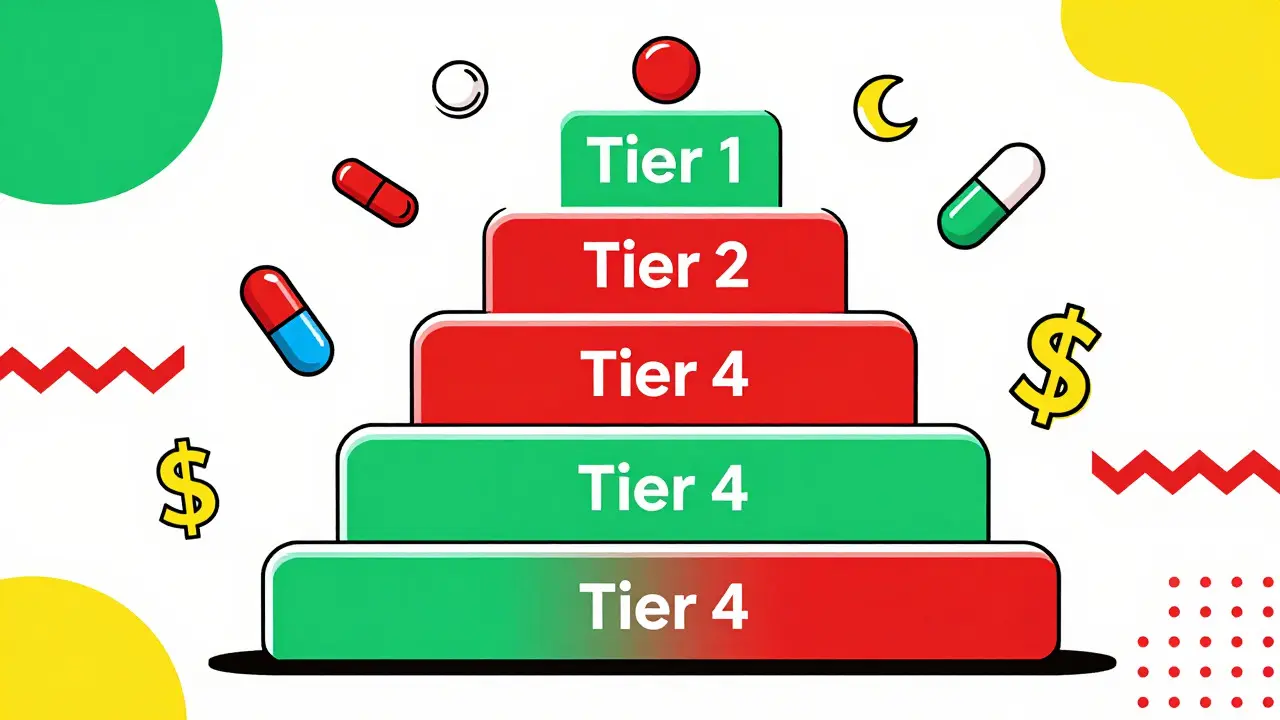
Not all drugs on the formulary are treated equally. Insurers categorize medications into tiers, which directly dictate your out-of-pocket costs. This tiered structure is the primary tool insurers use to steer you toward cheaper options.
| Tier Level | Type of Medication | Typical Patient Cost |
|---|---|---|
| Tier 1 | Generic drugs | $10 - $15 copay |
| Tier 2 | Preferred brand-name drugs | $40 - $50 copay |
| Tier 3 | Non-preferred brand-name drugs | $70 - $100 copay |
| Tier 4 | Specialty drugs (high-cost/rare conditions) | 33% coinsurance (no annual cap) |
Moving from Tier 1 to Tier 4 can increase your annual spending by hundreds or even thousands of dollars. For example, a specialty drug like Imbruvica might cost a patient $15,000 annually under a Tier 4 coinsurance structure. This is why knowing where your medication sits on the tier list is just as important as knowing if it’s covered at all.
Access Restrictions: Prior Authorization and Step Therapy
Even if a drug is on the formulary, you might not get it immediately. Insurers use access restrictions to ensure drugs are used appropriately and to encourage the use of lower-cost alternatives first. The two most common barriers are Prior Authorization and Step Therapy.
- Prior Authorization (PA): Your doctor must send documentation to the insurer proving that you need this specific drug. This process causes delays; the American Medical Association reports that 82% of physicians experience PA delays, and 34% say these delays have caused serious adverse events for patients.
- Step Therapy: Also known as "fail-first" therapy, this requires you to try and fail on a cheaper drug (usually Tier 1 or 2) before the insurer will cover the prescribed drug. If the cheaper drug doesn’t work or causes side effects, you then go through another round of paperwork to get approval for the original prescription.
- Quantity Limits: The insurer may limit how much medication you can buy at once, forcing more frequent pharmacy visits and potential gaps in coverage if refills are missed.
These restrictions are frustrating, but they are built into the contract. Navigating them requires proactive communication between you, your doctor, and your pharmacist.
Drug Substitution Laws and Therapeutic Interchange
This is where things get legally complex. Drug substitution occurs when a pharmacist dispenses a different medication than the one prescribed. There are two main types: generic substitution and therapeutic interchange.
Generic substitution is widely accepted and encouraged by law in most states. If your doctor prescribes Brand X, the pharmacist can usually swap it for Generic X without asking you, saving you money. However, therapeutic substitution is different. This involves swapping a drug for a completely different chemical compound within the same therapeutic class (e.g., swapping one statin for another).
Substitution laws vary by state. Currently, 31 states have laws allowing pharmacists to substitute lower-cost alternatives within the same therapeutic class without physician approval. This practice affects approximately 18% of prescriptions. While this saves insurers money, it can disrupt treatment for 5-7% of patients with complex conditions who rely on specific formulations.
If you are sensitive to certain fillers or binders in medications, always tell your pharmacist "Dispense as Written" or "Brand Medically Necessary." This overrides automatic substitution protocols in many cases.
Open vs. Closed Formularies
Not all formularies look the same. The structure depends heavily on the type of insurance plan you have.
- Closed Formularies: These cover only specific drugs listed on the approved list. About 65% of Medicare Part D plans are closed formularies. They offer strong cost control but create high barriers to access. If your drug isn’t on the list, you pay full price unless you win an exception appeal.
- Open Formularies: These cover almost all medications with few restrictions. They comprise about 22% of Part D plans. You have more choice, but your monthly premiums are typically 12-15% higher to offset the broader coverage.
- Partially Closed Formularies: A middle ground that excludes certain medications based on cost or clinical guidelines but allows exceptions more easily than closed plans.
Employer-sponsored plans often feature more restrictive formularies, covering 30% fewer brand-name drugs than individual market plans. Always check whether your plan is open or closed during enrollment.

How to Fight Back: Exceptions and Appeals
If your medication is not covered, or if you are stuck in step therapy, you have rights. The formulary exception process is your primary tool. CMS data shows that 73.2% of initial exception requests are approved for Medicare Part D beneficiaries.
- Request an Exception: Your doctor submits a letter stating that the non-formulary drug is medically necessary. This usually needs to be done within 72 hours of the denial.
- Expedited Review: If waiting 7 days would harm your health, request an expedited review. Note that approval rates drop to 38.5% for expedited requests, so prepare strong medical evidence.
- Appeal the Denial: If the exception is denied, you can file a formal appeal. The average processing time for appeals is 7.2 business days, which can be dangerous for time-sensitive conditions.
Keep records of every call and submission. Document dates, times, and the names of representatives you speak with. This paper trail is essential if you need to escalate the issue to a state insurance commissioner or an external review organization.
Practical Steps for Patients
Don’t wait until you need a refill to understand your coverage. Take these steps to stay ahead of formulary changes:
- Review Annually: During open enrollment (October 15-December 7 for Medicare), verify every single medication you take against the new year’s formulary. 43% of formulary changes occur without direct patient notification.
- Use Online Tools: Most insurers provide real-time benefit tools. Use them to check tier placement and estimated costs before you leave the doctor’s office.
- Compare Plans: If you have multiple medication needs, compare at least three plans. Users who do this find an average of $472 in annual savings compared to those who select randomly.
- Ask About Biosimilars: With the rise of biosimilar drugs, ask your doctor if a biosimilar version of your biologic drug is available. CMS requires Part D plans to cover biosimilars in the same tier as reference products, which can lead to significant savings.
Knowledge is your best defense. By understanding how formularies and substitution laws work, you can navigate the system effectively, avoid surprise bills, and ensure you receive the treatment you need.
What happens if my medication is not on the formulary?
If your medication is not on the formulary, you generally have three options: switch to a covered alternative, pay the full retail price out-of-pocket, or file a formulary exception request. An exception requires your doctor to prove medical necessity. Approximately 73% of initial exception requests are approved, but the process takes time and documentation.
Can a pharmacist change my prescription without asking me?
Yes, in many cases. Pharmacists can automatically substitute generic versions of brand-name drugs due to state laws. They may also engage in therapeutic substitution (swapping for a different drug in the same class) in 31 states that allow it without physician approval. To prevent this, tell your pharmacist to "dispense as written" or check the box for "brand medically necessary" on your prescription slip.
What is step therapy, and how do I bypass it?
Step therapy requires you to try and fail on a lower-cost drug before your insurer covers the prescribed one. To bypass it, your doctor must submit a waiver demonstrating that the required step drug is contraindicated, ineffective, or likely to cause adverse reactions for your specific condition. This is part of the prior authorization process.
How often do formularies change?
Formularies are continually updated, but major changes typically occur during the annual open enrollment period. However, insurers can make mid-year changes with proper notice. It is recommended to check your formulary online every few months, especially if you start a new medication, to ensure it remains covered and in the same tier.
Is there a cap on out-of-pocket costs for specialty drugs?
Starting in 2025, Medicare Part D plans implemented a $2,000 annual out-of-pocket cap for all prescription drugs, including specialty medications. Before this, Tier 4 specialty drugs often had no annual cap, leading to costs exceeding $15,000 for some patients. Private insurance plans vary, so check your specific policy limits.