Obesity Dosing Metric Calculator
Patient Weight Metrics Tool
Calculation Results
- Hydrophilic Drugs: Consider IBW or AdjBW to avoid subtherapeutic levels.
- Lipophilic Drugs: Use Lean Body Weight or Fixed Dosing to avoid toxicity.
- High Risk: Always pair these metrics with Therapeutic Drug Monitoring (TDM).
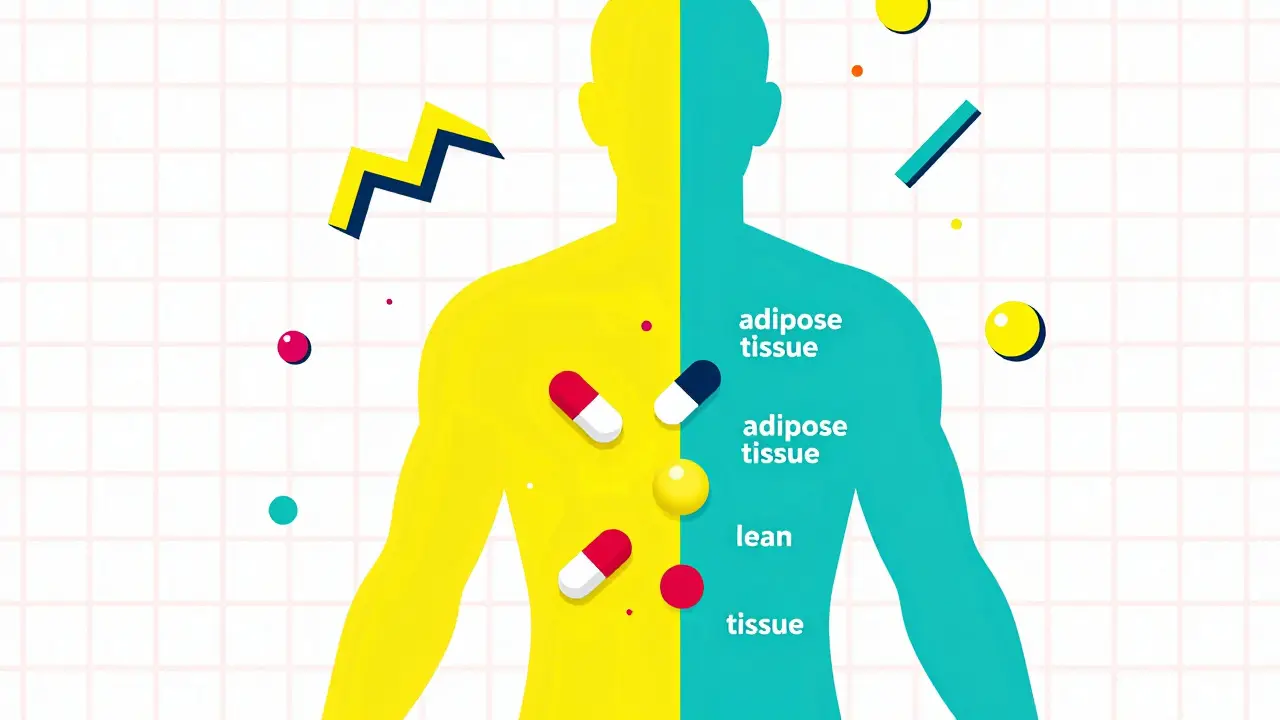
Giving a medication to someone with a BMI of 45 isn't as simple as just increasing the dose based on their scale weight. If you do, you might actually end up under-dosing a critical antibiotic or over-dosing a potent sedative. The problem is that fat doesn't behave like muscle or organ tissue when it comes to chemicals. For some drugs, the extra adipose tissue acts like a sponge, soaking up the medication and keeping it away from the target site. For others, the body clears the drug much faster than expected, leaving the patient with subtherapeutic levels that simply don't work.
The stakes are high. Data from the 2024 Stanford SHC-ABX Obesity Dosing Guide shows that between 21% and 37% of obese patients receiving standard doses experience therapeutic failure. We're not just talking about a pill not working; we're talking about systemic infections that won't clear or blood clots that won't dissolve because the drug concentration in the blood is too low. To get this right, we have to move past obesity medication dosing based on total body weight and start using more precise metrics.
The Core Problem: Why Total Body Weight Lies
When a clinician looks at Total Body Weight (TBW), they are seeing the sum of everything-bone, muscle, water, and fat. But drugs interact with these tissues differently. This is where we divide medications into two main camps: hydrophilic (water-loving) and lipophilic (fat-loving).
For hydrophilic drugs, like many antibiotics, the drug doesn't easily enter fat cells. If you dose based on TBW, you're essentially pretending the patient has more "active" tissue than they actually do, which often leads to under-dosing. For example, with cephazolin, clearance can increase by 28% to 42% in obese patients. A standard 1g dose for surgical prophylaxis might be fine for a 70kg person, but for an obese patient, you often need to jump to 2g just to hit the target concentration.
On the flip side, lipophilic drugs love adipose tissue. In Class III obesity (BMI ≥40 kg/m²), fat can make up over 50% of the body mass. This dramatically increases the Volume of Distribution (Vd). Take diazepam: its Vd jumps from 1.1 L/kg in a normal-weight person to 2.8 L/kg in an obese patient. If you dose this based on TBW, you risk hitting supratherapeutic levels, leading to excessive sedation or toxicity.
Navigating the Weight Metrics: Which One to Use?
Since TBW is often misleading, pharmacists and doctors use three primary alternative calculations to find the "sweet spot" for dosing. Choosing the wrong one can be the difference between a recovery and a medication error.
- Ideal Body Weight (IBW): This is the theoretical weight for a person of a specific height. It's generally the go-to for hydrophilic drugs to avoid toxicity, such as with colistin, where dosing by IBW helps prevent nephrotoxicity (which affects 44% of obese patients compared to 29% in normal-weight patients).
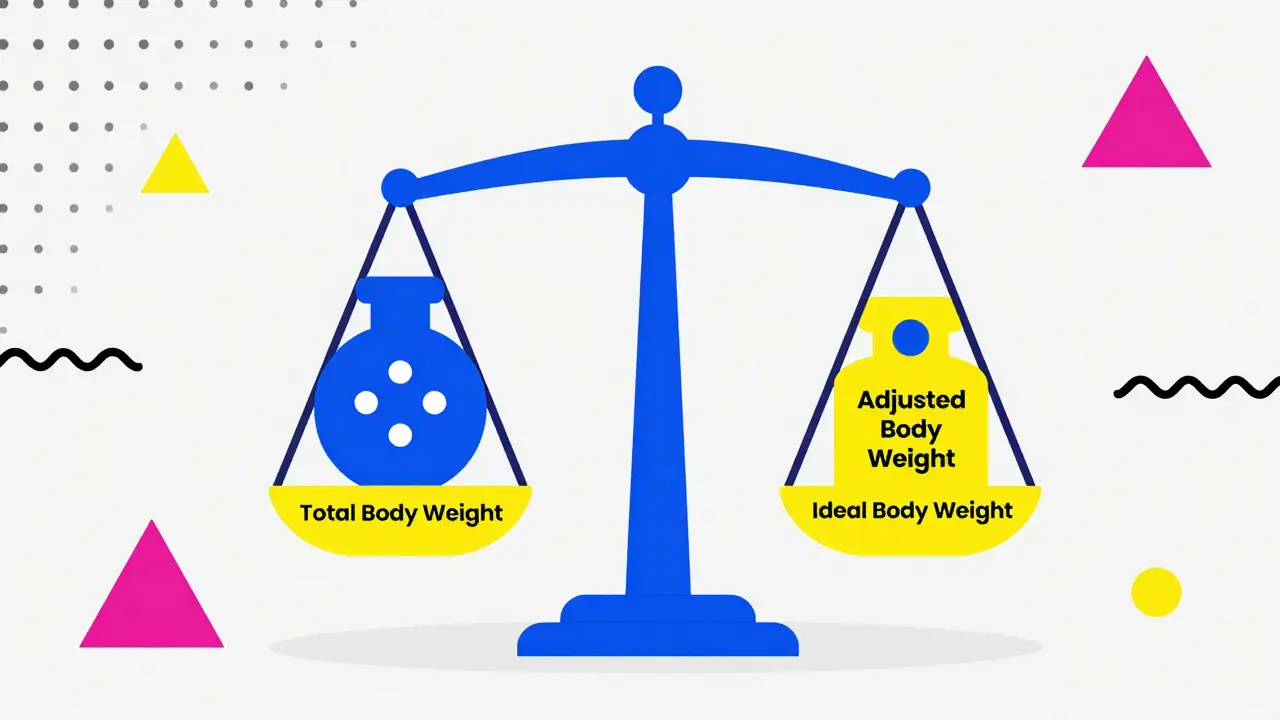
- Adjusted Body Weight (AdjBW): This is a compromise. It acknowledges that while fat doesn't distribute drugs like muscle does, it still has some impact. The common formula is AdjBW = IBW + 0.4(TBW - IBW). This is frequently used for drugs like ceftriaxone; in fact, using standard 1g doses in obese patients leads to subtherapeutic troughs in 63% of cases, whereas AdjBW helps bridge that gap.
- Lean Body Weight (LBW): This focuses on non-fat mass. Experts like Dr. Matthew Barras argue that basing maintenance doses on LBW is the only way to get a comparable drug response across different body sizes.
| Drug Property | Recommended Metric | Risk of using TBW | Example Drug |
|---|---|---|---|
| Hydrophilic | IBW or AdjBW | Subtherapeutic levels | Ceftriaxone |
| Lipophilic | LBW or Fixed Dose | Supratherapeutic levels | Diazepam |
| Highly Toxic/Narrow Index | IBW + TDM | Organ Failure (e.g., Kidney) | Colistin |
The Danger of "Dichotomized" Dosing
Some medications use a "cliff" approach to dosing, known as dichotomized dosing. This is when a dose jumps significantly at a specific weight threshold. A prime example is carvedilol: 50mg daily for those under 85kg, and 100mg for those 85kg or over. This creates a 100% dose discontinuity at the 85kg mark.
This approach is risky. Data suggests that dichotomized strategies cause 32% more concentration variability than continuous weight-based dosing. The real-world danger shows up in drugs like apixaban, where Medicare claims data indicated a 47% higher bleeding risk for patients just above the 85kg threshold compared to those just below it. When a small change in weight leads to a massive change in dose, the margin for error disappears.
Putting it into Practice: Real-World Wins and Fails
Implementing these protocols isn't always smooth. A study from the University of Michigan found that 43% of internal medicine residents were confused about whether to use TBW or IBW, leading to a 28% error rate. In one severe case, a patient with a BMI of 52 suffered from heparin-induced thrombocytopenis because of excessive enoxaparin dosing.
However, when hospitals commit to the process, the results are impressive. Stanford Health Care reduced supratherapeutic voriconazole levels from 39% down to 12% simply by implementing AdjBW dosing. Similarly, the Mayo Clinic used an electronic health record (EHR) alert system to flag obesity dosing needs, which slashed subtherapeutic vancomycin levels from 31% to 9% and actually reduced the average hospital stay by 2.3 days for patients with MRSA infections.
For those managing anticoagulants, enoxaparin presents a unique challenge. While 40mg twice daily works for BMI 40-49.9, patients with a BMI of 50 or higher often need 60mg twice daily to avoid subtherapeutic anti-Xa levels, which occur in 21% of patients on the lower dose.
The Role of Therapeutic Drug Monitoring (TDM)
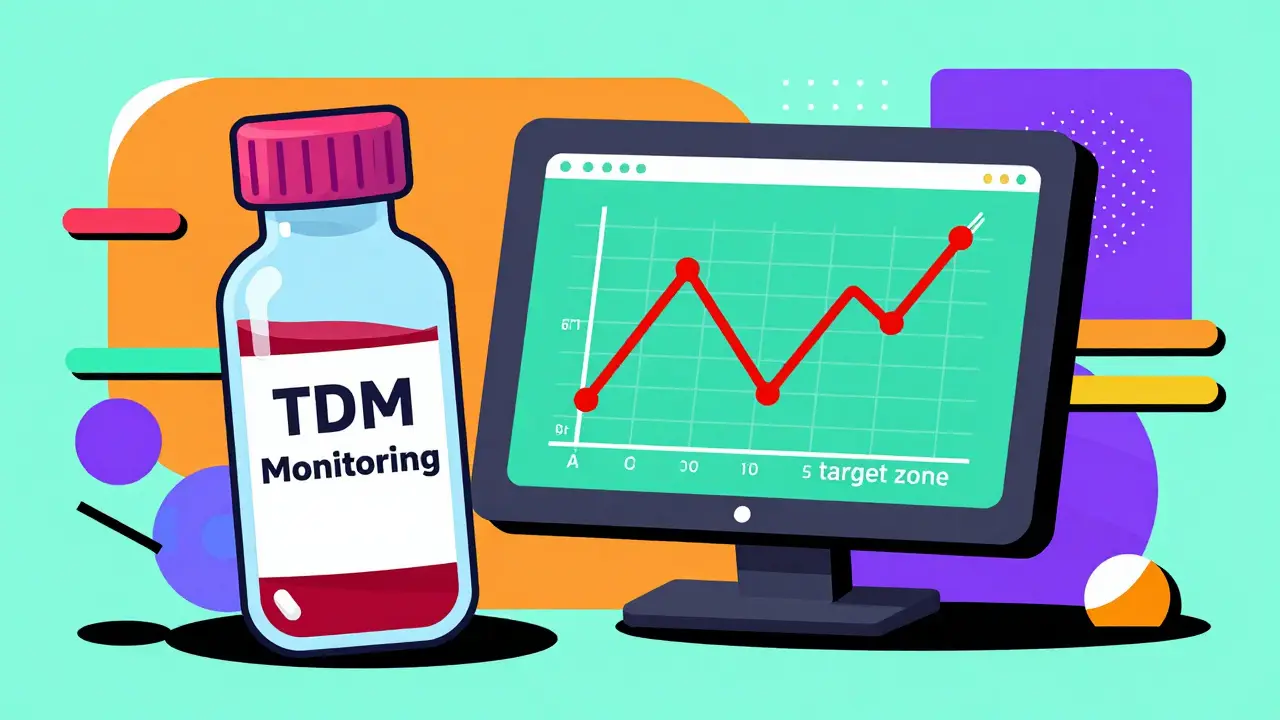
Calculations are a starting point, but Therapeutic Drug Monitoring (TDM) is the gold standard for safety. TDM involves measuring the actual concentration of a drug in the patient's blood to adjust the dose in real-time. The IDSA strongly recommends this for "high-risk" drugs like vancomycin, aminoglycosides, and voriconazole.
Without TDM, we are essentially guessing based on a formula. Because every person's body composition is different-some may have more visceral fat while others have more subcutaneous fat-the same AdjBW formula might yield different results for two people with the same BMI. TDM removes the guesswork by providing a concrete value of how the patient is actually processing the drug.
Why can't we just use Total Body Weight for everything?
Total Body Weight (TBW) assumes that all tissues distribute drugs equally. However, adipose tissue (fat) has different blood flow and solubility properties than lean muscle. Using TBW often leads to under-dosing hydrophilic drugs (like some antibiotics) and over-dosing lipophilic drugs (like certain sedatives), increasing the risk of treatment failure or toxicity.
What is the formula for Adjusted Body Weight (AdjBW)?
The most commonly used formula in clinical settings is AdjBW = IBW + 0.4(TBW - IBW). This formula attempts to account for the fact that additional weight in obese patients isn't entirely lean mass, but still contributes to the overall volume of distribution.
Which drugs are most dangerous to dose incorrectly in obese patients?
Drugs with a narrow therapeutic index-where the difference between a working dose and a toxic dose is small-are the most dangerous. This includes colistin (risk of nephrotoxicity), vancomycin, and anticoagulants like enoxaparin or apixaban (risk of bleeding or clotting).
How does Class III obesity change drug distribution?
In Class III obesity (BMI ≥40), adipose tissue can exceed 50% of total body mass. This dramatically increases the Volume of Distribution (Vd) for lipophilic drugs, meaning the drug spreads further into the fat tissues and stays in the body longer, which can lead to unexpectedly high levels of drug accumulation.
What is the best way to ensure dosing accuracy in a hospital?
The most effective approach combines the use of Adjusted Body Weight (AdjBW) or Lean Body Weight (LBW) with Therapeutic Drug Monitoring (TDM) and EHR-integrated alerts. TDM allows clinicians to see the actual blood concentration and adjust the dose specifically for that individual's physiology.
Next Steps for Clinical Improvement
For healthcare providers, the first step is moving away from the "one size fits all" approach. If you are treating a patient with a BMI over 30, start by classifying their obesity level (Class I, II, or III) and identifying whether the drug you're prescribing is hydrophilic or lipophilic. If the drug is a high-risk antimicrobial or anticoagulant, don't rely on the FDA label alone-only about 18% of labels contain obesity-specific dosing.
Institutions should look into implementing Bayesian TDM software or EHR alerts, as seen at the Mayo Clinic, to reduce the cognitive load on residents and pharmacists. For the individual clinician, mastering the IBW and AdjBW formulas is essential, but the real goal is a transition toward precision medicine where body composition imaging and pharmacogenomics eventually replace these general formulas.





Goodwin Colangelo
April 5, 2026 AT 01:46This is a solid breakdown of a really tricky clinical problem. In my experience, the hardest part isn't the math, but getting the residents to actually stop and think about the drug properties before they hit 'order'. TDM is definitely the way to go, even if the lab turnaround time can be a pain in the neck.
Divine Manna
April 5, 2026 AT 11:04It is frankly alarming that we are only now emphasizing the distinction between hydrophilic and lipophilic distribution in a modern clinical setting. One would assume that basic pharmacokinetics would be ingrained in every practitioner's mind, yet the data suggests a profound systemic failure in medical education. The reliance on total body weight is not merely a "mistake," but a failure of intellectual rigor. We must prioritize the Lean Body Weight metric to ensure that we are treating the patient's physiology rather than their scale weight, which is a meaningless number in the context of cellular absorption.
Brian Shiroma
April 7, 2026 AT 10:49Oh great, so we just trust a formula and hope for the best while the patients are essentially guinea pigs. Truly heartwarming to see how "precise" our healthcare system is.
Rachelle Z
April 8, 2026 AT 16:51Wait, what a total nightmare!!! 😱 Who even thought that dosing by total weight was a good idea in the first place??? Absolute chaos!!! 🙄✨
Ace Kalagui
April 10, 2026 AT 06:56I really appreciate how this post sheds light on the complexities of treating diverse body types, and I think it's so important that we keep pushing for these EHR alerts because they act as a safety net for overworked doctors who are just trying their best to save lives every single day in high-pressure environments where a small mistake can have huge consequences.
Rob Newton
April 10, 2026 AT 20:09TDM is overrated. Just use common sense.
Beth LeCours
April 12, 2026 AT 10:20Too many big words. Just say fat makes meds not work.
Branden Prunica
April 12, 2026 AT 23:00I am actually shaking right now reading this! Imagine being just one pound over a limit and suddenly your dose doubles and you're bleeding out! This is literally a horror movie scenario! The sheer audacity of these dosing cliffs is beyond belief!
Hudson Nascimento Santos
April 13, 2026 AT 05:18It raises an interesting point about the nature of precision. We attempt to quantify a human being into a metric like AdjBW, yet we are still guessing until the blood work comes back. Perhaps the formula is just a bridge to the actual biological truth.
HARSH GUSANI
April 13, 2026 AT 18:48Why use US guides anyway? 🇮🇳 Our doctors in India are way better at managing this without fancy software! These guides are just for people who can't think for themselves! 🙄
The Charlotte Moms Blog
April 14, 2026 AT 18:11Absolutely ridiculous that this is even an issue in 2024... just completely unacceptable... the level of incompetence is staggering!!!
Sakshi Mahant
April 15, 2026 AT 06:35It is very helpful to see these guidelines laid out so clearly. We must remember to treat every patient with dignity regardless of their size while following these scientific protocols.
Lawrence Rimmer
April 17, 2026 AT 03:57Who cares about a formula when the whole system is broken anyway. It's all just a game of numbers to the hospitals.
Dipankar Das
April 17, 2026 AT 18:31YOU MUST IMPLEMENT THESE EHR ALERTS IMMEDIATELY! It is a moral imperative that no patient suffers from subtherapeutic dosing due to administrative laziness! We should be striving for 100% accuracy in every single dose administered in our hospitals without exception!
angel sharma
April 19, 2026 AT 11:08This is the kind of innovation that saves thousands of lives and we should all be shouting from the rooftops about the importance of moving toward precision medicine because the old ways of doing things are simply not enough to handle the health challenges of the modern world and we need more experts to step up and lead the way in training the next generation of pharmacists!