Medication Affordability Calculator
Medication Affordability Impact
Estimate how out-of-pocket costs affect your ability to take medications as prescribed. Based on data from the article showing how cost barriers disproportionately impact minority communities.
Every year, millions of people around the world suffer harm from medications that should have kept them safe. But not everyone experiences this risk equally. People of color, older adults, non-English speakers, and those with low income are far more likely to face dangerous medication errors - and far less likely to have those errors noticed, reported, or fixed. This isn’t just bad luck. It’s a system failure rooted in decades of neglect.
Why Medication Safety Isn’t the Same for Everyone
Medication errors happen at every step: when a doctor writes a prescription, when a pharmacist fills it, when a nurse administers it, or when a patient takes it at home. The World Health Organization calls this a global crisis, estimating that medication errors cost $42 billion annually and cause avoidable harm to millions. But behind that number are real people - and they’re not evenly distributed. A 2025 study across five NHS hospitals found that patients from certain racial and ethnic groups had far fewer medication incidents reported - not because they made fewer mistakes, but because their concerns were ignored. Black, Asian, and Hispanic patients were significantly less likely to have their medication concerns documented. Why? Language barriers, cultural mistrust, and clinicians who assume these patients don’t understand their own care. One analysis of African American public health students in Georgia showed how subtle biases shape interactions. Clinicians often spoke more slowly, used simpler language, or avoided discussing side effects with Black patients - not out of malice, but because of unconscious assumptions about their education or ability to comply. That’s not care. That’s neglect dressed up as caution.Clinical Trials Don’t Reflect Real Populations
New drugs are tested in clinical trials - but those trials rarely include the people who will actually use them. A Kaiser Family Foundation review of FDA-approved drugs from 2014 to 2021 found that Black participants made up only one-third of their share of the disease burden. In other words, if 10% of people with heart disease are Black, only about 3% of trial participants were. That’s not just unfair. It’s dangerous. When a drug is tested mostly on white men, we don’t know how it affects women, older adults, or people of color. We don’t know if side effects are more common. We don’t know if dosing needs to change. And we don’t know if it works at all. The result? Medications are approved based on incomplete data - and then prescribed to everyone. The 2021 U.S. Preventive Services Task Force couldn’t issue specific colorectal cancer screening guidelines for Black Americans - despite them having the highest rates of death from the disease - because there wasn’t enough data from Black participants in the studies. That’s not science. That’s systemic erasure.Cost Blocks Access to Safer Medications
Even when better, safer drugs become available, they’re often out of reach. In 2022, 18.7% of Hispanic Americans and 11.5% of Black Americans were uninsured. That’s compared to 7.4% of white Americans. When a new medication costs $1,200 a month and you’re working two jobs just to keep the lights on, you don’t take it. You use over-the-counter alternatives. You skip doses. You wait until you’re in crisis. This isn’t about personal responsibility. It’s about structural inequality. A drug that could prevent a stroke or reduce hospitalizations is useless if you can’t afford it. And when you can’t afford it, you’re more likely to end up in the emergency room - where the risk of a medication error spikes due to rushed care, poor communication, and fragmented records.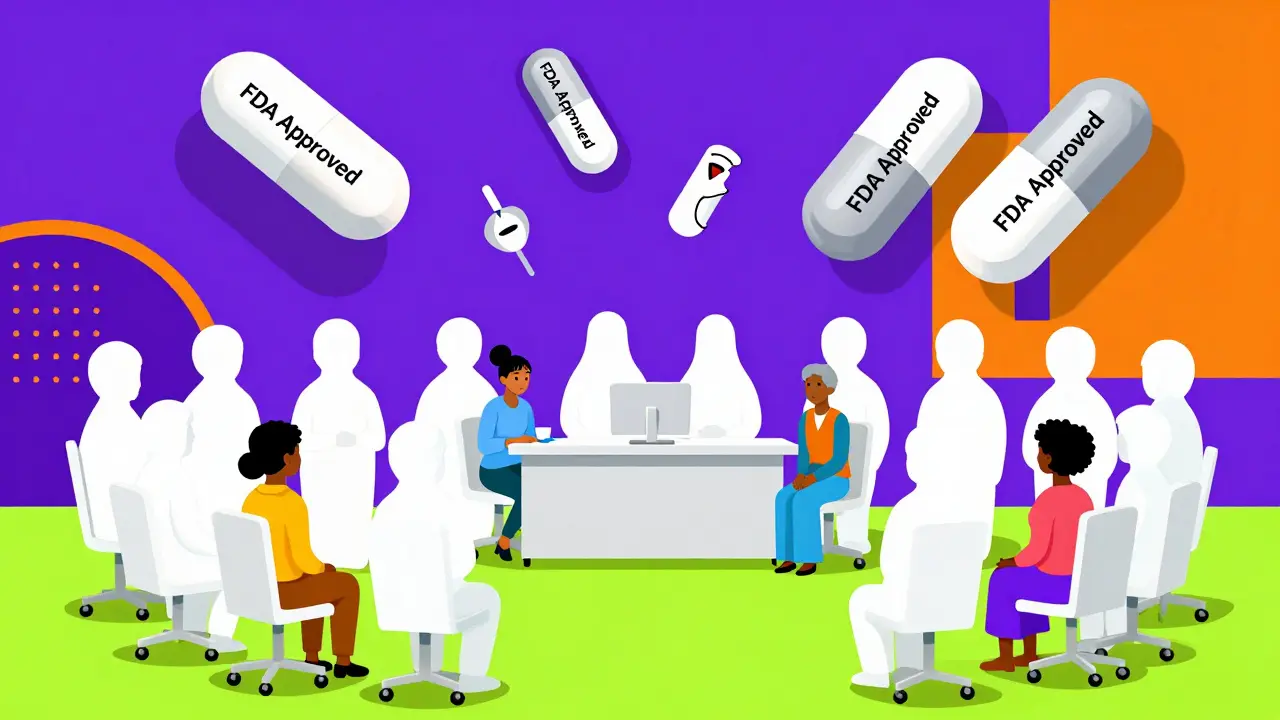
How Bias Shows Up in Prescribing
Doctors aren’t evil. But they’re human. And humans carry bias - even when they don’t realize it. A 2024 study in JAMA Network Open found three main drivers of medication safety disparities: lack of access to care, implicit bias in prescribing, and reliance on unsafe over-the-counter options. One example? Pain management. Multiple studies show Black patients are less likely to be prescribed opioids for the same level of pain as white patients - not because they need less, but because of the false belief that they have higher pain tolerance. That leads to untreated pain, which leads to more use of risky alternatives like alcohol or illicit drugs. Another example: diabetes medications. Studies show Black and Hispanic patients are more likely to be prescribed older, cheaper drugs with more side effects - even when newer, safer options are available. Why? Clinicians assume they won’t adhere to complex regimens. But the real issue isn’t compliance - it’s access to education, support, and follow-up care.What’s Being Done - and What’s Not
The World Health Organization launched its Medication Without Harm initiative in 2017 with a bold goal: cut severe medication-related harm by 50% in five years. It’s a good framework. But it doesn’t go far enough. Only 86 of 194 countries have committed - and even fewer have integrated equity into their plans. The Joint Commission, which accredits U.S. hospitals, made equity a formal patient safety goal in 2024. That’s progress. But a 2024 survey by the American Hospital Association found only 32% of hospitals have actual programs to address medication safety disparities. Seventy-eight percent say it’s a priority - but only a third are doing anything about it. Meanwhile, communities are stepping in. Patient advocacy groups on Reddit and Twitter are documenting stories of miscommunication, ignored symptoms, and dangerous dosing errors. One thread from a Spanish-speaking mother in Texas described how her child’s asthma inhaler was mislabeled in English - and no one checked if she understood the instructions. Her child ended up in the ER. The hospital didn’t report it as a medication error. They called it a “family misunderstanding.”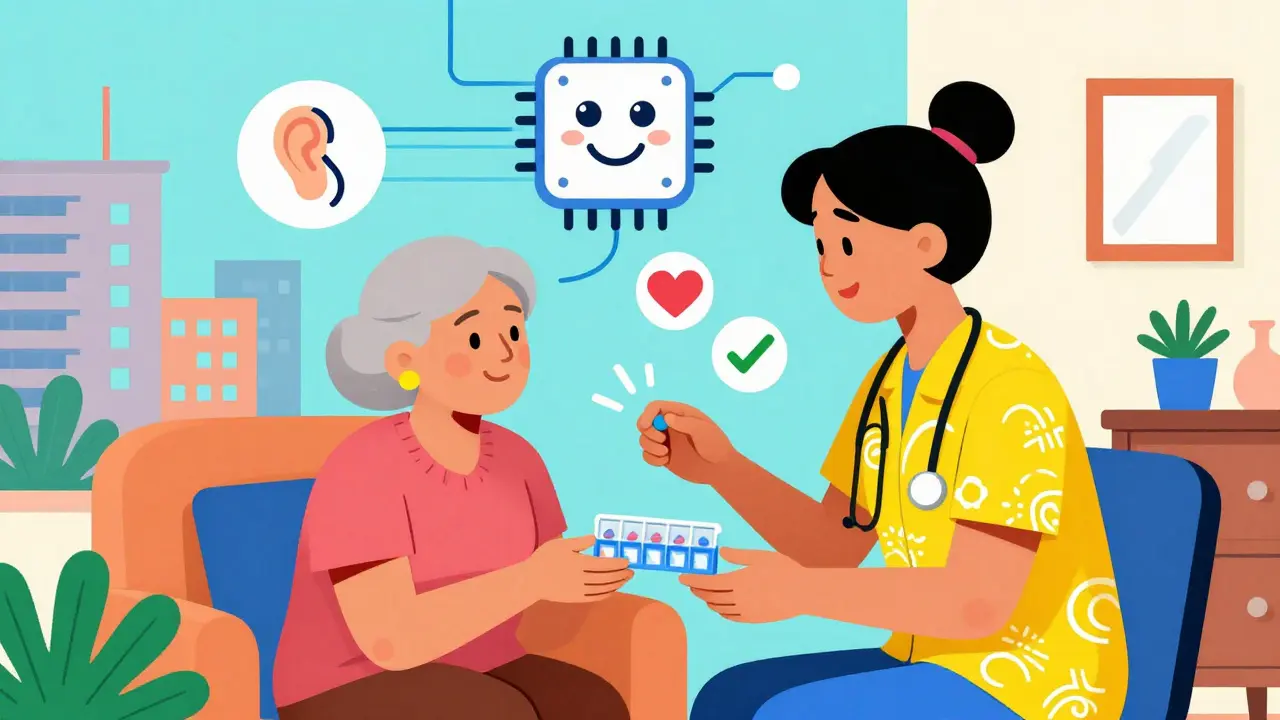
Real Solutions That Work
There are no magic bullets. But there are proven steps. Language services aren’t optional. Hospitals that provide trained medical interpreters - not family members or Google Translate - see 40% fewer medication errors among non-English speakers. Yet only 38% of U.S. hospitals have full-time interpreters on staff. Train clinicians on bias. One hospital in Minnesota cut medication errors in minority patients by 31% after requiring all staff to complete annual cultural competency training that included implicit bias modules. The training didn’t just teach facts - it asked staff to reflect on their own assumptions. Collect and report data by race, language, and income. You can’t fix what you don’t measure. Electronic health records should flag patients at higher risk of error - not based on stereotypes, but on real data: low health literacy, recent hospital discharge, limited English proficiency. Then, systems can automatically trigger extra checks: pharmacist consultations, visual aids, follow-up calls. Engage communities directly. In Detroit, community health workers - people from the same neighborhoods - were trained to help patients understand their medications. Within a year, medication adherence rose by 27%, and hospital readmissions dropped. The key? Trust. These workers weren’t just translators. They were neighbors.The Future Is in Technology - But Only If We Use It Right
Artificial intelligence can help. The U.S. Office of the National Coordinator for Health Information Technology launched a $15 million project in 2024 to build algorithms that detect patterns of medication disparities in electronic records. For example: Are Black patients with diabetes being prescribed different drugs than white patients with the same HbA1c levels? Are elderly patients in low-income zip codes getting fewer follow-up prescriptions? But AI is only as good as the data it’s trained on. If the data is biased - if it reflects years of under-treatment or under-reporting - the algorithm will just reinforce the same inequities. That’s why human oversight is non-negotiable. Algorithms should flag potential disparities. Humans must investigate them.This Isn’t a Social Issue - It’s a Safety Issue
Some still treat health disparities as a “social problem” outside the scope of medicine. That’s wrong. Every medication error that goes unreported, every drug that’s never tested on diverse populations, every patient who skips a dose because they can’t afford it - these aren’t side effects of inequality. They are the direct result of it. Medication safety isn’t just about pills and prescriptions. It’s about dignity. It’s about being heard. It’s about being seen as someone who deserves to live without fear of harm from the very medicines meant to heal. The tools exist. The data is clear. The cost of inaction is measured in lives lost, hospital stays extended, and families shattered. What’s missing is the will to act - and the courage to change systems that have been broken for too long.Why are medication errors under-reported among minority groups?
Medication errors are under-reported among minority groups due to language barriers, cultural mistrust, and clinician bias. Patients may not feel heard or may fear being judged for asking questions. Some don’t know they can report errors, while others have experienced past dismissals of their concerns. Studies show that when patients feel their voices aren’t valued, they stop speaking up - even when something goes wrong.
Do clinical trials include enough diverse participants?
No. From 2014 to 2021, Black participants in FDA drug trials made up only about one-third of their share of the disease burden. Even during the COVID-19 vaccine trials, Black and Hispanic people were underrepresented compared to their population size. Without diverse participants, we can’t know if a drug is safe or effective for everyone - leading to unsafe prescriptions and missed opportunities for better care.
How does cost affect medication safety?
High drug costs force people to skip doses, split pills, or use unsafe alternatives. In 2022, nearly 19% of Hispanic Americans and 11.5% of Black Americans were uninsured - compared to 7.4% of white Americans. When people can’t afford new, safer medications, they’re stuck with older drugs that have more side effects. This increases the risk of hospitalization and death.
Can AI help reduce medication safety disparities?
AI can help by spotting patterns - like if certain groups are consistently prescribed different drugs for the same condition. The U.S. government launched a $15 million initiative in 2024 to build tools that detect these disparities in electronic health records. But AI only works if it’s trained on fair data and reviewed by humans. If the data reflects past bias, the AI will repeat it - so human oversight is critical.
What can hospitals do right now to improve medication safety for everyone?
Hospitals can start with three things: hire trained medical interpreters, require staff to complete implicit bias training, and start collecting and reviewing medication error data by race, language, and income. They should also partner with community health workers who understand local needs. These steps are low-cost, proven, and save lives.
Addressing health disparities in medication safety isn’t about adding another program. It’s about fixing a system that’s been ignoring the people who need help most. The question isn’t whether we can afford to act - it’s whether we can afford not to.



Faith Wright
January 12, 2026 AT 12:17So we’re telling people their pain isn’t real, their concerns aren’t valid, and their lives are too ‘complicated’ for proper meds - then acting shocked when they end up in the ER? Classic. I’ve seen nurses roll their eyes at non-English speakers asking for clarification. Not because they’re rude - because they’ve been trained to assume ignorance. That’s not healthcare. That’s a slow-motion massacre dressed in scrubs.
Katherine Carlock
January 13, 2026 AT 17:48I work in a clinic in Atlanta and let me tell you - the moment a patient looks ‘too quiet’ or doesn’t make eye contact, staff assume they’re noncompliant. Meanwhile, they’re just terrified of being misunderstood. We started using plain-language visual aids and hiring bilingual community liaisons. Medication errors dropped 40% in six months. It’s not rocket science. It’s basic human decency. Why is that so hard?
Sona Chandra
January 14, 2026 AT 03:16THIS IS WHY WE NEED TO STOP LETTING WHITE DOCTORS DECIDE WHAT’S BEST FOR BLACK AND BROWN BODIES. THEY DON’T LIVE OUR LIVES. THEY DON’T KNOW OUR FOOD OUR STRESS OUR TRAUMA. THEY JUST SEE A CHART AND ASSUME WE’RE STUPID OR LAZY. I’VE HAD MY MEDS DOUBLED BECAUSE I DIDN’T SPEAK ENGLISH WELL AND NOW I’M ON A DRUG THAT KILLS MY LIVER. NOBODY CARES. NOBODY REPORTS IT. THEY CALL IT ‘PATIENT ERROR’ LIKE I’M THE ONE WHO BROKE THE SYSTEM.
Cassie Widders
January 15, 2026 AT 10:03It’s wild how we’ll spend millions on fancy AI tools to ‘detect bias’ but won’t hire one more interpreter. The tech is cool, sure. But real change happens when someone sits down with you, speaks your language, and doesn’t rush you. That’s not innovation. That’s just basic care.
Rinky Tandon
January 16, 2026 AT 18:59The root cause is systemic epistemic violence rooted in colonial medical paradigms that pathologize non-Western epistemologies of health. The biomedical model’s hegemony suppresses indigenous pharmacological knowledge and reinforces heteronormative, cis-centric, Eurocentric clinical protocols that inherently exclude marginalized populations. Until we decolonize pharmacovigilance frameworks, algorithmic audits are just performative neoliberal band-aids.
Konika Choudhury
January 17, 2026 AT 08:38Why are we always blaming doctors when the real problem is the government letting drug prices skyrocket and then blaming patients for not affording them? If you can’t pay you shouldn’t get the medicine. That’s how capitalism works. Stop crying and get a better job. Or move to India where medicine is cheap. We don’t have time for your guilt trips.
Darryl Perry
January 18, 2026 AT 01:15Correlation isn’t causation. You’re blaming systemic bias for everything. Maybe these groups just don’t follow instructions. Maybe they don’t care. The data doesn’t prove intent - only outcomes. Fix compliance, not culture.
TiM Vince
January 19, 2026 AT 06:32I’m a first-gen immigrant. My dad had diabetes. The pharmacist gave him instructions in English. He didn’t understand. He took the wrong dose. He ended up in the hospital. No one apologized. No one asked if he needed help. Just a bill and a discharge slip. I didn’t speak up because I thought it was normal. Turns out it wasn’t. It’s been 12 years. I still think about it.
Amanda Eichstaedt
January 20, 2026 AT 15:26Remember when the FDA approved that new blood thinner? It was tested on 92% white participants. Then it hit the market. Three months later, Black patients started having weird bleeding episodes. The FDA said ‘it’s rare.’ Turns out it wasn’t rare - it was predictable. We don’t need more studies. We need to stop approving drugs without diverse trials. Period.
Alex Fortwengler
January 21, 2026 AT 15:59AI is just the new way for Big Pharma to cover up their crimes. They don’t care about equity. They care about profit. The whole system is rigged. Doctors are paid to push certain drugs. Hospitals get bonuses for low readmission rates - so they discharge people before they’re ready. And if you’re poor? You’re just collateral damage. Wake up. This isn’t a flaw. It’s the design.
Lelia Battle
January 22, 2026 AT 00:31What does it mean to be ‘seen’ in a system designed to render you invisible? We speak of safety as if it’s a technical problem - fix the algorithm, hire the interpreter, train the clinician. But the deeper question is: who gets to define safety? Who gets to decide what counts as a ‘valid’ concern? When a mother’s fear is dismissed as ‘anxiety,’ and a man’s pain is labeled ‘noncompliant,’ we’re not failing at medicine. We’re failing at humanity. And that failure is older than any hospital, older than any drug, older than any algorithm. It’s embedded in the silence we’ve accepted as normal.
Daniel Pate
January 23, 2026 AT 03:20Let’s be honest - most of these solutions are already known. Interpreters. Bias training. Community workers. Data tracking. We’ve had the blueprint for a decade. So why isn’t it happening? Is it cost? No. It’s power. The people who benefit from the status quo aren’t the ones suffering the errors. Until those with power feel the pain, nothing changes. And until we make them feel it - we’re just rearranging deck chairs on the Titanic.