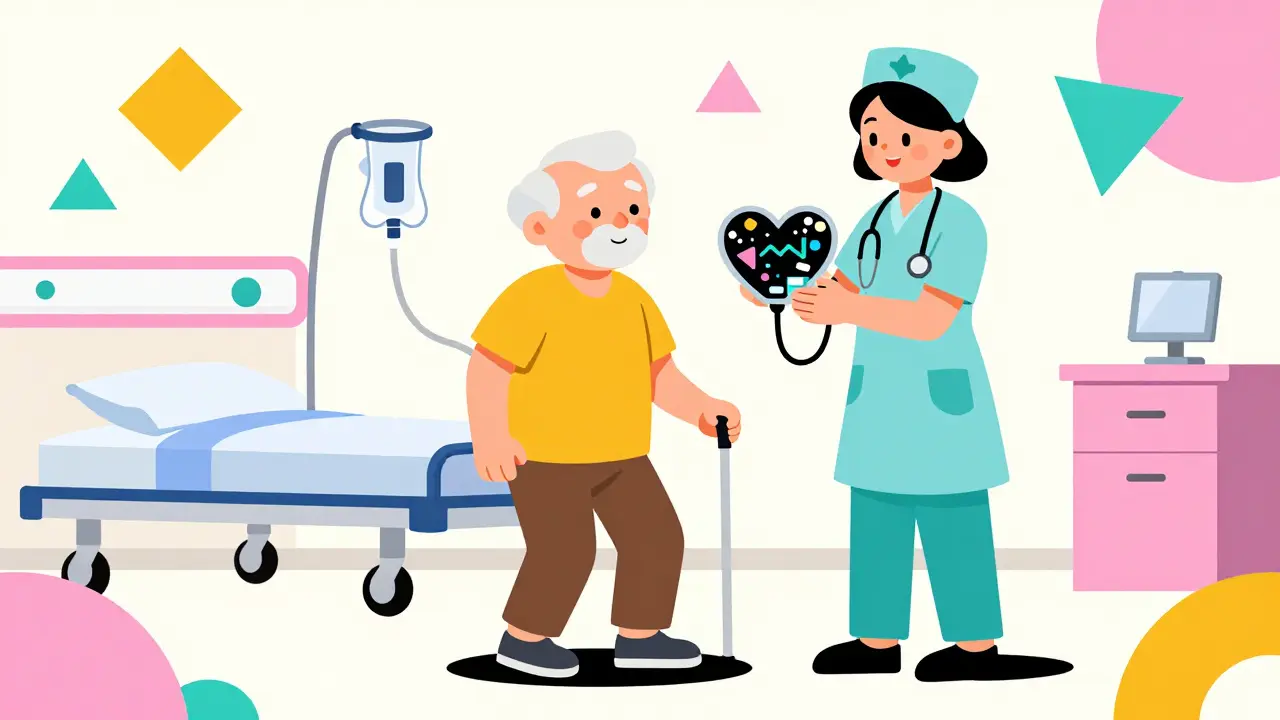
After a heart attack or heart surgery, your body needs more than just rest to heal properly. You don’t just wake up one day and feel normal again. Recovery isn’t passive-it’s active. And the most powerful tool you have? Cardiac rehabilitation.
What Is Cardiac Rehabilitation, Really?
Cardiac rehabilitation isn’t a fancy spa day with heart monitors. It’s a structured, medically supervised program built on decades of research. It’s designed to help you get back to living-not just surviving. The goal? Reduce your chance of another heart problem, improve your energy, and help you feel like yourself again. It’s not optional. It’s standard care. The American Heart Association says it cuts your risk of dying from heart disease by 20-30%. That’s not a small number. That’s like taking a life-saving pill every day, without the side effects. And yet, only about 37% of people who qualify actually join. Why? Many don’t know it exists. Others think it’s too risky. Or they’re told to just take it easy-and that’s where things go wrong.The Three Phases of Recovery
Cardiac rehab happens in three clear stages. Each one builds on the last. Skipping one isn’t an option.Phase I: Right in the Hospital
You’re still in the hospital, maybe still on oxygen. But you’re already moving. Within 24 to 48 hours after your heart event, staff will help you sit up, stand, and take a few steps. This isn’t about strength-it’s about preventing blood clots, keeping your lungs clear, and telling your heart it’s safe to start working again. Sessions are short: 3 to 5 minutes of walking, then rest. Repeat 3 or 4 times a day. Your heart rate is watched closely. It shouldn’t go above your resting rate plus 20 beats per minute. If you’re dizzy, short of breath, or feel chest pressure, you stop. No pushing. No pretending you’re fine. Safety comes first.Phase II: Outpatient, Supervised, and Structured
This starts 1 to 3 weeks after you leave the hospital. You’ll go to a rehab center 3 to 5 days a week for about 12 weeks. Each session lasts an hour. You’ll do aerobic exercise-walking on a treadmill, pedaling a stationary bike-and light strength training with resistance bands or light dumbbells. Your intensity? Moderate. You should be able to talk but not sing. On the Borg scale, you’re aiming for a 12 to 13 out of 20. That’s just enough to feel your heart working, but not so much that you’re gasping. Your heart rate is monitored. Your blood pressure is checked. If something’s off, the session stops. You’ll also get education. How to eat for your heart. How to recognize warning signs. How to manage stress. Depression is common after a heart event-up to 40% of people feel it. Rehab includes counseling. It’s not just about your heart. It’s about your whole life.Phase III: Lifelong Maintenance
Phase III is where you take over. You don’t go to the center anymore. But you don’t stop moving. The goal? 150 minutes of moderate exercise every week. That’s 30 minutes, 5 days a week. Walk. Swim. Cycle. Dance. Whatever you enjoy. You’ll still check in with your team occasionally, but now you’re in charge. You track your steps. You note how you feel. You adjust your routine. If you miss a day, you don’t quit. You start again the next day.What Does the Exercise Look Like?
You don’t need to run a marathon. You don’t even need to run at all. Start with walking. Even if it’s just to the mailbox. Then the corner. Then the local shop. The Heart Foundation of Australia says: walk until you start to ‘puff’ a little. Not gasping. Not in pain. Just enough to know you’re working. Strength training? Yes. But light. Start with 10 reps of something you can lift easily. No holding your breath. That’s how you spike your blood pressure-and that’s dangerous. Breathe out when you lift. Breathe in when you lower. Do 8 to 10 exercises, targeting arms, legs, chest, back. Twice a week, not on back-to-back days. Always warm up for 5 minutes. Walk slowly. Stretch gently. Cool down for 5 minutes after. Don’t stop suddenly. Let your heart slow down naturally.Who Should Do It?
If you’ve had any of these, you’re eligible:- A heart attack in the last 12 months
- Coronary bypass surgery
- Angioplasty or stent placement
- Heart valve repair or replacement
- Heart or lung transplant
- Stable angina (chest pain with activity)
- Chronic heart failure

Who Should Avoid It?
Rehab isn’t for everyone. If you have:- Unstable angina (chest pain at rest)
- Uncontrolled heart rhythm problems
- Acute heart failure (sudden shortness of breath, swelling)
- Severe aortic stenosis
- Active myocarditis (inflammation of the heart muscle)
Why Don’t More People Do It?
Here’s the hard truth: doctors don’t always refer patients. Only about 70% of eligible people get a referral. Some think it’s not necessary. Others can’t get to the center. Transportation is a big issue, especially in rural areas. Some people think they’re too old. Too weak. Too busy. But here’s what they don’t tell you: cardiac rehab is safer than walking your dog. Studies show only 1 complication per 100,000 hours of exercise. That’s less risky than driving to the store. The Cochrane Review of over 12,000 people found it cuts hospital readmissions by 18% and heart-related deaths by 26%.Telehealth Rehab Is a Game Changer
You don’t have to drive to a clinic anymore. In 2021, Medicare started covering remote cardiac rehab. You get a wearable monitor. You do your exercises at home. You check in with your team via video. Your heart rate, steps, and symptoms are tracked. A 2022 study in JAMA Network Open found telehealth rehab worked just as well as in-person. People improved their oxygen use by nearly the same amount. They felt better. They stuck with it longer. For people in Perth’s outer suburbs, or those without a car, this is life-changing.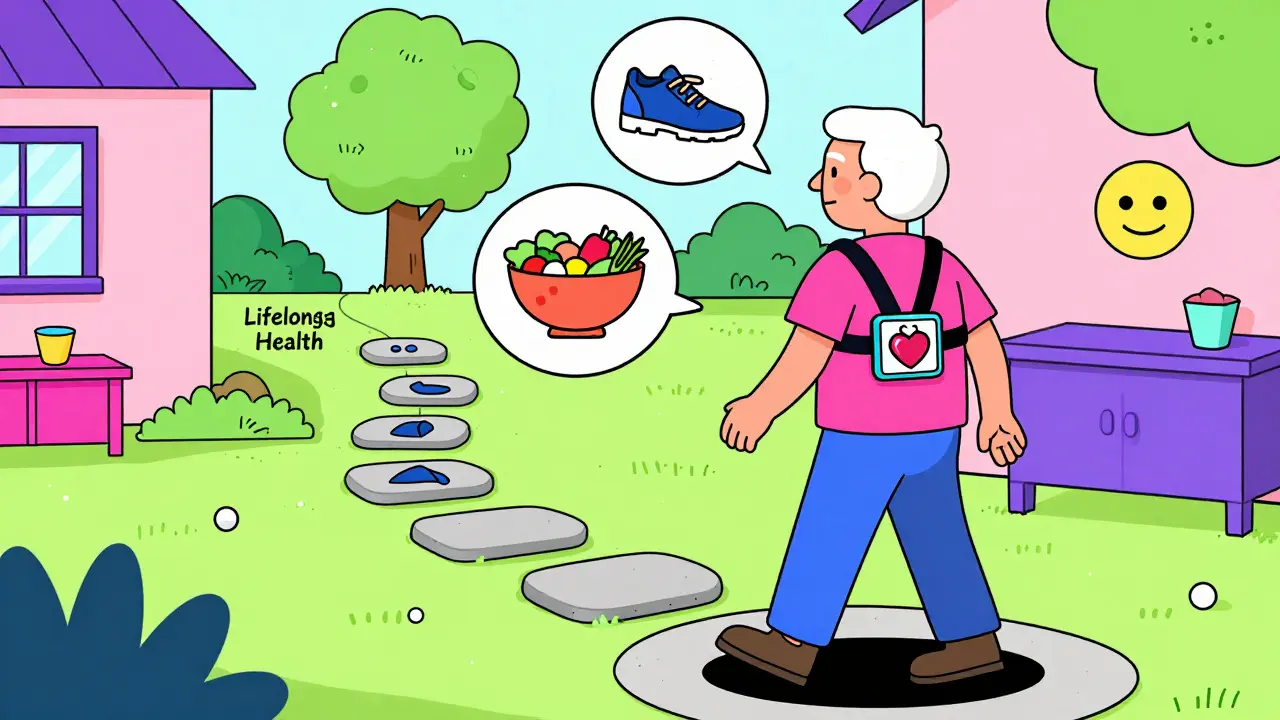
What Happens If You Skip It?
If you skip rehab, you’re not just missing exercise. You’re missing education. You’re missing support. You’re missing the chance to learn how to live differently. Without rehab, your risk of another heart attack goes up. Your muscles weaken. You get tired faster. You might gain weight. Your anxiety and depression might grow. You might stop driving. Stop seeing friends. Stop enjoying life. Rehab doesn’t just fix your heart. It fixes your life.Getting Started
Talk to your cardiologist. Ask: “Am I a candidate for cardiac rehab?” If they say yes, ask for a referral. If they don’t mention it, ask again. Don’t wait. The sooner you start, the better you’ll feel. In Australia, Medicare covers 36 sessions. You pay 20% out of pocket. Many private insurers cover it too. The cost? Far less than another hospital stay. Start small. Walk to the end of your driveway. Then the mailbox. Then the next street. Celebrate every step. You’re not just recovering. You’re rebuilding.What You’ll Gain
After 12 weeks of rehab:- You’ll walk farther without getting winded
- Your heart will pump more efficiently
- Your blood pressure and cholesterol will improve
- You’ll sleep better
- You’ll feel more confident
- You’ll have a plan for the long term
Is cardiac rehab safe after a heart attack?
Yes, it’s very safe. Studies show only 1 major complication per 100,000 hours of exercise. That’s safer than many daily activities. Your heart rate and blood pressure are monitored, and staff are trained to respond immediately if anything changes.
Can I do cardiac rehab at home?
Yes, especially after Phase II. Many programs now offer telehealth options with remote monitoring. You’ll use a wearable device to track your heart rate and activity, and check in with your rehab team via video calls. Home-based rehab has been shown to be just as effective as center-based programs.
How long does cardiac rehab last?
Phase II typically lasts 12 weeks with 36 one-hour sessions. But cardiac rehab isn’t just a program-it’s a lifestyle. Phase III is lifelong. You’ll continue exercising, eating well, and managing stress every day, even after formal sessions end.
Will insurance cover cardiac rehab?
Yes. Medicare covers 36 sessions after qualifying events like heart attack or bypass surgery. Most private insurers also cover it. You’ll pay 20% out of pocket under Medicare, but the cost is far less than a hospital readmission.
What if I’m too old or too weak for rehab?
Age and weakness aren’t barriers. Rehab programs are tailored to your ability. A 75-year-old with heart failure might start with chair exercises or 2-minute walks. The goal isn’t to be athletic-it’s to be functional. Moving more, even a little, reduces your risk and improves your quality of life.
Can I skip rehab if I feel fine now?
Feeling fine doesn’t mean you’re fully recovered. Many heart patients feel okay right after surgery, but their heart is still healing. Rehab helps rebuild strength, lower risk factors, and prevent future problems. Skipping it increases your chance of another event by up to 30%.





Viola Li
January 24, 2026 AT 22:11Wow, another one of those ‘just do rehab’ lectures. Like it’s that simple. My uncle did it after his bypass and ended up with a stress fracture from ‘light’ dumbbells. They don’t tell you how many people get injured in these programs because nobody tracks it. And don’t get me started on the $20 copay - it’s a money grab disguised as care.
Vatsal Patel
January 26, 2026 AT 04:43Ah yes, the great cardiac rehab cult. You’ve been brainwashed by the medical-industrial complex. They tell you to walk 30 minutes a day - but who really benefits? The treadmill manufacturers? The insurance companies? The pharmaceutical giants who want you to stay dependent on their pills? The truth? Your heart doesn’t need rehab. It needs silence. Rest. Not more noise. Not more schedules. Just peace.
John McGuirk
January 27, 2026 AT 17:37They say it’s safe? Ha. My cousin did rehab after his stent. Next thing you know, he’s on a heart monitor 24/7. Turns out the ‘supervised’ part meant they were watching him like a prisoner. And the ‘exercise’? They made him walk in circles like a lab rat. I’m not buying it. This is all just a way to keep you in the system. They don’t want you healthy. They want you coming back.
Kevin Waters
January 28, 2026 AT 16:38I’ve been a cardiac rehab nurse for 15 years. I’ve seen people who couldn’t walk to the bathroom come back six months later hiking mountains. It’s not magic - it’s science. The stats are real. The dropout rate is high because people are scared. But if you stick with it, even just 80% of the sessions, your life changes. You’ll sleep better, feel less anxious, and actually enjoy your grandkids again. No hype. Just facts.
Sushrita Chakraborty
January 28, 2026 AT 18:28Cardiac rehabilitation, as delineated in this comprehensive exposition, represents a paradigm shift in post-cardiac-event management; it is not merely a therapeutic intervention, but a holistic, evidence-based reintegration into daily life. The triphasic model, meticulously outlined, aligns with global clinical guidelines, and the inclusion of psychological support is, frankly, indispensable.
Furthermore, the assertion that telehealth modalities yield outcomes equivalent to in-person programs is corroborated by recent meta-analyses - a development that is both pragmatic and profoundly equitable.
Heather McCubbin
January 29, 2026 AT 23:29So now I’m supposed to believe that walking to the mailbox is gonna save my life? I just had a heart attack and now I’m supposed to dance in a gym with a bunch of old people who think they’re athletes? I’m not doing it. I’m gonna eat my tacos and watch Netflix. If I die, at least I died happy.
Tiffany Wagner
January 31, 2026 AT 12:03i just got my referral last week and honestly i was scared to start. but the first session was so chill. the trainer asked how i felt, not how many steps i took. we walked for 5 minutes and i cried because i realized i hadn’t walked without being out of breath in months. thank you for writing this. it made me feel less alone.
Chloe Hadland
February 2, 2026 AT 05:43my dad did rehab after his stent and he’s been biking every morning since. he says it’s the first time in years he’s felt like himself. i didn’t believe it until i saw him laugh while pedaling in the rain. no fancy equipment. just him, his bike, and his dog. this stuff works if you let it.
Amelia Williams
February 3, 2026 AT 22:31Okay but what if you live in a town with no rehab center? And your car broke down? And you’re on Medicaid and they only cover 12 sessions? I’m not saying it’s bad - I’m saying the system is broken. I did telehealth and my monitor kept glitching. My nurse had to call me three times to remind me to do my squats. It’s not perfect - but it’s better than nothing. I’m doing my 30 minutes a day now. Even if I’m late. Even if I’m tired. I’m doing it.
lorraine england
February 5, 2026 AT 06:06My sister skipped rehab because she thought she was fine. Six months later, she was back in the hospital. They told her it was ‘unstable angina’ - but really? It was just her not moving. Rehab didn’t fix her heart. It reminded her she had one. And that’s enough.