Missing a pill can seem like a small thing-until it isn’t. For people managing chronic conditions like high blood pressure, diabetes, or HIV, skipping even one dose can lead to worse outcomes, hospital visits, or even life-threatening complications. And it’s more common than you think: medication adherence rates for chronic illnesses hover around 50% globally. That means half the people prescribed daily meds don’t take them as directed. Text message reminders aren’t magic, but they’re one of the most proven, low-cost tools we have to fix this.
Why Text Messages Work Better Than You Think
It’s not just about getting a notification. Text reminders work because they tap into how human brains actually function. We forget things. We get busy. We feel fine and assume we don’t need the pill today. A simple text cuts through that mental noise. Studies show that when patients get daily texts reminding them to take their meds, adherence improves by an average of 14 percentage points. That’s not a small win-it’s the difference between controlling your blood pressure and ending up in the ER.
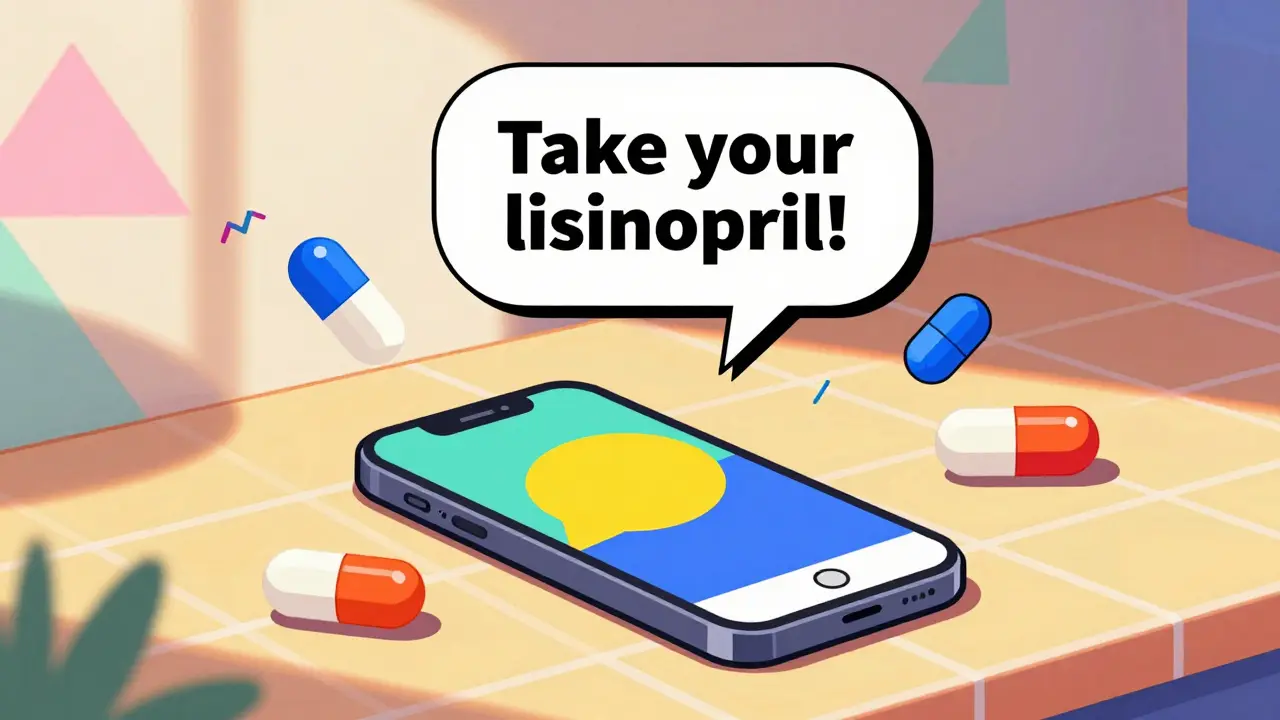
What makes text messages stand out? They’re personal, immediate, and always on. Unlike apps that require you to open them or alarms you can snooze, a text pops up on your lock screen. No extra steps. No app downloads. Just a message that says, “It’s 8 AM. Take your lisinopril.” And if you’ve ever been on a long-term medication plan, you know how powerful that is.
What Kind of Messages Actually Help?
Not all texts are created equal. A generic message like “Take your medicine” won’t cut it. The most effective messages are specific, personalized, and timed right.
- Use the actual drug name: “Time for your metformin 500mg.”
- Include the reason: “Take your blood pressure pill to keep your heart safe today.”
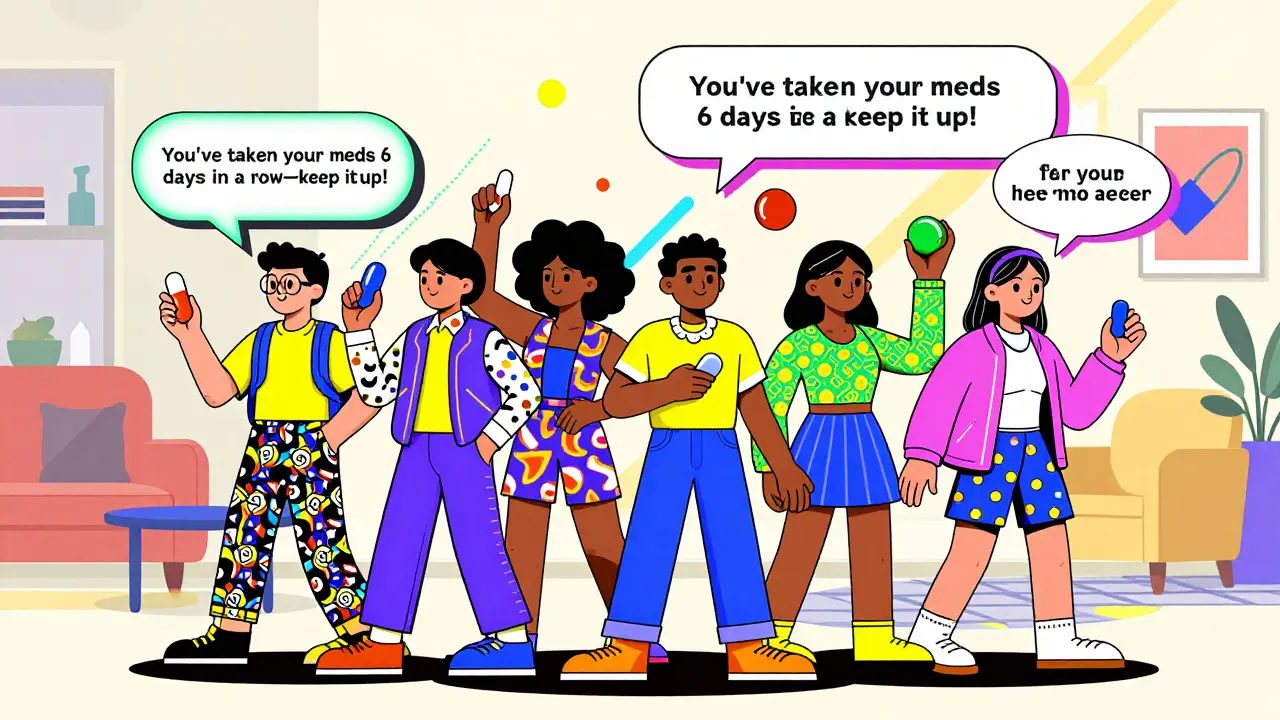
- Add a positive nudge: “You’ve taken your meds 6 days in a row-keep it up!”
- Set the right time: Send the message 15-30 minutes before your usual pill time. Studies show effectiveness drops sharply if the message arrives more than two hours after the scheduled dose.
One study found that personalized messages increased adherence by 32% compared to generic ones. That’s because people respond to messages that feel like they’re made for them-not a robot copy-paste. Even small details like using your name or referencing your last refill can make a big difference.
Who Benefits the Most?
Text reminders aren’t equally effective for every condition. They shine brightest where timing is critical and missed doses have immediate consequences.
- HIV treatment: 73% of studies showed strong improvement. Missing doses can lead to drug resistance.
- Diabetes: Daily insulin or oral meds require strict timing. Texts help reduce A1C spikes.
- Heart disease: Blood pressure and cholesterol meds need daily consistency. One trial showed text reminders doubled the chance of reaching target blood pressure.
- Episodes of depression or schizophrenia: Medication adherence directly impacts relapse rates. Texts help bridge gaps in care.
On the other hand, for long-term conditions like osteoporosis or thyroid disease, where missing one dose doesn’t cause immediate harm, the effect is weaker. And in some cases-like tuberculosis treatment-texts didn’t improve pill-taking but did reduce patients dropping out of care entirely. That’s still a win.
What Doesn’t Work
Let’s be honest: not every text reminder system succeeds. A 2023 study of over 9,500 patients with heart disease found no improvement in refill rates after a full year-even with smart, behavior-based messages. Why? Because people got used to them.
Message fatigue is real. After 3 to 6 months, many patients start ignoring texts. They turn off notifications. They delete the number. The novelty wears off. That’s why simple, one-size-fits-all reminders fail over time. The key isn’t sending more messages-it’s sending smarter ones.
Another big issue? Timing. If your text comes at 11 PM for a 7 AM pill, you’ll ignore it. Or worse, you’ll take the pill at midnight and throw off your whole schedule. Systems that sync with your phone’s calendar or let you pick your preferred time have much higher success rates.
How to Set It Up Right
Setting up text reminders isn’t just about picking an app. It’s about building a system that fits your life.
- Check your phone access: Do you have a reliable phone and unlimited texting? If you’re on a pay-as-you-go plan, make sure texts won’t cost you extra.
- Choose your method: You can use a pharmacy app (like Medisafe or MyTherapy), your doctor’s portal, or a free service like Text4Health. Some clinics offer automated texting through their electronic records.
- Customize the timing: Don’t accept default times. Set reminders for when you actually take your meds-not when the system thinks you should.
- Make it personal: If the system lets you edit the message, do it. Change “Take your medicine” to “Take your warfarin-your INR is due tomorrow.”
- Test it for a week: See if the timing works. Do you respond? Do you forget anyway? Adjust before committing long-term.
Pro tip: If you’re helping someone else (like an aging parent), set up the reminder on their phone with them. Don’t just send a link. Walk them through it. Many older adults don’t know how to change notification settings-and if the text doesn’t make a sound, it’s useless.
What to Do When It Stops Working
After a few months, you might notice you’re skipping texts. That’s normal. Here’s how to reset it:
- Change the message wording. Try a new tone-funny, serious, or encouraging.
- Switch from daily to weekly if your meds allow it. For example, if you take a statin once a day, you might only need a weekly check-in.
- Pair it with another habit. “After I brush my teeth, I take my pill.” Link the text to a routine you never miss.
- Ask your pharmacist or doctor to call you if you miss two doses in a row. Human contact still matters.
- If you’re getting too many texts, ask to reduce frequency. More isn’t always better.
One user on Reddit said their Medisafe app cut their missed doses from 30% to under 5%. But they added: “I had to turn off the daily ‘You’re doing great!’ messages after two weeks. They started feeling like nagging.” That’s the balance-support, not pressure.
Limitations and Who It’s Not For
Text reminders aren’t a cure-all. They don’t work if:
- You don’t have a phone or reliable service.
- You’re not comfortable with technology.
- You have cognitive impairments and can’t respond to the message.
- You’re on a plan that doesn’t integrate with your prescription system.
Also, texts can’t confirm you took the pill. They only remind you. If you’re still skipping doses after getting reminders, you may need more support-like a pill organizer, a caregiver check-in, or a medication review with your doctor.
And while most systems are secure, make sure your provider follows privacy rules. In the U.S., HIPAA protects your health data. In Australia, it’s the Privacy Act. Ask your clinic how your info is stored and who can see your text logs.
The Bigger Picture
Text reminders are part of a larger shift in healthcare-from reactive to proactive. Instead of waiting for someone to get sick because they missed pills, we’re now using simple tech to stop it before it happens. In 2026, over 78% of U.S. health systems use some form of digital adherence tool. But only a third have linked them to clinical decision-making.
The future isn’t just texts. It’s AI that learns your patterns and sends a message only when you’re at risk of missing a dose. It’s apps that sync with your smart pill bottle and alert your doctor if you haven’t opened it in 48 hours. But for now, the simplest tool still works best for most people.
If you’re struggling to stay on track with your meds, start with a text. It costs nothing. Takes five minutes to set up. And for many, it’s the only thing keeping them healthy.
Can I use text reminders if I don’t have a smartphone?
Yes. All you need is a basic mobile phone that can receive SMS texts. You don’t need internet, apps, or a data plan. Most pharmacy and clinic-based reminder systems work over standard SMS, even on older phones.
How often should I get reminders?
Daily reminders work best for medications taken every day, like blood pressure or diabetes pills. For weekly or monthly meds (like some osteoporosis drugs), weekly reminders are enough. Too many texts can lead to fatigue-so match the frequency to your dosing schedule.
Are text reminders private and secure?
Reputable healthcare providers use encrypted, HIPAA-compliant (or equivalent) systems to send reminders. Avoid third-party apps that ask for your medical records unless they’re verified by your doctor. Always ask your clinic how your data is protected.
What if I miss a dose even after getting the text?
Texts remind you, but they don’t force you to take the pill. If you’re consistently missing doses, talk to your doctor. You might need a simpler regimen, a pill organizer, or help with side effects. Sometimes, the issue isn’t forgetting-it’s feeling worse after taking the medicine.
Can I get text reminders for multiple medications?
Yes. Most systems let you set multiple reminders with different times and messages. For example: “7 AM: Take your metformin. 8 PM: Take your atorvastatin.” Make sure each message is clear and includes the drug name to avoid confusion.
Do pharmacies offer this service?
Many do. Ask your pharmacist if they offer automated text reminders for prescriptions. Some systems link to your refill schedule and send alerts when it’s time to pick up your next bottle, too.
Ted Conerly
January 11, 2026 AT 08:34Text reminders saved my life after my stent. I used to forget my blood pressure meds until I set one for 7:30 AM with my actual drug name. No app, just SMS. Now I haven’t missed in 18 months. Simple works.
Faith Edwards
January 13, 2026 AT 05:43One is left to wonder whether the proliferation of these digital nudges is not merely a symptom of our collective societal decay-a failure of personal responsibility masked as technological innovation. Are we now so intellectually bankrupt that we require algorithmic babysitting to ingest a pill? The very notion is both tragic and grotesque.
Bradford Beardall
January 14, 2026 AT 22:19Just came back from a trip to rural India where I saw elders using basic phones to get daily reminders for TB meds. No smartphone, no data, just SMS. And it worked. This isn’t a ‘tech solution’-it’s a dignity solution. Healthcare should be this simple everywhere.
McCarthy Halverson
January 16, 2026 AT 17:30Set the time right. Use the drug name. Don’t overdo it. That’s it.
Michael Marchio
January 17, 2026 AT 17:14Let’s be real-most people don’t need reminders because they’re forgetful. They need them because they don’t believe the medicine works, or they hate the side effects, or they can’t afford it. Texts don’t fix those problems. They just make people feel guilty for not taking a pill that might be doing more harm than good. I’ve seen too many patients get depressed because they’re constantly failing a system that never asked them what they needed.
Jake Kelly
January 17, 2026 AT 22:51I’ve helped my dad set this up. He’s 78. We picked a time after his morning coffee. Changed the message to ‘Coffee done? Time for your baby aspirin.’ He actually replies now. That’s the magic-making it part of his routine, not a chore.
Ashlee Montgomery
January 19, 2026 AT 08:35It’s interesting how something so small-a text-can become a moral anchor for people who feel like their bodies have betrayed them. The reminder isn’t just about the pill. It’s about being remembered. Being cared for. Even by a machine.
neeraj maor
January 20, 2026 AT 22:37Text reminders are a government surveillance tool disguised as healthcare. They track your behavior, build profiles, and feed data to pharma companies who then raise prices because you’re ‘compliant.’ The 32% adherence increase? That’s not because it works-it’s because they’ve engineered addiction to guilt. Wake up.
Ritwik Bose
January 22, 2026 AT 10:26Thank you for this thoughtful piece 🙏. In India, many elderly patients rely on SMS reminders because family members are far away. A simple message saying ‘Baba, take your medicine’ from a daughter in Dubai-this is not tech. This is love, delivered via carrier wave.
Paul Bear
January 24, 2026 AT 04:33While the anecdotal evidence is compelling, the meta-analyses reveal significant heterogeneity in effect sizes, particularly when controlling for socioeconomic confounders. The 14-percentage-point improvement cited is statistically significant but clinically marginal in populations with low baseline adherence. Moreover, the absence of long-term sustainability data (>12 months) renders these interventions vulnerable to regression to the mean. One must also consider the ethical implications of behavioral nudging without informed consent in vulnerable populations.
lisa Bajram
January 25, 2026 AT 13:11OMG I LOVE THIS! I used to miss my diabetes meds like clockwork-until I made my reminder say ‘Your pancreas is thanking you 💪’ and sent it at 8:15 AM right after my shower. Now I look forward to it. I even changed it to ‘You’re a rockstar, and your A1C knows it!’ after two weeks. Yes, I’m that person. And I’m proud of it 😌
Jaqueline santos bau
January 26, 2026 AT 08:58My sister’s doctor sent her a text that said ‘You missed your pill. Again.’ She cried for three days. That’s not support-that’s humiliation. Why can’t they just call? Why can’t they care enough to talk? Texts are cold. They’re robotic. They make people feel like failures instead of humans. I hate this trend.
Kunal Majumder
January 27, 2026 AT 16:27I set this up for my uncle in Punjab. He didn’t even know how to unlock his phone. We put the reminder on repeat, turned the volume up, and wrote the message in Punjabi. Now he takes his pills like a soldier. Simple. Human. Works.
Aurora Memo
January 28, 2026 AT 21:19This is one of those rare tech solutions that doesn’t feel like tech. It’s not about innovation. It’s about showing up-for someone, even in the smallest way. If a text helps even one person avoid the ER, it’s worth it. No grand claims needed.