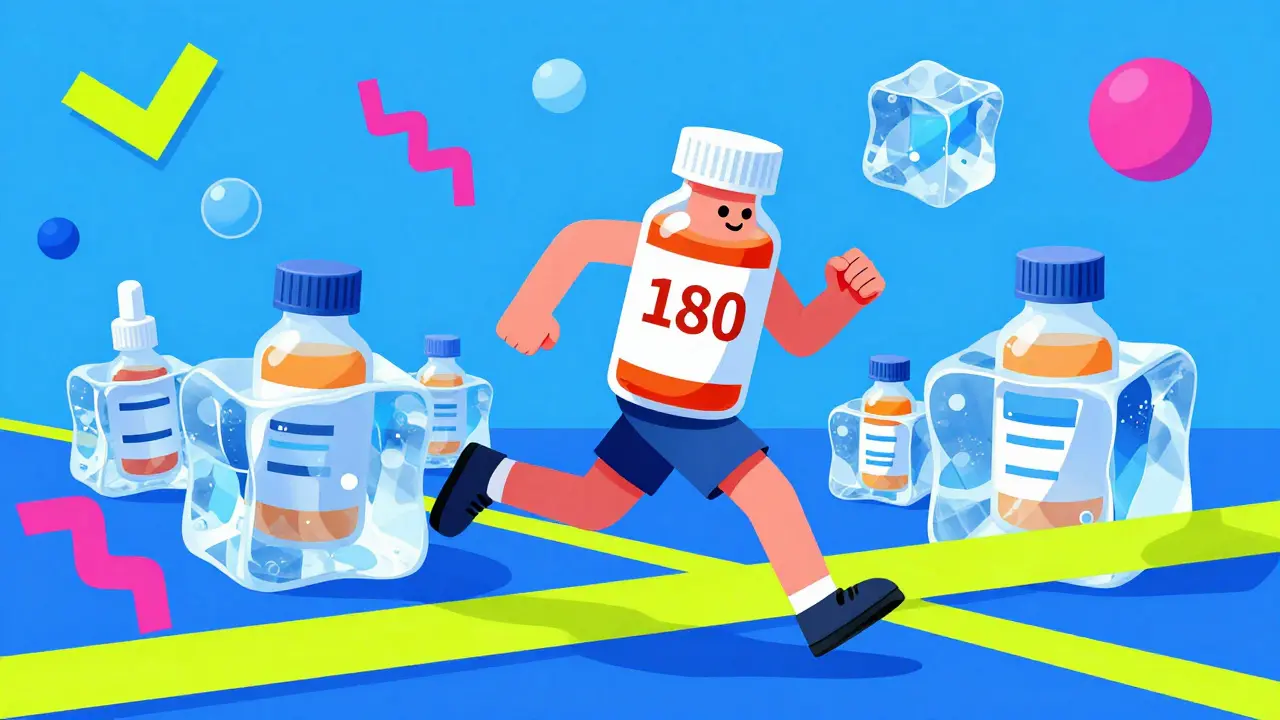
Imagine spending years and millions of dollars developing a generic version of a blockbuster drug, only to launch it and find the pharmacy shelves already full of a competitor's product. In the pharmaceutical world, timing isn't just an advantage-it's the entire game. Being the first to market with a generic drug can be the difference between capturing 90% of the market or fighting for scraps. This first-mover advantage is a powerful economic engine that lets a company dominate a therapeutic area long after the initial excitement fades.
The Regulatory Secret: The Hatch-Waxman Act
The foundation of this advantage isn't just about speed; it's written into U.S. law. Hatch-Waxman Act is a 1984 law that balances the need for new drug innovation with the need for affordable generic medicines. For generic manufacturers, the crown jewel of this act is the 180-day marketing exclusivity period. If a company is the first to successfully challenge a brand-name drug's patent, they get six months where no other generic version of that drug can enter the market.
Think of this 180-day window as a head start in a race where the other runners are frozen at the starting line. During this time, the first filer faces limited competition, allowing them to set pricing and establish a foothold. While six months might seem short, the ripples of this window last for years. In fact, generic drugs have grown from a tiny 19% of prescriptions in 1984 to over 90% today, largely thanks to the framework this act created.
Beyond the 180 Days: Why the Lead Stays Sticky
If the exclusivity is only six months, why do first movers still dominate years later? It comes down to "path dependency" and the way the healthcare system actually works. Once a pharmacist stocks a specific generic, they rarely want to switch. Why? Because storing multiple versions of the same molecule increases inventory costs and complicates logistics. Most pharmacies prefer to stock just one generic version per drug.
Then there's the human element. Doctors develop habits. If a prescriber gets comfortable with the first generic available, they keep prescribing it. Patients with chronic diseases, who take the same medication for decades, rarely have a reason to switch if the first generic is working fine. This "agent inertia" means that even when five other companies enter the market, the first mover often keeps a massive lead. Data shows that first movers can maintain a market share advantage of up to 90% over later entrants because the cost of switching is simply too high for the system to bother.
| Entry Position | Typical Market Share (Exclusivity) | Long-term Market Share (Post-Competition) | Key Advantage |
|---|---|---|---|
| First Generic | 70-80% | 30-40% | Pharmacy stocking & prescriber loyalty |
| Second Generic | N/A | 10-15% | Price competition |
| Subsequent Entrants | N/A | <10% | Niche targeting/price wars |
Where the Advantage Hits Hardest
Not all drugs are created equal. The strength of the first-mover effect depends heavily on the type of medication. For instance, Specialty Therapeutics-drugs for rare or complex conditions-offer a much stronger advantage than primary care drugs. In these areas, there are fewer prescribers and patients, so once the first mover locks them in, the competition has almost no way to break through.
The delivery method matters too. Injectable drugs usually show a stronger first-mover effect than simple oral pills. Why? Because injectables often require more specialized handling and training, making the relationship between the provider and the manufacturer much tighter. Analysis indicates that injectables can provide an 8-10 percentage point market share boost over oral preparations.
The size of the company also plays a role. When a large pharmaceutical firm is the first mover, they can leverage their existing distribution networks to push the drug faster, often gaining an advantage of over ten market-share points. Smaller players, without that existing infrastructure, often struggle to capture a fair share of the market even if they are first.
The Risks: Authorized Generics and Pay-for-Delay
It's not all easy wins. The biggest threat to a first-mover's profit is the Authorized Generic (AG). This is when the original brand-name company launches its own generic version of the drug. Instead of a two-player game (Brand vs. First Generic), it becomes a three-player game. Because the brand company already owns the manufacturing process, they can often undercut the first generic's price by 4-8% at retail and 7-14% at wholesale, eating directly into the first mover's margins.
Then there's the legal side. In the past, some companies used "pay-for-delay" agreements, where the brand company paid the first generic manufacturer to stay off the market for a while. However, the Federal Trade Commission has been cracking down on these deals. This is actually a win for the system, as it accelerates the launch of generics by an average of 6-9 months, though it makes the legal landscape more volatile for the companies involved.
Strategies for Winning the Race
If you want to secure a first-mover advantage, you can't just be fast; you have to be strategic. The most successful companies focus on three main areas:
- Expanding Indications: First movers who quickly get their generic approved for multiple uses (indications) of the drug see the strongest results-often 13 percentage points above their fair market share.
- Securing API Suppliers: Having relationships with multiple Active Pharmaceutical Ingredient (API) suppliers ensures you don't run out of stock during that critical 180-day window. This can lead to cost reductions of 12-15% compared to latecomers.
- Therapeutic Expertise: Companies that already have a presence in a specific medical field perform twice as well as those jumping into a new area. Pre-launch investment in medical expertise is non-negotiable.
The timeline is tight. The gap between challenging a patent and actually hitting the market usually takes 18 to 36 months. If the gap between the first and second generic is three years or more, the first mover practically owns the market. If the gap is less than a year, the advantage almost disappears entirely.
The Future of Generic Dominance
We are seeing a shift toward "complex generics," such as inhalers and long-acting injectables. These are harder to make, which means fewer competitors. For these products, the first-mover advantage is even more massive, averaging 15-20 percentage points above fair share. While the FDA is making it easier for more companies to develop these products through new guidance, the fundamental drivers-pharmacist habits and patient loyalty-aren't going away.
In the end, the pharmaceutical market is less about who has the best product (since generics are designed to be identical) and more about who gets there first. The first mover doesn't just get a six-month window; they get a permanent seat at the table that others have to fight desperately to join.
What exactly is the 180-day exclusivity period?
It is a regulatory reward granted by the FDA under the Hatch-Waxman Act. The first generic company to successfully challenge a brand-name drug's patent is given six months of market exclusivity, meaning the FDA will not approve any other generic version of that drug during that time.
Why does being first matter if the drugs are identical?
Because of "stickiness" in the healthcare system. Pharmacists prefer to stock only one generic version of a drug to save on inventory costs, and doctors develop prescribing habits. Once a patient starts on the first available generic, they rarely switch unless there is a strong medical reason.
How do Authorized Generics (AGs) affect first movers?
Authorized Generics are generic versions sold by the original brand-name company. They can launch during the 180-day exclusivity period, creating competition for the first generic filer and typically lowering retail prices by 4-8%, which reduces the first mover's revenue.
Which types of drugs have the strongest first-mover advantage?
Specialty therapeutics (drugs for rare diseases) and complex delivery systems like injectables or inhalers have the strongest advantages. These typically see a 15-20 percentage point market share boost compared to standard oral pills.
Does company size influence the success of a first-to-market launch?
Yes. Large pharmaceutical companies often gain a significantly higher advantage (over 10 percentage points) because they have better distribution networks and more resources to handle the complex regulatory requirements of the FDA.



Agatha Deo
April 18, 2026 AT 08:31Oh, please. Imagine believing the Hatch-Waxman Act is actually about 'balance' and not just a choreographed dance between Big Pharma and the government to keep prices high enough to sustain their yachts while pretending to help the poor. It's all a giant shell game where the first mover just gets a slightly bigger piece of the scam 🙄
Joshua Nicholson
April 19, 2026 AT 13:58Eh, seems like a lot of effort just to be the first one to sell the same thing as everyone else.
Randall Barker
April 21, 2026 AT 00:12The real tragedy here isn't the market share, but the absolute moral bankruptcy of a system that rewards speed over accessibility. We've commodified health to the point where 'path dependency' is just a fancy term for trapping patients in a corporate ecosystem because a pharmacist is too lazy to switch a SKU. It's a systemic failure of ethics masquerading as economic efficiency.
Heer Malhotra
April 22, 2026 AT 17:53It is profoundly disappointing to see how the US regulatory framework prioritizes corporate greed over the global necessity for affordable medicine. India's pharmaceutical industry has consistently shown that generic production can be scaled for the public good, yet the world remains beholden to these restrictive American laws that serve only to inflate the profits of a few select entities.
Nathan Berlin
April 24, 2026 AT 10:29Exactly 🇮🇳 our industry is lightyears ahead in efficiency while the US just plays these little games with 180 day windows lol imagine being that slow 🤡
Cheryl C
April 24, 2026 AT 12:58USA is still the best place for biz anyway!! 🇺🇸🇺🇸 let the big guys win cuz they make the best stuff lol 💊
Ben Ferguson
April 26, 2026 AT 06:15I find it absolutely fascinating, almost poetic in its own cruel way, how the invisible hand of the market operates here, creating this dramatic race where the winner takes almost everything just by crossing a finish line a few months early, and then the sheer inertia of human habit-the way we just cling to what we know-solidifies that lead into a veritable empire that lasts for a decade!
Josephine Wyburn
April 26, 2026 AT 23:56Honestly I'm just sitting here thinking about how stressful this must be for the employees 😫 like imagine the absolute chaos of trying to launch a drug and then realizing an Authorized Generic just crashed your party and took your margins 📉 it's literally a nightmare scenario and I can't even imagine the anxiety levels in those boardrooms 😱😭
Nell O'Leary
April 28, 2026 AT 08:19The synergy between API procurement and the 180-day exclusivity window is definitely the critical path for maximizing ROI here. If you don't have that vertical integration or at least a robust vendor agreement, you're basically leaving money on the table :)
Autumn Bridwell
April 29, 2026 AT 01:03Wait, so you're telling me my doctor might just be prescribing a drug because he's used to it and not because it's the absolute best one for me?! This is honestly terrifying! I need to call my physician right now and demand a full audit of why I'm on this specific generic!
Richard Moore
April 29, 2026 AT 23:20The analysis on injectables is spot on. The operational friction involved in switching a provider's workflow for a complex delivery system is way higher than just swapping a pill 💉. It makes total sense why the first mover lock-in is so much tighter there! 👍
Rob Schlautman
May 1, 2026 AT 17:59typical corporate strategy fluff just telling us that the biggest fish eats the smallest fish and the pharmacist is too lazy to care about a different brand name which is basically the story of every single industry in this country honestly just a cycle of mediocrity and greed
Bonnie Piersall
May 2, 2026 AT 09:01Look at the bright side! This just means there's a huge opportunity for the scrappy newcomers to innovate in the 'complex generics' space. If you can master those inhalers and long-acting shots, you can carve out a gorgeous little niche and absolutely crush it. Just keep grinding and focus on those high-barrier entries! You got this!