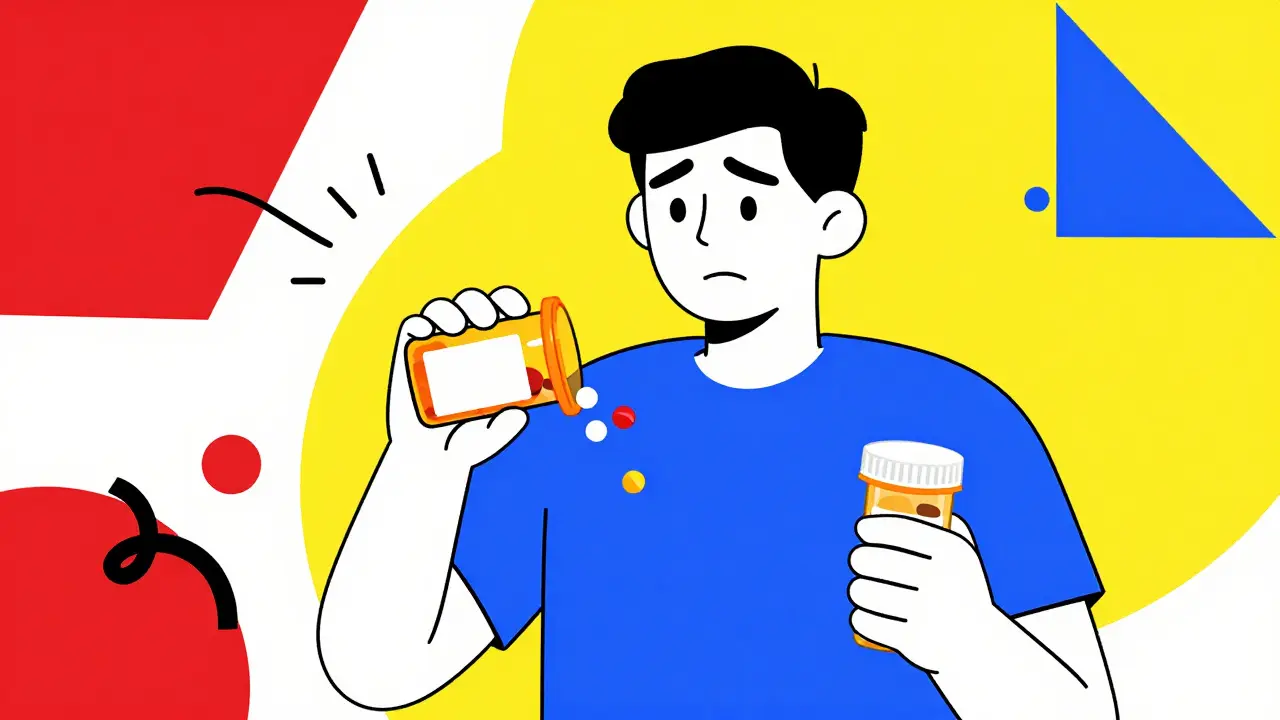
Imagine picking up your usual blood pressure pill, but the tablet is a different color or shape than what you’re used to. You take it anyway because the label says it’s the same medicine. But later, you feel dizzy or nauseous. Was it the drug? Or was it a mistake made somewhere along the way?
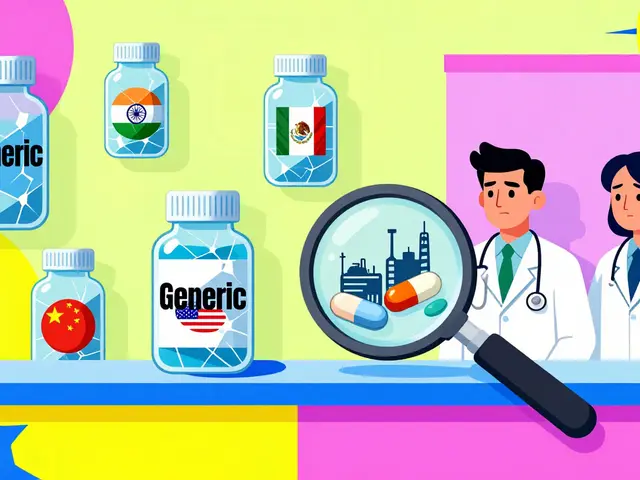
This scenario highlights a hidden risk in modern healthcare: pharmacy errors with generics. Generic drugs make up about 90% of all prescriptions filled in the United States today. They are cheaper, effective, and essential for keeping healthcare affordable. However, their sheer volume and the variations between manufacturers create unique opportunities for mistakes that can harm patients.
We need to talk about why these errors happen, how they slip through the cracks, and most importantly, what pharmacists and patients can do to stop them. This isn’t just about blaming individuals; it’s about fixing broken systems and building better safeguards.
Why Generic Medications Are Prone to Errors
To understand the problem, we first have to look at what makes generics tricky. A generic drug must be bioequivalent to its brand-name counterpart, meaning it delivers the same amount of active ingredient into the bloodstream within a similar timeframe (usually an 80-125% absorption range). The FDA strictly enforces this.
However, the inactive ingredients-the fillers, dyes, and binders-can vary wildly between manufacturers. These differences affect the pill’s appearance, size, and even how some patients tolerate it. When a pharmacy switches from one generic manufacturer to another due to supply chain issues or cost-saving measures, the physical change can confuse both staff and patients.
Consider the data. Community pharmacies experience prescription correction rates of roughly 23.1 per 10,000 prescriptions. While not every error involves a generic, the complexity introduced by multiple manufacturers amplifies specific risks. For instance, look-alike/sound-alike names and varying physical characteristics contribute significantly to dispensing form issues, which account for 14.4% of clinical errors.
| Error Category | Frequency (%) | Generic-Specific Risk Factor |
|---|---|---|
| Dosage Errors | 37.4% | Confusion between similar strength markings on different brands |
| Strength Discrepancies | 19.2% | Misreading labels with varying font sizes/styles |
| Dispensing Form Issues | 14.4% | Changes in pill color/shape causing patient rejection or confusion |
| Quantity Mistakes | 11.3% | Incorrect counting due to unfamiliar bottle layouts |
The Human Factor: Where Mistakes Slip Through
Technology helps, but humans still run the show. And humans get tired, distracted, and overwhelmed. In high-volume retail settings, pharmacists often face intense time pressure. Mandatory counseling for first-fill medications is a crucial safeguard, yet many professionals report inadequate time to conduct these sessions properly.
A study by Jenkins (2007) found that 35% of preventable adverse drug events result from inadequate drug information. More than half of these occur at the prescribing stage, where doctors might not realize a specific generic formulation interacts poorly with a patient’s other conditions. By the time the prescription reaches the pharmacy, the seed of the error has already been planted.
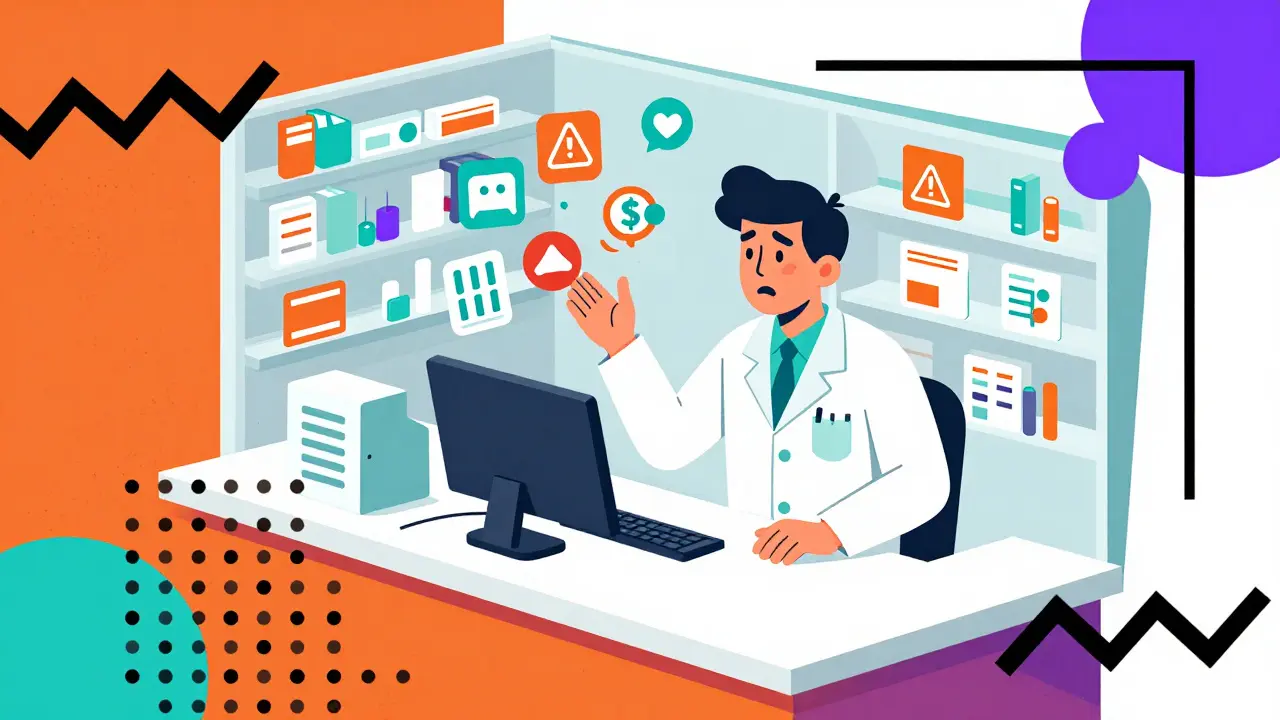
Then there’s the issue of "alert fatigue." Clinical Decision Support Systems (CDSS) are designed to flag potential problems. But when a system pops up warnings for every minor discrepancy-including routine generic substitutions-pharmacists start ignoring them. The WHO Technical Series on Safer Primary Care warns that excessive "stop alerts" can actually increase error rates because staff become desensitized to critical warnings.
Prevention Strategies That Actually Work
So, how do we fix this? We can’t eliminate generics, nor should we want to. Instead, we need robust prevention strategies that address both technology and workflow.
Bar Code Medication Administration (BCMA) is a system that scans barcodes on medication packages and patient wristbands to ensure the right drug goes to the right person. Implementing BCMA reduces potential adverse drug events by 50%. It’s not perfect, but it adds a hard checkpoint that bypasses human memory lapses.
Another powerful tool is Computerized Physician Order Entry (CPOE) is an electronic system that allows prescribers to enter orders directly into a patient's medical record, reducing handwriting errors and enabling automated checks. CPOE systems reduce medication errors by 55% in hospital settings. When combined with CDSS, they catch dosage errors and drug interactions before the prescription ever leaves the doctor’s office.
But technology alone isn’t enough. We need to return to basics: the "8 R’s of medication safety." Right patient, right drug, right time, right dose, right route, right documentation, right reason, and right response. Training staff on these principles takes about 8-12 hours, but it creates a culture of double-checking that catches errors machines miss.
Correcting Errors: The Role of Reconciliation
When an error does occur-or when a near-miss is caught-correction is vital. This is where Medication Reconciliation is the process of creating the most accurate list possible of all medications a patient is taking, including name, dose, frequency, and route, and comparing it against the physician's order.
Dr. Robert A. Tariq notes that medication reconciliation, particularly at discharge, significantly decreases medication errors. Pharmacists spending 15-20 minutes per patient on comprehensive review identify an average of 2.3 medication discrepancies per patient. For generics, this means checking if a recent manufacturer switch caused any issues and ensuring the patient understands why their pill looks different.
Community feedback suggests that mandatory counseling for first-fill generics acts as a final safeguard. Pharmacists report that 15-20% of counseling sessions catch potential misunderstandings about generic substitutions. If a patient says, "This doesn’t look like my last pill," the pharmacist has a chance to verify the order before the patient leaves.
Practical Steps for Pharmacists and Patients
If you’re a pharmacist, here are three immediate actions you can take:
- Update Your References: 42% of pharmacists report outdated formulation details in their reference systems. Maintain current resources like 'Drug Facts and Comparisons' or use updated apps like Epocrates to check for excipient changes.
- Standardize Counseling Scripts: Create brief, clear scripts for explaining generic substitutions. Focus on efficacy and appearance changes to preempt patient anxiety.
- Track Near-Misses: Only 28% of community pharmacies maintain formal error tracking. Start logging near-misses involving generics to identify patterns in your specific workflow.
If you’re a patient, you play a huge role in your own safety:
- Ask Questions: If your pill looks different, ask the pharmacist immediately. Don’t assume it’s fine.
- Keep a List: Maintain a personal list of your medications, including the manufacturer if known. Bring this to every appointment.
- Report Side Effects: If you feel worse after a generic switch, report it. It might be a rare reaction to an inactive ingredient.
The Future of Generic Safety
The landscape is evolving. The FDA’s 2022 Generic Drug User Fee Amendments (GDUFA III) include provisions for improved communication about manufacturer changes. Meanwhile, AI-powered CDSS systems are being piloted to predict patient-specific adverse reactions based on pharmacogenomics, showing a 22% additional error reduction beyond standard systems.
The WHO projects that comprehensive implementation of existing technologies could reduce medication errors by 70-75% globally by 2030. That would prevent over 1 million adverse drug events annually. It’s an ambitious goal, but achievable if we prioritize safety over speed.
Generic medications are a cornerstone of modern healthcare. But their benefits come with responsibilities. By combining smart technology, rigorous training, and open communication between pharmacists and patients, we can turn these vulnerabilities into strengths. The next time you pick up a generic, remember: your voice matters. Ask questions, stay informed, and help build a safer system for everyone.
What is the most common type of pharmacy error with generics?
Dosage errors are the most frequent, accounting for 37.4% of clinical errors. This often happens due to confusion between similar strength markings on different generic brands or misreading labels with varying fonts.
How do generic medications differ from brand-name drugs?
Generic drugs contain the same active ingredient as brand-name drugs but may have different inactive ingredients (fillers, dyes). This can result in differences in pill color, shape, and sometimes tolerance, though bioequivalence ensures similar therapeutic effects.
Can technology completely prevent generic medication errors?
No single technology eliminates all risks. While BCMA and CPOE systems reduce errors by 50-55%, alert fatigue and inconsistent database updates remain challenges. Technology works best when combined with human verification and standardized protocols.
What should I do if my generic pill looks different?
Contact your pharmacist immediately. Manufacturers often change, leading to different appearances. The pharmacist can verify if the new pill is the correct medication and explain any changes in inactive ingredients that might affect you.
How much does implementing error prevention technology cost?
Implementing Clinical Decision Support Systems (CDSS) typically costs $25,000-$75,000 for mid-sized pharmacies, with integration taking 3-6 months. However, the cost of preventing just a few serious adverse events often outweighs this investment.
What is medication reconciliation?
Medication reconciliation is the process of creating a complete and accurate list of all medications a patient is taking and comparing it against new orders. It helps catch discrepancies, especially during transitions of care like hospital discharge.