Your doctor just handed you a lab result that says Prediabetes is a metabolic condition where blood sugar levels are higher than normal but not yet high enough to be classified as type 2 diabetes. It’s not a diagnosis of doom, but it is a loud warning siren. If you ignore it, the CDC estimates there is a 50% chance you will develop full-blown type 2 diabetes within five years. But here is the good news: you can hit the brakes. You can actually reverse this condition. In fact, recent research suggests that reversing prediabetes can cut your future risk of developing type 2 diabetes by roughly 70% over the next decade.
This isn’t about starving yourself or running marathons you hate. It is about making specific, sustainable shifts in how you eat and move. The goal is to lower your blood glucose levels and improve your body’s sensitivity to insulin. Let’s look at exactly how to do that, based on the latest clinical evidence.
Understanding the Numbers: What Is Prediabetes?
Before we fix it, we need to know what we are looking at. Prediabetes is defined by specific thresholds in your blood work. If you have been diagnosed, one of these three markers was likely elevated:
- Fasting Plasma Glucose: Between 100 and 125 mg/dL (normal is under 100).
- HbA1c: Between 5.7% and 6.4% (this measures your average blood sugar over the past 2-3 months).
- Oral Glucose Tolerance Test: A 2-hour plasma glucose level between 140 and 199 mg/dL.
The scary part? More than 80% of people with prediabetes don’t even know they have it. That’s why regular check-ups matter. Once you know your numbers, you have power. You can act before the damage becomes permanent.
The Weight Myth: Why Fat Distribution Matters More Than Scale Weight
For years, the advice was simple: lose weight. And while losing 5% to 7% of your body weight is a great target, new science tells us something more nuanced. A study published in Nature Medicine revealed that you can reverse prediabetes even without significant weight loss. The key isn’t just the number on the scale; it’s where your body stores fat.
Visceral adipose tissue-the fat stored deep inside your abdomen around your organs-is the real culprit. This fat releases inflammatory chemicals that block insulin from working properly, leading to insulin resistance. People who reversed their prediabetes showed a greater reduction in this belly fat compared to those who didn’t, even if their total body weight stayed similar. So, focus less on shrinking your jeans size and more on reducing that visceral fat through diet and exercise.
Dietary Shifts: Eating for Blood Sugar Control
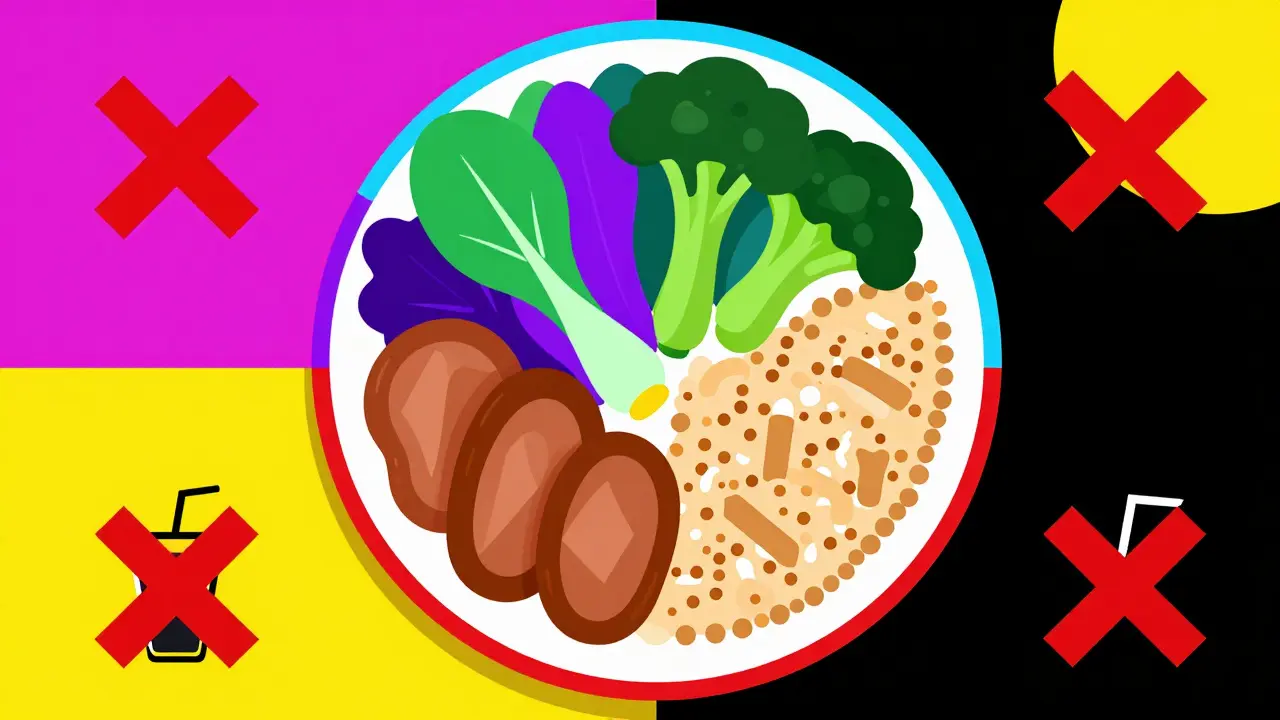
You don’t need a complicated medical diet. You need to change what fills your plate. Dr. Van Name from Yale Medicine suggests a simple visual check: if your plate is mostly beige (white rice, white bread, pasta), it’s likely spiking your blood sugar. Aim for color. Aim for green.
Here are the concrete dietary changes backed by Harvard Health Publishing and the American Diabetes Association:
- Swap Refined Grains for Whole Grains: Ditch white flour and white rice. Switch to intact whole grains like quinoa, farro, oatmeal, brown rice, and corn. These contain fiber, which slows down sugar absorption.
- Cut Added Sugars: Sugary drinks, juices, and processed snacks are quick ways to spike glucose. Water, tea, and black coffee are your best friends here.
- Fill Half Your Plate with Non-Starchy Vegetables: Leafy greens, broccoli, peppers, and zucchini add volume and nutrients without the sugar load.
- Reduce Processed Meats: Limit bacon, sausages, and deli meats. Opt for lean proteins like chicken, fish, beans, and lentils.
- Increase Fiber Intake: Legumes, fruits, and vegetables are packed with fiber. It helps regulate blood sugar levels and keeps you feeling full longer.
There is no single "best" diet for everyone. Whether you prefer Mediterranean, low-carb, or plant-based eating, the principle remains the same: minimize processed foods and maximize whole, nutrient-dense ingredients.
Movement as Medicine: The Exercise Prescription
Exercise does two things: it burns glucose for energy right now, and it makes your muscles more sensitive to insulin later. The CDC recommends at least 150 minutes of moderate-intensity activity per week. That breaks down to just 30 minutes a day, five days a week.
What counts as moderate intensity? Brisk walking, swimming, cycling, or dancing-anything that raises your heart rate and makes you break a light sweat. You don’t need a gym membership. Start with a family walk after dinner. Take the stairs instead of the elevator. The goal is consistency, not intensity. Even small increases in daily movement can significantly lower your risk.

The Power of Structured Programs: The CDC Diabetes Prevention Program
If you find it hard to stay motivated alone, you are not alone. The CDC’s national Diabetes Prevention Program (DPP) is a proven solution. Since 2012, this intensive lifestyle change program has helped thousands of people prevent or delay type 2 diabetes.
The DPP consists of a 16-week core curriculum followed by a maintenance phase. Participants work with trained lifestyle coaches via smartphone, computer, or in-person sessions. Research shows that people in these programs achieve an average weight loss of 5.6% at 12 months. Crucially, many insurance plans, including Medicare, cover the cost of these programs because they save money on long-term healthcare costs. Look for a "CDC-recognized" program in your area. As of 2023, there are over 1,600 such programs across the United States.
| Intervention Type | Effectiveness (Reversal Rate) | Evidence Strength | Key Benefit |
|---|---|---|---|
| Lifestyle Modification | 18% - 44% | Strongest | Sustainable, improves overall health |
| Pharmacological (e.g., Metformin, GLP-1) | 23% - 47% | Moderate | Rapid glucose control |
| Supplements (e.g., Magnesium) | Variable | Low to Very Low | Supportive role only |
While medications like metformin or GLP-1 receptor agonists can lower blood sugar, a 2023 systematic review found that lifestyle modification provides the strongest evidence for long-term reversal. Medications can help, but they are rarely a substitute for healthy habits. Always consult your doctor before starting any medication.
Sustaining the Change: Long-Term Success Strategies
Reversing prediabetes is a marathon, not a sprint. The biggest challenge is maintaining these changes. Studies show that keeping up lifestyle modifications for at least three years yields the most significant protective effects. Here is how to stay on track:
- Find Your "Why": Connect your actions to a deeper motivation, like playing with your grandkids or traveling without health worries.
- Track Progress: Monitor your HbA1c levels every 3-6 months. Seeing the numbers drop is powerful reinforcement.
- Build Support: Join a group, get a workout buddy, or involve your family in meal prep. Social support doubles your chances of success.
- Be Patient: Some weeks will be better than others. Don’t let one bad meal derail your entire journey. Just get back on track with the next meal.
Remember, prediabetes is reversible. It requires effort, but the reward-a life free from the complications of type 2 diabetes-is worth every step. Start today. Your future self will thank you.
Can prediabetes be completely reversed?
Yes. Clinical studies show that lifestyle changes can return blood glucose levels to normal range, effectively reversing prediabetes. This state is often referred to as remission. However, you must maintain these healthy habits, as the risk of returning to prediabetes remains if old habits resume.
How much weight do I need to lose to reverse prediabetes?
The CDC recommends losing 5% to 7% of your body weight. For example, if you weigh 200 pounds, aiming to lose 10 to 14 pounds can reduce your diabetes risk by 58%. However, recent research indicates that improving fat distribution and reducing visceral fat is equally important, even without major weight loss.
Is the CDC Diabetes Prevention Program covered by insurance?
Many insurance plans, including Medicare, cover the CDC-recognized Diabetes Prevention Program. Check with your provider to see if they offer coverage. The program typically costs $350-$500 out-of-pocket, but insurance coverage can make it free or low-cost for eligible participants.
What foods should I avoid with prediabetes?
Focus on avoiding added sugars, refined carbohydrates (white bread, white rice, pasta), sugary drinks, and processed meats. These foods cause rapid spikes in blood glucose. Instead, choose whole grains, non-starchy vegetables, lean proteins, and healthy fats.
How quickly can I see results from lifestyle changes?
You may feel more energetic within weeks of starting exercise and dietary changes. However, blood test results like HbA1c take time to reflect improvements. Expect to see meaningful changes in your labs after 3 to 6 months of consistent effort. Long-term benefits accrue when changes are sustained for years.