Most of us treat sleep like a switch we flip off at night and back on in the morning. But if you’ve ever stared at the ceiling at 3 AM, wondering why your brain won’t shut down, you know that’s not how it works. The secret isn’t usually found in a pill bottle. It’s hidden in the small, daily habits you ignore until they break. This is what experts call Sleep Hygiene, which is a set of behavioral and environmental practices designed to optimize sleep quality and duration without pharmaceutical intervention. Originally coined by Peter Hauri in 1977 at the Mayo Clinic, this concept has evolved from simple advice into a rigorous, evidence-based framework. Recent studies show that sticking to these behaviors can reduce insomnia severity by up to 40%. You don’t need a prescription to fix your sleep; you just need to change how you live.
The Four Pillars of Effective Sleep Behavior
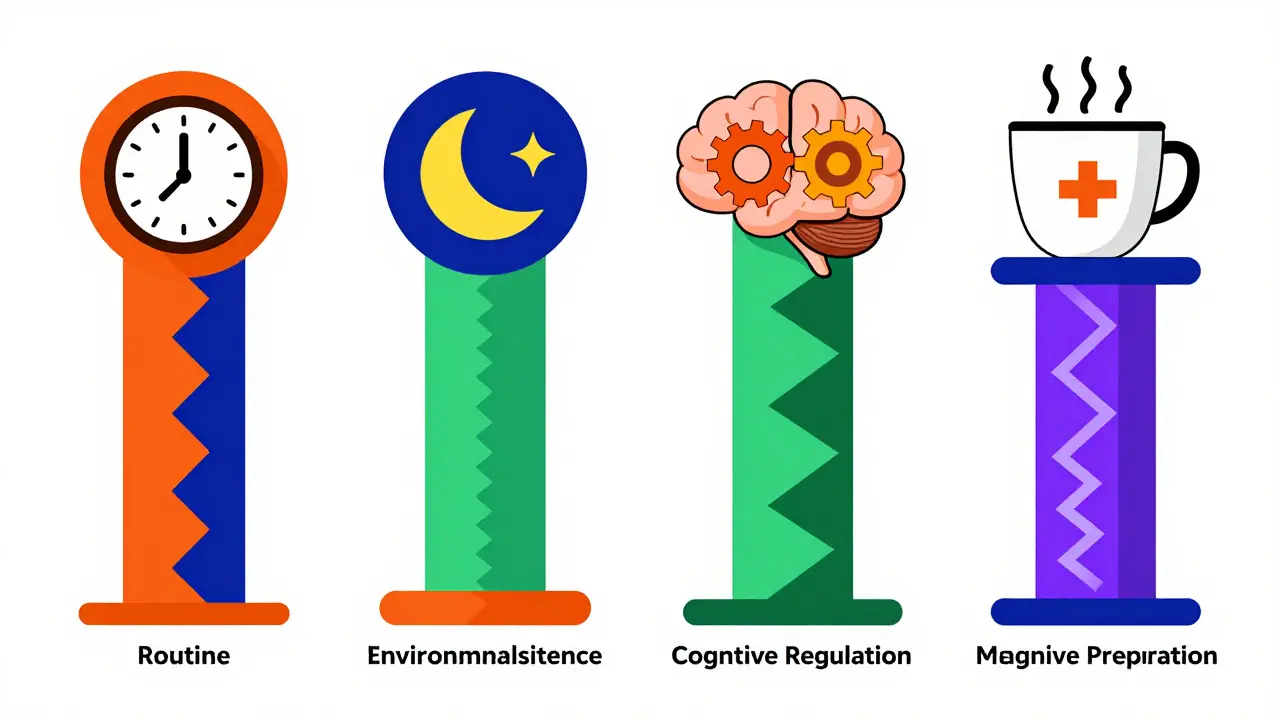
Sleep hygiene isn’t just about buying blackout curtains. It rests on four specific behavioral domains that work together to signal your body it’s time to rest. Think of these as the foundation of your nightly routine. If one pillar is weak, the whole structure wobbles.
- Routine Consistency: Your body runs on a clock called the circadian rhythm, which is the internal biological cycle that regulates sleep-wake patterns over a 24-hour period. To keep this clock accurate, you must go to bed and wake up within a 30-minute window every single day, even on weekends. Research shows consistent wake times are the strongest predictor of good sleep quality (β = -0.34).
- Environmental Optimization: Your bedroom should feel like a cave. Keep the temperature between 60-67°F (15.6-19.4°C) and ensure light exposure stays below 5 lux during sleep. This cool, dark environment helps lower your core body temperature, a necessary step for falling asleep.
- Cognitive Regulation: What happens in the hour before bed matters more than you think. Reducing "perseverative cognition"-that loop of worrying or planning-is critical. High pre-sleep cognitive arousal is linked to significantly worse sleep outcomes (β = -0.41).
- Physiological Preparation: Treat your body like an engine that needs cooling down. Avoid caffeine 8 hours before bedtime, limit fluids 2 hours prior to prevent nighttime bathroom trips, and skip heavy meals within 3 hours of sleep.
Implementing five or more of these practices consistently can drop your score on the Pittsburgh Sleep Quality Index (PSQI) by 2.1 points, moving you from clinically impaired sleep to a healthy range. It’s not magic; it’s biology.
Why Willpower Fails: The Science Behind the Struggle
If sleep hygiene is so effective, why do most people fail at it? The answer lies in the gap between intention and action. A 2023 study highlighted that while many behaviors help, individual variability plays a huge role. For example, going to bed hungry helped 63% of participants but hurt 22%. One size does not fit all.
The biggest hurdle is consistency across weekends. Working adults often use Saturday nights to "catch up" on sleep, staying up late and sleeping in. This creates "social jetlag," confusing your circadian rhythm and making Monday mornings harder. Another major barrier is technology. Only 32% of smartphone users successfully stop using screens one hour before bed. The blue light emitted by phones suppresses melatonin production, the hormone that tells your body it’s time to sleep. However, new data suggests that simply wearing blue-light filtering glasses only reduces sleep onset latency by 4-7 minutes. The real issue isn’t just the light; it’s the mental stimulation from social media and emails.
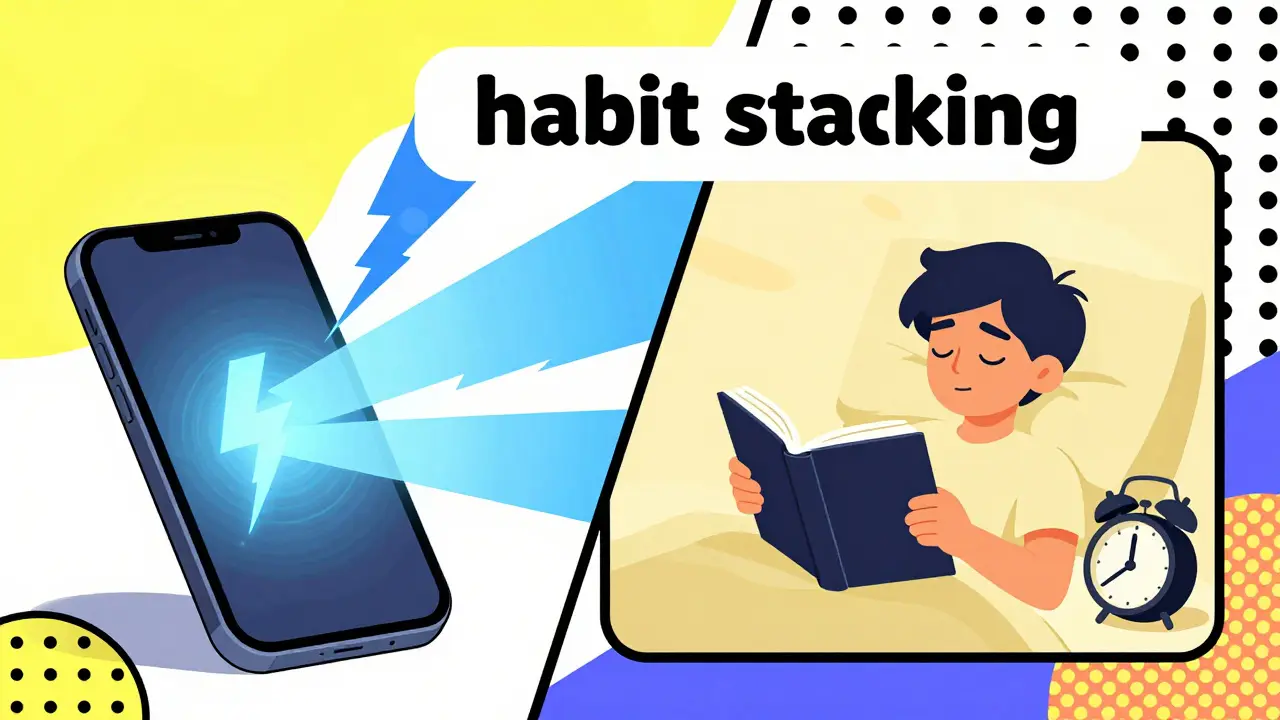
To beat this, you need strategies that bypass willpower. "Habit stacking" is highly effective. Pair a new sleep behavior with an existing habit. For instance, "After I brush my teeth, I immediately put my phone in the kitchen." This "if-then" planning increases adherence rates to 63%. You aren’t relying on motivation; you’re building a automatic sequence.
| Method | Effect Size | Time to Benefit | Risk of Dependence |
|---|---|---|---|
| Sleep Hygiene | Moderate (d = 0.35) | 2-4 weeks | None |
| CBT-I (Cognitive Behavioral Therapy for Insomnia) | Large (d = 0.81) | 4-8 weeks | None |
| Zolpidem (Prescription Medication) | High Initial Impact | First week | 30% after 8 weeks |
As the table shows, sleep hygiene is slower than medication but safer long-term. Drugs like zolpidem might knock you out faster, but they carry a risk of dependence. Sleep hygiene builds resilience. It doesn’t just treat tonight’s bad sleep; it prevents tomorrow’s.
Beyond Basics: When Hygiene Isn't Enough
It’s important to be realistic. Sleep hygiene alone is often insufficient for treating chronic clinical insomnia. Dr. Rachel Salas from Johns Hopkins University notes that hygiene is "necessary but insufficient" for severe cases. It serves as the foundation upon which more intensive therapies are built.
If you have a PSQI score above 8, indicating severe sleep disturbance, basic hygiene changes might not cut it. In these cases, Cognitive Behavioral Therapy for Insomnia (CBT-I) is the gold standard. CBT-I incorporates sleep hygiene but adds cognitive restructuring to challenge negative thoughts about sleep. Sleep hygiene components actually account for 45-60% of CBT-I’s effectiveness. So, you’re not wasting time on hygiene; you’re doing the first half of the job.
Experts also warn against the "paradoxical effect." About 29% of users report that focusing too hard on sleep hygiene increases their anxiety. If you’re obsessively tracking your sleep or stressing over whether your room is exactly 65 degrees, you’re creating cognitive arousal-the very thing you’re trying to avoid. Keep it simple. Aim for progress, not perfection.
Practical Steps to Start Tonight
You don’t need to overhaul your life overnight. Start with the highest-impact behaviors. Based on current data, here is your actionable checklist:
- Fix Your Wake Time: Pick a time you can stick to 7 days a week. Set two alarms if you have to. This anchors your circadian rhythm.
- Create a Buffer Zone: Establish a 60-minute wind-down period before bed. No work emails, no intense arguments, no scrolling. Read a physical book or listen to calm music instead.
- Optimize Light Exposure: Get bright natural sunlight within 30 minutes of waking up. This reinforces your body clock. At night, dim the lights an hour before bed.
- Manage Caffeine: If you wake up at 7 AM, your last coffee should be before 11 PM. Caffeine has a half-life of 5-6 hours, meaning half of it is still in your system at midnight.
- Track Progress: Use a simple sleep diary or an app like Sleep Cycle or ShutEye. Tracking for 7-10 days establishes your baseline. Noticeable improvements usually appear after 14-21 days of consistency.
Remember, the goal is not just to fall asleep faster, but to stay asleep and wake up refreshed. By addressing the behavioral roots of poor sleep, you take control back from the disorder. It takes patience, but the payoff is a clearer mind and a healthier body.
How long does it take for sleep hygiene to work?
You typically need to practice consistent sleep hygiene for 2 to 4 weeks to see measurable improvements. While some people notice better sleep onset latency within the first few days, establishing a new circadian rhythm and breaking old habits usually requires at least 14 to 21 days of strict adherence.
Is sleep hygiene enough to cure insomnia?
For mild sleep disturbances, yes. However, for chronic clinical insomnia (PSQI > 8), sleep hygiene alone is often insufficient. It is considered a "weak recommendation" for standalone treatment of chronic insomnia by the American Academy of Sleep Medicine. In these cases, it should be combined with Cognitive Behavioral Therapy for Insomnia (CBT-I) for best results.
What is the most important sleep hygiene rule?
The single most impactful behavior is maintaining a consistent wake time every day, including weekends. Studies show that consistent wake times are the strongest predictor of sleep quality, helping to anchor your circadian rhythm and regulate sleep pressure.
Does avoiding screens really help sleep?
Yes, but primarily due to mental stimulation rather than just blue light. While blue light suppresses melatonin, recent meta-analyses suggest that blue-light blocking glasses offer minimal benefit (reducing sleep onset by only 4-7 minutes). The bigger issue is the cognitive arousal caused by engaging content on social media or work emails, which keeps your brain active when it should be winding down.
Can exercise improve sleep quality?
Yes, regular exercise improves sleep quality for most people. Contrary to older advice suggesting you avoid exercise 3 hours before bed, recent studies indicate that evening exercise can actually improve sleep for many individuals. However, high-intensity workouts close to bedtime may cause physiological arousal that interferes with sleep for some, so listen to your body's response.