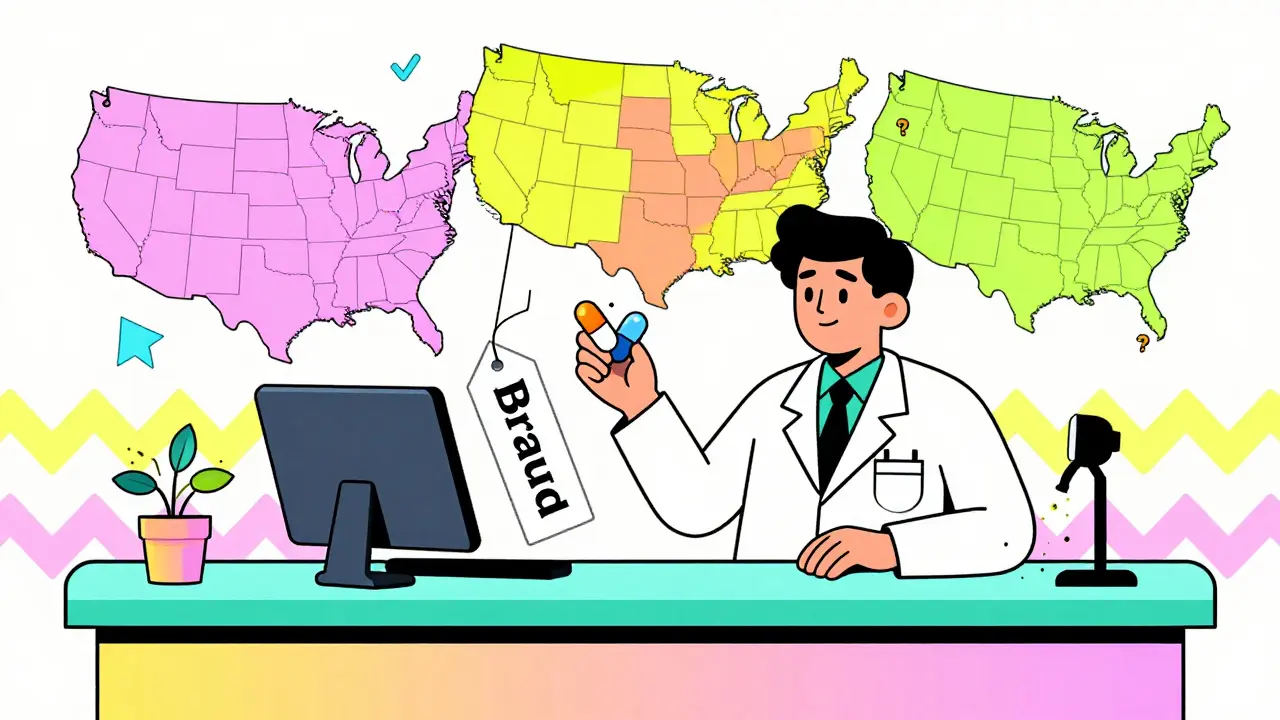
When you fill a prescription, you might not think about whether the drug you get is the brand name or the generic version. But behind the counter, pharmacists are navigating a maze of 51 different sets of rules - one for each state and Washington, D.C. - that dictate exactly when and how they can swap a brand-name drug for a cheaper generic. These aren’t just minor policy differences. They affect your out-of-pocket costs, your safety, and even whether your pharmacist feels comfortable making the switch at all.
How Generic Substitution Laws Work
Generic drugs are chemically identical to their brand-name counterparts. They work the same way, have the same side effects, and are held to the same FDA standards. The only difference? Price. Generics cost, on average, 80% less. That’s why Congress passed the Hatch-Waxman Act in 1984 - to make it easier for generics to enter the market and slash drug spending.
But here’s the catch: even though the federal government approves generics, each state controls what pharmacists can do when filling prescriptions. Some states force pharmacists to substitute generics unless the doctor says no. Others leave it up to the pharmacist’s discretion. And a few require you to give your permission before any swap happens.
The result? A patchwork of rules that makes it hard for pharmacists to keep up. One pharmacist in Ohio might be required to substitute automatically. The same pharmacist, working remotely for a patient in Oklahoma, could be legally blocked from substituting unless the prescriber or payer gives written approval. That’s not a glitch - it’s the system.
Mandatory vs. Permissive Substitution
There are two main models for how states handle substitution: mandatory and permissive.
Mandatory substitution means the pharmacist must switch to the generic unless the prescriber writes "dispense as written" on the prescription. Nineteen states - including New York, Florida, and Illinois - use this model. The idea is simple: if the generic is approved and available, use it. It saves money. The Congressional Budget Office estimates that states with mandatory substitution laws see 5-10% higher generic use than permissive ones. That translates to over $1 billion in annual savings.
Permissive substitution means the pharmacist can substitute, but doesn’t have to. Thirty-one states and D.C. operate this way. In these states, pharmacists often default to the brand name unless they’re told otherwise. This puts the burden on the patient or prescriber to push for the cheaper option.
Here’s the problem: most patients don’t know they’re being charged more than necessary. A 2023 University of Michigan poll found that only 38% of patients in permissive states even realized they could ask for a generic. In mandatory states, that number jumps to 71%.
Formularies: Positive vs. Negative
Not all states treat generics the same way. Some use what’s called a positive formulary - meaning they list the specific generic drugs that are approved for substitution. Others use a negative formulary - listing only the drugs where substitution is banned.
California uses a positive formulary based on the FDA’s Orange Book. If a generic has an "A" rating (therapeutically equivalent), it can be substituted. New York, on the other hand, uses a negative formulary that bans substitution for certain high-risk drugs like warfarin or levothyroxine, even if they’re rated "A."
Some states, like Oklahoma, go further. They require written authorization from either the prescriber or the payer (insurance company) before any substitution can happen - even for a simple antibiotic. That means extra phone calls, delays, and frustration for everyone involved.
Biologics and the New Frontier
Biologics - drugs made from living cells, like Humira or Enbrel - are a whole different ballgame. Unlike small-molecule generics, biosimilars aren’t exact copies. They’re "similar but not identical." That’s why 45 states (including D.C.) have created special rules for them.
In most of these states, pharmacists must notify the prescriber within a few days after substituting a biosimilar. California requires an electronic entry that the doctor can access. Texas mandates a written notice within 72 hours. In 38 states, patients must also be notified - either in writing or verbally.
And here’s the kicker: no state treats biosimilars exactly like regular generics. Even though the FDA has approved 32 biosimilars since 2015, they’re still only filling 14% of eligible prescriptions. Why? Because the rules are too confusing. Pharmacists fear liability. Prescribers worry about tracking. Patients don’t understand the difference.
Liability and Legal Risks
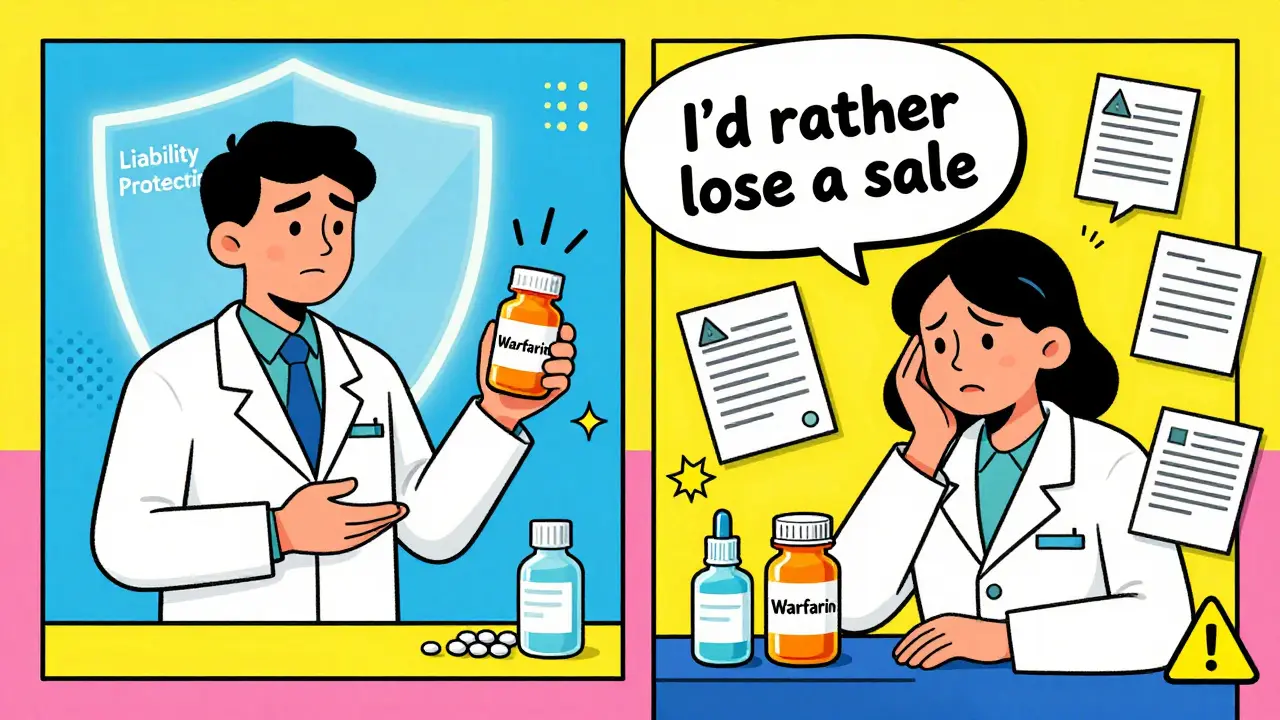
Pharmacists aren’t just following rules - they’re risking their licenses. In 24 states, there’s no legal protection if a patient has a bad reaction after a substitution. That means if a pharmacist swaps a drug that’s technically approved but causes an issue, they could be sued.
Connecticut pharmacist Sarah Jennings told Pharmacy Times in February 2024 that she refuses to substitute warfarin - even when guidelines say it’s safe - because she has no liability protection. "I’d rather lose a sale than risk a lawsuit," she said.
Meanwhile, 26 states have laws that shield pharmacists from liability as long as they follow state rules. That’s a big reason why chain pharmacies - with legal teams and compliance departments - handle substitutions more confidently than independent pharmacies. According to a 2023 survey, 42% of chain pharmacists reported substitution errors in the past year. For independents? It was 68%.
Notification and Consent Rules
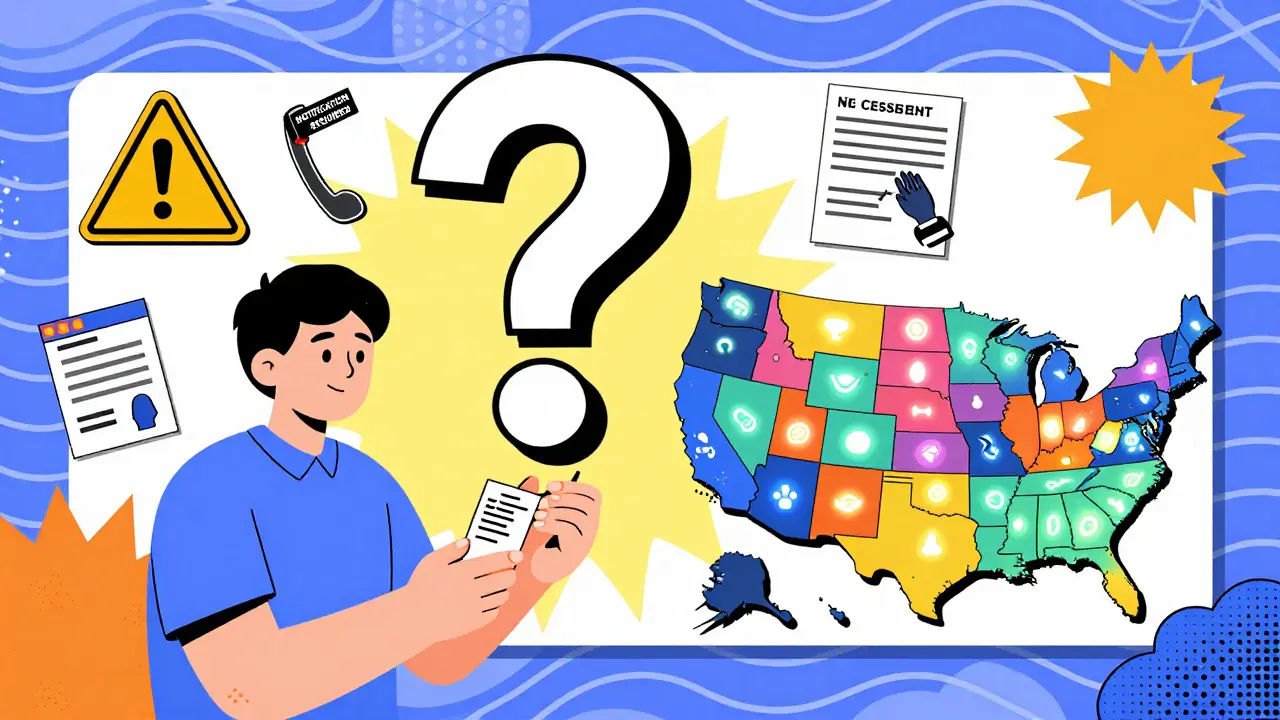
Do you know when your pharmacist swaps your drug? In 31 states and D.C., you’ll get notified - either on the label, in a letter, or via phone call. In 20 states? You might never know.
Only seven states plus D.C. require your explicit consent before substitution. That means the pharmacist has to ask you, you have to say yes, and they have to document it. In the other 43 states, consent is assumed.
Patients in states with consent rules are twice as likely to feel informed about their meds, according to the same 2023 Michigan poll. But that also means more paperwork, more delays, and more burden on pharmacists who are already stretched thin.
Technology and the Future
Trying to keep up with 51 sets of rules is exhausting. Pharmacists spend an average of 8.2 hours a month just reviewing state laws. New pharmacists need 4-6 weeks of training before they can handle substitutions across multiple states.
Some systems are helping. The ScriptPro SP 200, for example, updates its substitution rules in real-time based on the state where the prescription is filled. A 2024 study found it reduced errors by 37% in a 12-state trial.
California’s electronic notification system for biosimilars cut substitution errors by 32% after rollout in 2022. But only 28 states have fully integrated these rules into their electronic health record systems. The rest? Still relying on paper, phone calls, and memory.
What’s Next?
The National Association of Boards of Pharmacy launched a project in January 2024 to simplify this mess. Their goal? Reduce 51 different rules down to just three regional models by 2027. The FDA is pushing for it too. Commissioner Robert Califf told Congress in February 2024 that "inconsistent state substitution laws represent the single greatest barrier to biosimilar adoption."
Meanwhile, 9 states passed laws in 2023-2024 to align their biologic and small-molecule rules. Texas, Illinois, and Pennsylvania now treat them the same way - no extra notifications, no special consent. It’s a step forward.
But change moves slowly. The Congressional Budget Office estimates harmonized laws could save $14.3 billion over 10 years. Right now, pharmacy chains spend $1.2 million per state just to stay compliant. That’s $61 million a year just to navigate bureaucracy.
For patients, the message is simple: ask. If you’re being charged more for a brand-name drug, ask if a generic is available. If you’re on a biologic, ask if a biosimilar is an option. And if your pharmacist hesitates? Ask why. Chances are, it’s not about safety - it’s about the rules.
Can a pharmacist substitute a generic drug without telling me?
In 20 states and Washington, D.C., pharmacists are not required to notify you when they substitute a generic drug. In the other 31 states and D.C., they must inform you - either on the prescription label, in writing, or by phone. If you want to know whether your drug was switched, always check the label or ask your pharmacist directly.
Why do some states require patient consent for substitution?
Seven states and D.C. require explicit patient consent to ensure transparency and patient autonomy. These states believe patients have a right to know and approve any change in their medication, especially for chronic conditions like diabetes or heart disease. While this increases trust, it also adds administrative steps that slow down the process.
Are biosimilars treated the same as regular generics in all states?
No. All 56 U.S. jurisdictions (including D.C. and Puerto Rico) treat biosimilars differently than small-molecule generics. Forty-five states require prescriber notification after a biosimilar substitution, and 38 require patient notification. None allow automatic substitution without additional steps. This is because biosimilars are more complex and not considered interchangeable by default.
What is the FDA’s Orange Book, and why does it matter?
The FDA’s Orange Book lists approved drug products with therapeutic equivalence evaluations. A drug rated "A" means it’s considered interchangeable with the brand-name version. Most states base their substitution rules on this list. But 18 states add their own criteria - like banning substitution for certain high-risk drugs - even if the FDA says it’s safe.
Do I have a right to request a brand-name drug even if a generic is available?
Yes. In every state, you can ask for the brand-name drug even if a generic is available and approved. The pharmacist must fill your request. However, your insurance may not cover the full cost, and you may have to pay more out of pocket. Some prescribers also write "dispense as written" on the prescription to prevent substitution.
Why do some pharmacists refuse to substitute certain drugs?
Pharmacists may refuse substitution for drugs with narrow therapeutic indexes - like warfarin, levothyroxine, or seizure medications - because small changes in dosage can cause serious side effects. Even if the generic is FDA-approved, some pharmacists avoid substitution due to liability concerns, especially in states without legal protection. Others simply follow prescriber preferences or state rules that restrict substitution.




Sonja Stoces
February 12, 2026 AT 22:54Annie Joyce
February 14, 2026 AT 00:26Rob Turner
February 15, 2026 AT 05:46Gabriella Adams
February 16, 2026 AT 08:25Rachidi Toupé GAGNON
February 17, 2026 AT 08:38Pat Mun
February 17, 2026 AT 18:35andres az
February 19, 2026 AT 13:42Steve DESTIVELLE
February 21, 2026 AT 04:34athmaja biju
February 23, 2026 AT 01:27Robert Petersen
February 24, 2026 AT 04:52Craig Staszak
February 25, 2026 AT 12:34alex clo
February 26, 2026 AT 19:18Alyssa Williams
February 28, 2026 AT 10:49Stacie Willhite
March 1, 2026 AT 16:41