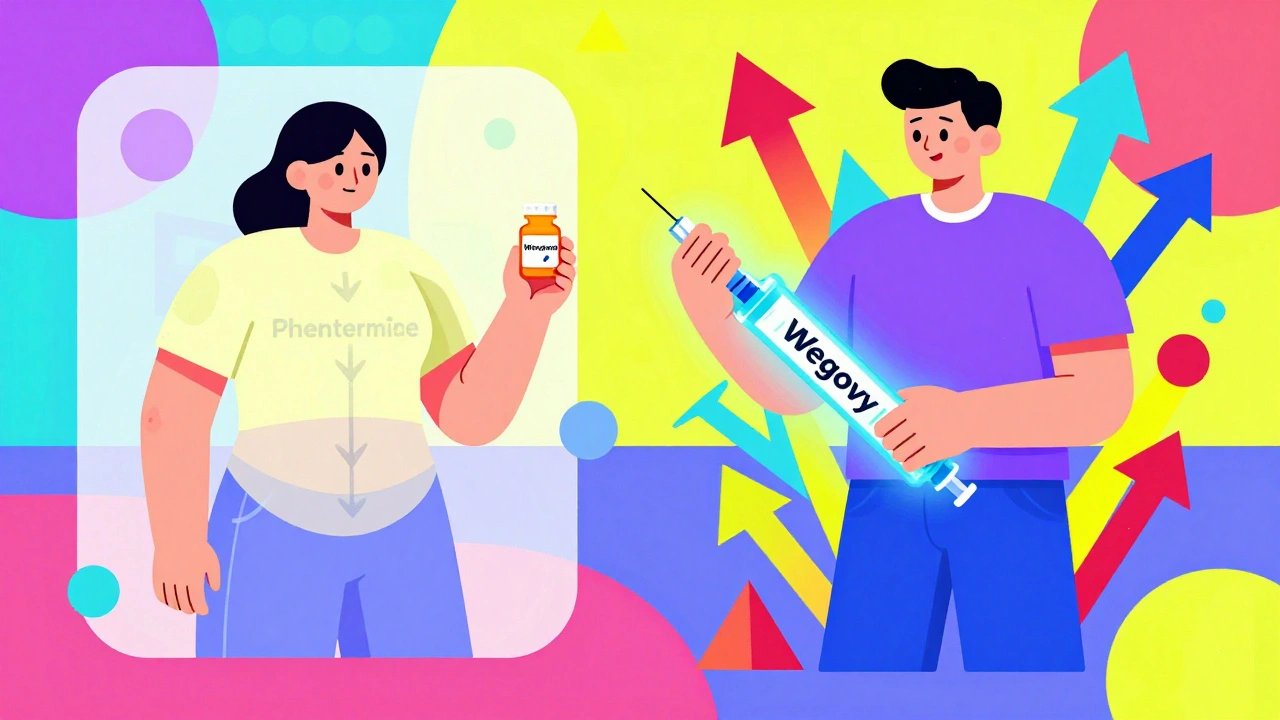
When it comes to losing weight, not all pills and injections are created equal. In 2025, the conversation around weight loss meds has shifted dramatically. A decade ago, if someone asked for help losing weight, you might have pointed them to a prescription for phentermine or a bottle of orlistat. Today, the spotlight is on GLP-1 agonists-drugs like Wegovy, Zepbound, and Saxenda-that promise far more dramatic results. But are they really better? And at what cost? This isn’t just about which drug works faster. It’s about who they work for, who can afford them, and what happens when you stop taking them.
How GLP-1 Agonists Actually Work
GLP-1 agonists mimic a hormone your body already makes-glucagon-like peptide-1. This hormone tells your brain you’re full, slows down how fast your stomach empties, and helps your pancreas release insulin when you eat. That’s why these drugs don’t just suppress appetite-they change how your body handles food. Semaglutide (Wegovy) and tirzepatide (Zepbound) are the heavy hitters here. In clinical trials, people using Wegovy lost around 15% of their body weight. Zepbound, a newer dual-acting drug, pushed that number to nearly 21%. That’s not a few pounds. That’s enough to move someone from obese to overweight, or even into a normal BMI range.
These aren’t quick fixes. They’re injected once a week, starting at a low dose and slowly climbing over 4 to 5 months. The goal is to reduce nausea and other side effects, which affect up to half of users during the ramp-up phase. People often describe it like riding a rollercoaster-feeling sick at first, then gradually getting used to it. But the trade-off is real: if you can stick with it, the results are unmatched by anything before.
What the Older Drugs Can (and Can’t) Do
Before GLP-1 agonists, the options were limited. Orlistat (Alli, Xenical) blocks fat absorption-so if you eat a burger, some of the grease just passes through you. It’s not pretty, and it doesn’t make you feel less hungry. On average, users lose about 5-10% of their weight. Phentermine, a stimulant, suppresses appetite but wears off quickly and carries risks like increased heart rate and insomnia. Qsymia (phentermine-topiramate) combines two drugs to hit appetite and cravings from different angles. It can deliver up to 10% weight loss, but side effects include tingling in hands and feet, memory fog, and mood changes.
Contrave (naltrexone-bupropion) targets the brain’s reward system. It’s designed for people who binge eat or crave food emotionally. It works for some, but studies show only about 5-8% weight loss on average. And unlike GLP-1 drugs, none of these older options have been shown to reduce heart disease risk or improve blood sugar control in people without diabetes.
Real-World Results vs. Clinical Trial Hype
Here’s the gap no one talks about enough: clinical trials are run under perfect conditions. Patients get regular check-ins, counseling, and strict adherence monitoring. Real life? People miss doses. They get scared by side effects. They can’t afford the monthly bill. A 2024 study from NYU Langone tracked over 50,000 people on GLP-1 drugs and found that after six months, the average weight loss was only 4.7%. After a full year, it climbed to 7%. That’s less than half of what the trials promised.
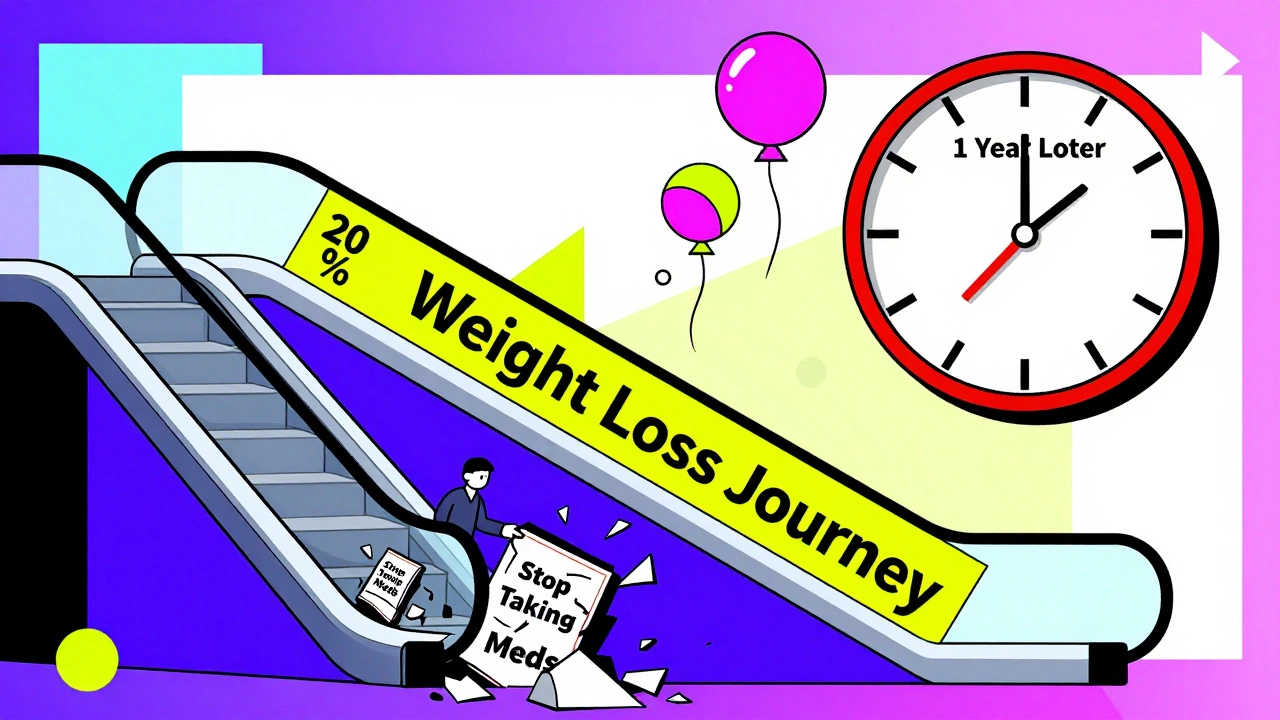
Why? Because 70% of people stop taking these drugs within a year. Not because they didn’t lose weight-but because the nausea didn’t go away, or their insurance stopped covering it, or they just couldn’t keep up with weekly injections. Even those who stick with it often regain weight once they stop. Studies show 50-100% of lost weight comes back within a year of discontinuation. That’s not failure. That’s biology. These drugs don’t reprogram your metabolism-they temporarily alter your hunger signals. When you stop, your body goes back to its old habits.
Cost and Access: The Hidden Barrier
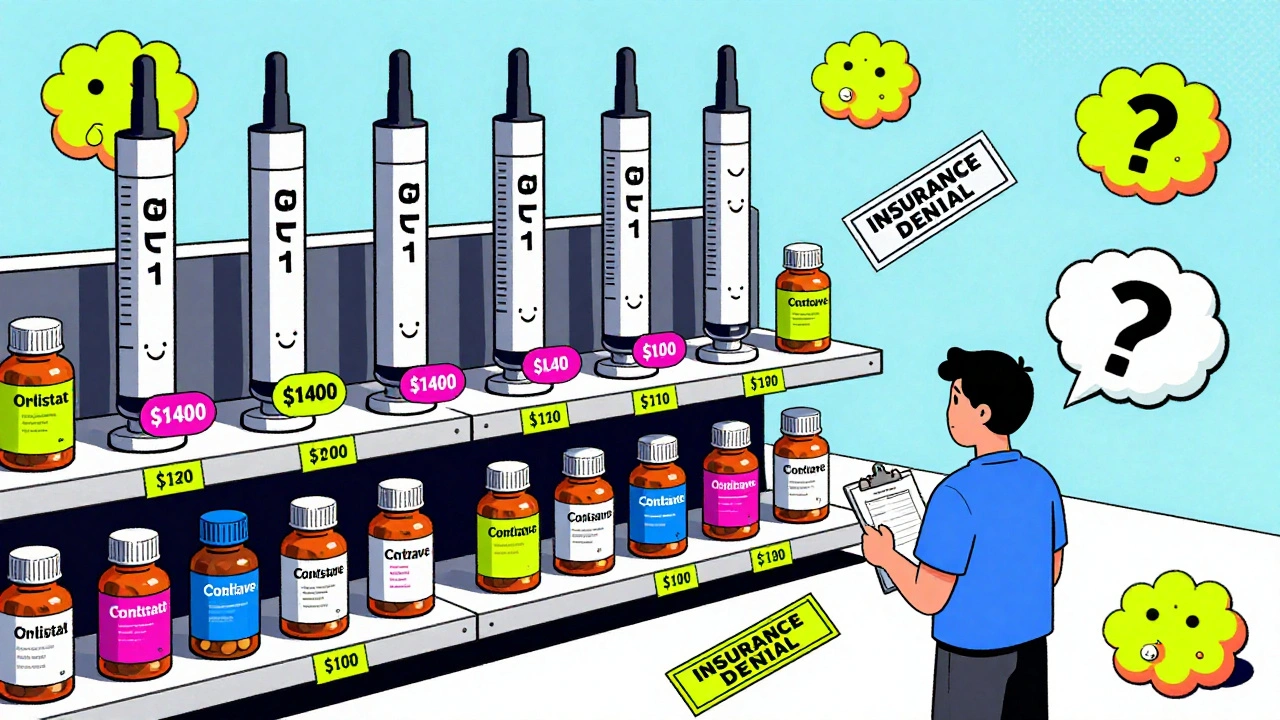
Wegovy and Zepbound cost between $1,000 and $1,400 a month without insurance. In Australia, where many people pay out-of-pocket, that’s more than a mortgage payment for some. Even with insurance, coverage is a nightmare. Only 28% of private insurers in the U.S. cover these drugs for weight loss without strict requirements-like having a BMI over 35 and at least one other health condition like high blood pressure or sleep apnea. Many people are denied outright. Others get approved but only after months of paperwork, appeals, and letters from doctors.
Compare that to phentermine, which can cost as little as $10 a month with a generic prescription. Orlistat is available over the counter for under $50. The price difference isn’t just about money-it’s about equity. Who gets to lose weight easily? The people who can afford it. The rest are left with outdated options or no options at all.
Who Should Use What?
If you’re looking to lose 10-15 pounds and have no major health issues, an older drug like phentermine or Contrave might be enough. They’re cheaper, easier to take, and come with fewer side effects for some people. But if you have obesity (BMI ≥30) and have tried diet and exercise without success, GLP-1 agonists are the most effective tool we have right now.
They’re especially valuable if you also have type 2 diabetes. Wegovy and Ozempic (the same drug, different dose) improve blood sugar control and lower heart attack risk. That’s a rare double win. But if you’re needle-averse, have a history of severe nausea, or can’t handle the cost, these drugs aren’t for you. And if you’re hoping for permanent weight loss without surgery, you’re setting yourself up for disappointment. These are maintenance tools, not cures.
The Future: What’s Coming Next
Science isn’t standing still. Retatrutide, a triple agonist targeting GLP-1, GIP, and glucagon, showed up to 24% weight loss in early trials. That’s close to what bariatric surgery achieves. MariTide, a new monoclonal antibody from Amgen, is entering Phase 3 trials in 2025 and could offer a non-injection option. But here’s the catch: even if these drugs work better, they’ll still cost the same-or more. And without systemic changes in insurance coverage and drug pricing, they’ll still be out of reach for most people.
Bariatric surgery remains the gold standard for durable, long-term weight loss. A 2024 study found surgery patients lost 24% of their body weight over two years-nearly three times what most GLP-1 users achieve. And unlike drugs, the effects last for decades. But surgery isn’t for everyone. It’s invasive, requires lifelong dietary changes, and carries its own risks. That’s why GLP-1 drugs are so important: they offer a middle ground. Not perfect, not permanent, but powerful.
What You Need to Know Before Starting
- Start low and go slow. Dose escalation takes months. Don’t rush it.
- Nausea is common. Anti-nausea meds like ondansetron can help during the first few weeks.
- Insurance denials are normal. Work with a specialty pharmacy-they know how to fight for coverage.
- These drugs work best with lifestyle changes. You still need to eat well and move more.
- Plan for the long haul. If you stop, you’ll likely regain weight. Be ready for that.
There’s no magic bullet. But if you’re serious about losing weight and have the resources to stick with it, GLP-1 agonists are the most effective option available today. Just know what you’re signing up for-not just the benefits, but the costs, the side effects, and the reality that this isn’t a finish line. It’s a long-term commitment.
Are GLP-1 agonists better than older weight loss drugs?
Yes, in terms of weight loss effectiveness. GLP-1 agonists like Wegovy and Zepbound typically lead to 15-20% body weight loss in clinical trials, while older drugs like orlistat, phentermine, and Contrave usually result in 5-10%. GLP-1 drugs also improve blood sugar and reduce heart disease risk, which older drugs do not. However, they require injections and cost significantly more.
Why do so many people stop taking GLP-1 drugs?
Three main reasons: cost, side effects, and lack of insurance coverage. Monthly prices range from $1,000-$1,400, and many insurers deny coverage unless you have diabetes or severe obesity. Side effects like nausea, vomiting, and diarrhea affect up to 50% of users, especially during dose increases. A 2024 study found 70% of patients discontinue within a year.
Can I take GLP-1 agonists if I don’t have diabetes?
Yes. Wegovy and Zepbound are FDA-approved specifically for chronic weight management in adults with obesity or overweight (BMI ≥27) with at least one weight-related condition. You don’t need to have diabetes to qualify. However, insurance coverage is often tied to diabetes diagnosis, making access harder for non-diabetic patients.
What happens if I stop taking Wegovy or Zepbound?
Most people regain the weight they lost. Studies show 50-100% of lost weight returns within a year of stopping. These drugs don’t permanently change your metabolism-they temporarily reduce hunger and slow digestion. Once you stop, your body returns to its previous state. That’s why they’re meant for long-term use, not short-term fixes.
Are there non-injection options for GLP-1 drugs?
Yes. Semaglutide is also available as an oral tablet called Rybelsus, but it’s only approved for type 2 diabetes, not weight loss. For weight loss, injections are still the standard. However, new oral GLP-1 drugs are in development, with some expected to reach the market by 2027. For now, weekly injections are the only approved form for weight loss.
There’s no one-size-fits-all solution. The best weight loss medication is the one you can stick with safely, affordably, and consistently. For many, that’s still lifestyle changes. For others, it’s a GLP-1 agonist. For those with severe obesity, surgery may be the most effective path. The key is knowing your options-and your limits.



Jessica Baydowicz
December 5, 2025 AT 11:31Okay but have y’all seen the TikTok hauls of people buying Wegovy on the black market? 😅 I know someone who got hers from a guy in a parking lot in Texas-$300 for a 4-week supply. She said it felt like winning the lottery… until she started puking every morning. Still, she’s down 28 lbs. Wild times.
Elizabeth Crutchfield
December 5, 2025 AT 15:59i just took orlistat for 3 months and let me tell u… it was like my butt was haunted. like… literally. i had to carry extra pants to work. but i lost 11 lbs and i didnt cry once. worth it? idk. but i didnt die either lol.
Ben Choy
December 7, 2025 AT 03:13I’ve been on semaglutide for 8 months now. Started at 240 lbs, now at 187. The nausea was brutal the first month-had to sleep with a bucket next to the bed. But once it settled, it was like my brain finally got the memo: ‘You’re not starving.’ I still eat carbs, still drink wine, just… less. And I don’t crave junk anymore. It’s not magic. It’s just… quieter hunger. 🙏
Emmanuel Peter
December 7, 2025 AT 17:16Let’s be real-this whole GLP-1 thing is just Big Pharma’s way of turning obesity into a lifetime subscription service. You think you’re ‘losing weight’? Nah. You’re just renting your appetite back from a $1,400/month lease. And when you default? Boom. You’re back to being the person you were before, but now you’re emotionally dependent on a needle. This isn’t medicine. It’s a pyramid scheme with syringes.
Ashley Elliott
December 7, 2025 AT 21:48Just wanted to say-this post is SO well-researched. Thank you. I’ve been on Wegovy since January, and I’ve lost 22 lbs. But I also have PCOS, and my doctor told me it’s the first thing that’s actually helped with my insulin resistance. The cost? Yeah, it’s insane. I got approved through Medicaid after 6 appeals. I cried when I got the email. I don’t think people realize how much emotional labor goes into just getting access to this stuff. It’s not just ‘take a pill.’ It’s a battle.
Chad Handy
December 8, 2025 AT 14:17Look, I’ve been in the weight loss game since 2012. I’ve done keto, intermittent fasting, juice cleanses, HCG drops, even that weird cabbage soup diet. I’ve lost 80 lbs and gained back 110. I’ve been to therapists, nutritionists, hypnotherapists, and a psychic who told me my ‘weight is tied to my mother’s unresolved grief.’ I’m 42 now. I’m tired. I don’t want to ‘fix’ myself anymore. I just want to be able to walk up the stairs without panting. If a $1,400 shot lets me do that? Fine. I’ll take it. But don’t tell me I’m ‘lazy’ or ‘undisciplined’-I’ve been trying for 12 years. This isn’t a moral failing. It’s biology. And if you’re not paying for it, you don’t get to judge.
Augusta Barlow
December 10, 2025 AT 08:17Have you ever stopped to think that maybe these drugs are just part of a larger plan? The FDA approved them right after the pandemic, right when everyone was gaining weight from stress and Zoom calls. Coincidence? I don’t think so. Who benefits from a population that’s dependent on expensive injections? Insurance companies? Pharma CEOs? The medical-industrial complex? And why are they pushing this over surgery? Because surgery is a one-time cost. This? This is recurring revenue. They’re not trying to cure obesity-they’re trying to monetize it. Wake up.
Joe Lam
December 11, 2025 AT 21:08Let’s cut through the fluff. If you’re using GLP-1 agonists and not doing strength training, you’re losing muscle, not fat. The 20% weight loss numbers? They include water, lean mass, and gut contents. Real fat loss? More like 8-12%. And if you’re not tracking macros, you’re just eating the same amount of calories, just less volume. These drugs don’t make you healthy-they make you skinny. Big difference. And if you think this is sustainable? You’re delusional.
Jenny Rogers
December 12, 2025 AT 02:11It is an ethical imperative to acknowledge that the commodification of bodily autonomy under the guise of medical advancement constitutes a profound violation of human dignity. The pharmaceutical industry, in its unrelenting pursuit of profit, has succeeded in pathologizing normal human variation under the banner of ‘obesity,’ thereby transforming the natural spectrum of human morphology into a marketable pathology. One must question: Are we treating disease-or constructing a new class of biopolitical subjects dependent on corporate goodwill for the right to exist unjudged?
Rachel Bonaparte
December 12, 2025 AT 20:57Okay, but have you seen the Instagram influencers who are selling ‘GLP-1 starter kits’ with meal plans and ‘side effect survival guides’? Like, I get it-you’re trying to help-but you’re literally turning a medical treatment into a lifestyle brand. And then they post before-and-afters with captions like ‘I didn’t lose weight, I unlocked my best self.’ Bro. That’s not empowerment. That’s spiritual capitalism. And it’s gross. Also, I paid $1,200 for my first month. My insurance denied it. I cried in the CVS parking lot. And now I’m supposed to be grateful? No. I’m furious.
Scott van Haastrecht
December 13, 2025 AT 11:47Let me tell you about my cousin. She got on Zepbound. Lost 40 lbs. Then she stopped because her mom got sick and she forgot to refill. She gained back 35 lbs in 6 weeks. Then she started drinking protein shakes and calling it ‘maintenance.’ She’s now 15 lbs heavier than when she started. She says she’s ‘at peace with her body.’ I say she’s in denial. These drugs aren’t optional for people who need them-they’re essential. And if you quit because it’s hard? You’re not ‘listening to your body.’ You’re giving up. And that’s not self-love. That’s surrender.
Chase Brittingham
December 14, 2025 AT 18:56I just want to say thank you for writing this. I’ve been on Wegovy for a year. I’m down 32 lbs. My blood pressure is normal. My knees don’t hurt anymore. I can play with my kids without getting winded. But I’m scared to stop. I know I’ll gain it back. I’ve done this cycle three times. I’m not lazy. I’m not broken. I just need help. And if that help costs $1,200 a month? Then the system is broken. Not me.
Bill Wolfe
December 15, 2025 AT 14:28Let’s be honest-GLP-1 drugs are the new miracle cure for the upper-middle-class guilt complex. You can’t be bothered to cook healthy meals or exercise? No problem! Just inject yourself with a $1,400 solution and call it ‘self-care.’ Meanwhile, the people who actually work two jobs, can’t afford groceries, and live in food deserts are told to ‘just eat less.’ That’s the real injustice. These drugs aren’t the problem. The fact that they’re only available to the privileged is. And if you’re celebrating weight loss without addressing systemic poverty? You’re not helping. You’re just doing performative wellness.