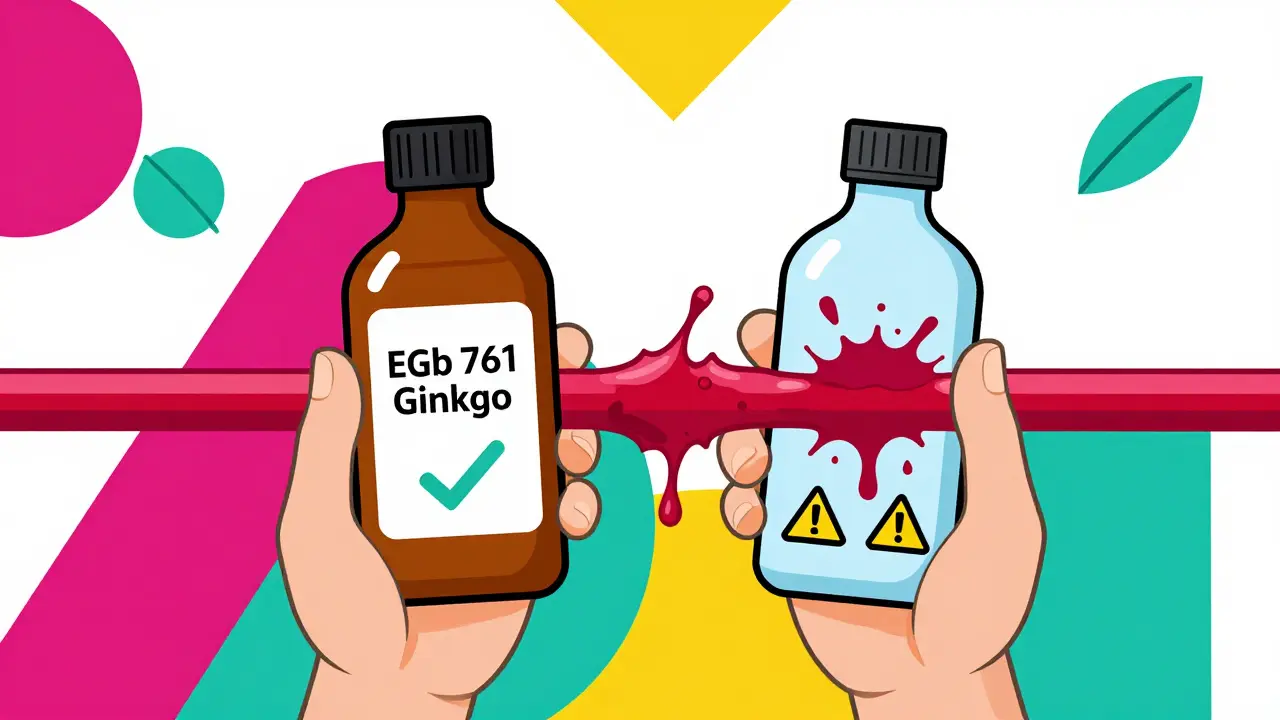
Millions of people take Ginkgo biloba every year to help with memory, focus, or circulation. It’s one of the most popular herbal supplements out there. But if you’re also on a blood thinner-like warfarin, aspirin, or clopidogrel-you need to stop and think. Mixing Ginkgo biloba with blood thinners isn’t a simple yes-or-no question. Some experts say it’s risky. Others say the evidence doesn’t back that up. So what’s the real story?
What Exactly Is Ginkgo Biloba?
Ginkgo biloba comes from the leaves of the Ginkgo tree, one of the oldest tree species on Earth, dating back over 270 million years. In traditional Chinese medicine, it was used for breathing issues and circulation. Today, it’s sold as a standardized extract called EGb 761 a specific 50:1 leaf extract containing 24% flavonol glycosides and 6% terpene lactones. This is the version most studies use, and it’s the one you’ll find in most reputable supplements. About 70% of global Ginkgo sales are this exact formula. It’s not just any leaf powder-it’s a precise, tested extract.
It’s commonly used for memory support, especially in older adults. But it’s also believed to improve blood flow by relaxing blood vessels and reducing platelet stickiness. That’s where the problem starts. If you’re already on a medication that thins your blood, adding something that makes platelets less likely to clump could be dangerous.
How Blood Thinners Work
Blood thinners aren’t one thing. They fall into two main groups:
- Anticoagulants like warfarin (Coumadin), apixaban (Eliquis), and rivaroxaban (Xarelto). These work by slowing down your body’s clotting process, often by blocking vitamin K or specific clotting factors.
- Antiplatelets like aspirin, clopidogrel (Plavix), and ticagrelor (Brilinta). These stop platelets from sticking together, which is the first step in forming a clot.
Both types reduce the risk of strokes and heart attacks. But they also increase your chance of bleeding. Even a small cut can take longer to stop. A bump on the head could lead to internal bleeding. That’s why doctors are so careful when prescribing them.
The Theory: Why Ginkgo Might Interact
Ginkgo biloba contains compounds that affect platelets. Research from 2011 in Frontiers in Pharmacology showed it can block platelet-derived growth factors and reduce thrombin-induced platelet activation. In plain terms: it makes platelets less sticky. That sounds good-until you’re already on a drug that does the same thing.
There’s another angle. Ginkgo may interfere with the liver enzyme CYP2C9, which breaks down warfarin. If this enzyme slows down, warfarin builds up in your blood. That could push your INR (a blood test that measures clotting time) too high, increasing bleeding risk.
That’s the theory. But theory doesn’t always match real life.

The Evidence: What Studies Actually Show
Here’s the messy part. Controlled studies don’t always agree with case reports.
A 2012 study in Thrombosis and Haemostasis gave people Ginkgo and aspirin together. No increase in bleeding. No change in clotting time. Nothing alarming.
But then you look at case reports. Between 2008 and 2020, the FDA received 18 reports of bleeding events linked to Ginkgo. One involved a man who had a brain bleed after taking Ginkgo with warfarin. Another involved a woman who bled heavily after surgery while still using Ginkgo. These are rare, but they happened.
Here’s the key insight: almost all the serious cases involved non-standardized Ginkgo products-cheap supplements with unknown strength, inconsistent ingredients, or even contamination. The studies that found no risk? They used the clean, well-tested EGb 761 formula.
That’s why experts are split. The Mayo Clinic warns patients to avoid Ginkgo with blood thinners. GoodRx calls warfarin a "high-risk" interaction. But the PubMed review by Izzo et al. (2008) found no convincing evidence that Ginkgo significantly affects clotting when used with aspirin or warfarin.
What Do Doctors Actually Recommend?
Most doctors don’t have a clear answer. So they go with caution.
- Mayo Clinic: Says Ginkgo may raise bleeding risk with aspirin, clopidogrel, or warfarin. Advises caution.
- Cleveland Clinic: Lists blood thinners as a contraindication-meaning don’t take it if you’re on one.
- Dr. Michael Murray: Recommends stopping Ginkgo 36 hours before surgery.
- Dr. Tieraona Low Dog: Says stop it 2 weeks before surgery.
- American Society of Anesthesiologists: Recommends stopping all herbal supplements 2 weeks before surgery, including Ginkgo.
Pharmacists are even more cautious. A 2022 survey found that 78% of pharmacists routinely warn patients about Ginkgo-blood thinner combinations. Over half recommend stopping it before any procedure.
Electronic health records now flag these interactions. Epic’s system alerts doctors if someone is on warfarin and Ginkgo. Cerner alerts for all anticoagulants. That’s not a coincidence. Hospitals are seeing the risk, even if the science isn’t settled.
What About Other Supplements?
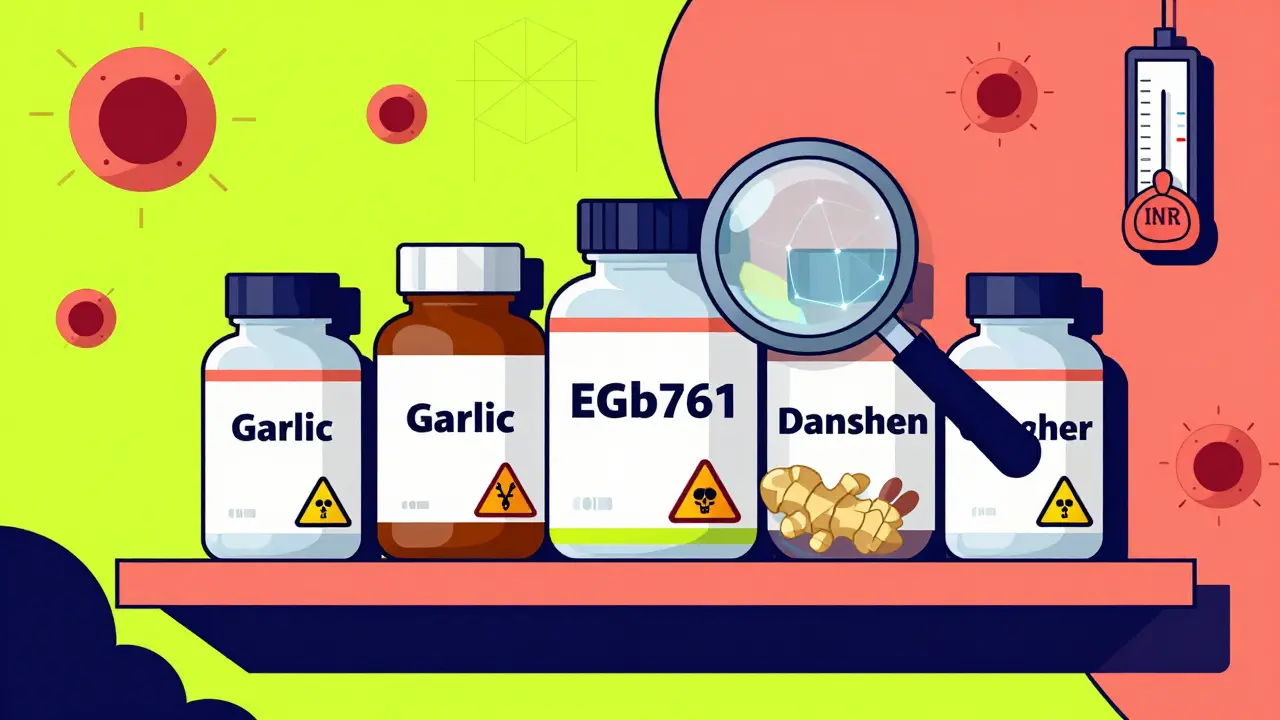
Ginkgo isn’t alone. Garlic, danshen, ginger, and evening primrose oil also affect blood clotting. If you’re on a blood thinner, you need to think about your whole supplement list-not just one thing.
A 2020 study in PLOS ONE found that 21% of people on blood thinners were also taking herbal supplements. Nearly half of those were at risk for dangerous interactions. That’s not small. That’s a lot of people flying under the radar.
What Should You Do?
You don’t need to panic. But you do need to act.
- Check your labels. If your Ginkgo supplement doesn’t say "EGb 761" or "standardized extract," it’s not the same as what was studied. Avoid it.
- Don’t start Ginkgo without telling your doctor. Even if you’re feeling fine, your blood thinner levels could shift. A simple INR test can catch problems early.
- Stop Ginkgo before surgery. Whether it’s a dental extraction or knee replacement, stop it at least 2 weeks before. Better safe than sorry.
- Track your symptoms. Unexplained bruising, nosebleeds, blood in urine or stool? These aren’t normal. Call your doctor.
- Use one pharmacy. If you get prescriptions and supplements from different places, your pharmacist won’t see the full picture. One pharmacy means one full record.
There’s no magic number. No guaranteed safe dose. The safest move is to assume interaction is possible until proven otherwise.
Final Thought: Trust, But Verify
Ginkgo biloba has been used safely by millions. But when you add a blood thinner into the mix, you’re playing with fire-even if the flame is small. The science is messy. The advice is conflicting. But your body doesn’t care about studies. It reacts to what’s in your bloodstream.
If you’re thinking about starting Ginkgo, talk to your doctor first. If you’re already taking it, don’t quit cold turkey-ask how to taper safely. And if you’re on warfarin? That’s the one to be extra careful with. It’s the most sensitive. It’s the one that’s hardest to balance.
Your health isn’t about following a trend. It’s about knowing what’s in your body-and who’s watching over it.
Can I take Ginkgo biloba if I’m on aspirin?
Some studies say yes, others say no. The safest answer? Talk to your doctor. Aspirin already thins your blood, and Ginkgo may add to that effect. Even if the risk is low, it’s not zero. If you’re at risk for bleeding-like if you’re older or have ulcers-your doctor may advise against it. Never start Ginkgo without checking first.
Is there a safe dose of Ginkgo when on blood thinners?
There’s no proven safe dose when combined with blood thinners. Most studies showing safety used 120 mg to 240 mg of standardized EGb 761 daily. But even that dose has caused bleeding in isolated cases. The problem isn’t just the dose-it’s the combination. Your body’s response can’t be predicted. So instead of looking for a "safe" amount, focus on whether you need Ginkgo at all.
What if I’ve been taking Ginkgo for years and just started a blood thinner?
Tell your doctor immediately. You may need more frequent blood tests (like INR checks if you’re on warfarin) to make sure your clotting levels haven’t shifted. Don’t assume you’re fine just because you’ve taken it for years. Your body changes. Your medications change. That combination might now be riskier than before.
Do all Ginkgo supplements have the same risk?
No. Supplements labeled "EGb 761" or "standardized extract" are the ones studied in clinical trials. Many cheap brands use unstandardized leaf powder, which can vary wildly in strength and may contain contaminants. These are the ones linked to most adverse events. If your bottle doesn’t say "EGb 761," it’s not the same product-and the risk is higher.
Should I stop Ginkgo before a dental procedure?
Yes. Even simple procedures like tooth extractions can cause bleeding. Most dentists and anesthesiologists recommend stopping herbal supplements like Ginkgo at least 2 weeks before any procedure, no matter how minor. Don’t assume it’s "just a cleaning." Your blood’s ability to clot matters, even for small cuts.



Ken Cooper
February 8, 2026 AT 00:28So I’ve been taking ginkgo for years for my memory, and just started warfarin last month-didn’t even think about the interaction till I saw this post. My doc never mentioned it. Should I be freaked out? I’ve had zero bruising, no nosebleeds, nothing. But now I’m second-guessing everything. Maybe I’ll stop for a week and get my INR checked. Better safe than sorry, right?
Sam Dickison
February 9, 2026 AT 09:50Let’s cut through the noise. Ginkgo’s primary pharmacodynamic action is PAF (platelet-activating factor) inhibition, which synergizes with antiplatelets like aspirin and clopidogrel. The CYP2C9 interaction with warfarin is theoretically plausible but clinically insignificant in controlled trials. The real risk isn’t the standardized EGb 761-it’s the unregulated shit sold on Amazon labeled "pure ginkgo leaf extract." Those can have 2x the terpene content or heavy metal contamination. Don’t panic. Just audit your supplement label.
Tom Forwood
February 11, 2026 AT 04:18I’m a pharmacist in rural Ohio, and I see this all the time. Elderly folks take ginkgo because their friend said it helps with brain fog. Then they get put on blood thinners after a TIA. No one tells them to stop. We had a guy last year who had a subdural hematoma after a minor fall-he’d been on 240mg ginkgo daily for 10 years and started warfarin 3 weeks prior. His INR was 8.2. We don’t scare people. We just say: "If it’s not in the study, don’t assume it’s safe." And yeah, EGb 761 is the only version that’s been tested. Everything else? Lottery tickets for bleeding.
John McDonald
February 12, 2026 AT 12:48Guys, I get it. You want to keep your brain sharp. I take ginkgo too. But here’s the thing: if you’re on a blood thinner, your body is already walking a tightrope. Adding another variable-even if the science is "meh"-is like adding a second person on that rope. Why risk it? I stopped my ginkgo the second my doc put me on Plavix. Felt fine. No brain fog. No crash. Just better peace of mind. Your health isn’t a gamble. It’s a foundation. Don’t build on shaky ground.
Jacob den Hollander
February 14, 2026 AT 03:53Just wanted to say-this is why I love forums like this. I’ve been on warfarin for 5 years, and I started ginkgo last year because I thought it would help with my circulation. My wife noticed I was bruising way more easily. I didn’t connect it until now. I stopped ginkgo yesterday. Got my INR checked today-it dropped from 3.1 to 2.4 in 72 hours. So yeah, it mattered. Not because of some study. Because my body told me. Listen to your body. And always tell your pharmacist EVERYTHING you’re taking. They’re the unsung heroes here.
Andrew Jackson
February 16, 2026 AT 00:42It is beyond absurd that we allow unregulated, untested, pseudo-scientific herbal concoctions to be sold as "dietary supplements." In Europe, this would be classified as a drug. In America, we let anyone with a Shopify store and a picture of a tree leaf sell you a chemical cocktail with no quality control. The fact that 78% of pharmacists warn patients about this is a national disgrace. We need regulation. We need oversight. We need to stop treating our bodies like science experiments. Ginkgo? Fine. But not like this. Not without FDA approval. This is how people die.
John Sonnenberg
February 17, 2026 AT 09:03My uncle had a hemorrhagic stroke at 72. He was on aspirin and took "ginkgo biloba" from a guy at the farmers market who said it was "ancient Chinese wisdom." The bottle had no ingredients, no batch number, no nothing. They found traces of lead and arsenic in his system. He didn’t survive. I’m not saying ginkgo killed him. But I’m saying we don’t know what’s in these things. And we’re letting people take them like candy. This isn’t wellness. It’s Russian roulette with your brain.
Kathryn Lenn
February 17, 2026 AT 17:57Oh please. "Standardized extract"? That’s just corporate marketing. They’re all the same. The real reason doctors freak out is because they don’t get paid for herbal advice. They want you on more pills. Ginkgo’s been used for centuries. The FDA’s only worried because they can’t patent it. Meanwhile, real science? The 2012 study showed zero interaction. But who reads studies? You just get told "don’t do it" and that’s that. I’ve been taking both for 8 years. Still breathing. Still thinking. Still not a lab rat.
Jonah Mann
February 18, 2026 AT 08:05Just a heads up: if you’re on warfarin, get your INR checked before AND after you start or stop ginkgo. Even if you think it’s fine. It can take 3-5 days for your body to adjust. I didn’t do this once, and my INR spiked to 5.8. Ended up in the ER. Not fun. Also-use one pharmacy. I used to get meds from CVS and supplements from Walmart. My pharmacist didn’t know I was taking ginkgo. Big mistake. Now everything’s in one place. Life’s easier.
THANGAVEL PARASAKTHI
February 19, 2026 AT 06:09From India, we’ve used ginkgo in Ayurveda for ages. But we never mixed it with anticoagulants. Our doctors always say: "If you’re on allopathic medicine, avoid herbal unless approved." Here’s the truth: no one in India sells EGb 761. We get local extracts. And yes, many are weak or contaminated. So your advice about checking labels? 100% right. Even if you’re in the US, check the manufacturer. Look for Ginkgo biloba leaf extract, standardized to 24% flavonoids. If it’s not there, skip it.
Chelsea Deflyss
February 20, 2026 AT 03:22Why are we even having this conversation? If you’re on blood thinners, you shouldn’t be taking ANY supplements. Period. Ginkgo? Garlic? Fish oil? Turmeric? They’re all "natural"-which means they’re unregulated, untested, and potentially lethal. You think your grandma’s herbal tea is harmless? It’s a chemical reaction waiting to happen. Stop pretending you’re in control. You’re not. Your body’s a black box. And doctors? They’re just guessing too. So why take the risk? Just say no to everything. Clean slate. Clean blood. Clean life.
Scott Conner
February 20, 2026 AT 15:11I took ginkgo with aspirin for 2 years. No issues. Then I started Eliquis. Still no issues. But I got my INR checked every 3 weeks just to be sure. The point isn’t to scare people. It’s to be informed. If you’re going to mix things, monitor. Test. Track. Don’t just assume. Don’t just stop. Do it smart. And if your doctor says "don’t do it," ask why. If they say "because it’s risky," ask for the data. Most can’t give it. But you should still be cautious.
Tatiana Barbosa
February 21, 2026 AT 12:38For anyone scared: you’re not alone. I was too. But here’s what changed my mind: I asked my pharmacist to run a drug interaction scan with my entire supplement list. Turns out, I was also taking ginger capsules. And turmeric. And omega-3s. All of them affect clotting. Ginkgo? Just one piece. The real issue isn’t ginkgo-it’s the pile of "natural" stuff we all take without thinking. Start by listing everything. Then talk to your pharmacist. Not your friend. Not Google. A professional. They’ll help you, not judge you. I did. Now I sleep better.
MANI V
February 23, 2026 AT 10:20People like you who say "trust your body" are the reason hospitals are full. Your body doesn’t know what a CYP2C9 enzyme is. Your body doesn’t care about EGb 761. Your body just bleeds. And when it bleeds inside your skull? Too late. You’re not a philosopher. You’re a patient. And patients don’t get to be experimental. They get to follow rules. So stop pretending you’re smarter than science. You’re not. You’re just lucky so far.