Cumulative Drug Toxicity Calculator
Medication Risk Assessment
Most people assume that if a medication doesn’t cause problems right away, it’s safe to keep taking. But what if the side effects aren’t showing up because they’re building up - slowly, silently - inside your body? This isn’t theoretical. It’s happening to thousands of people on long-term prescriptions, often without them realizing it until something serious happens.
What Is Cumulative Drug Toxicity?
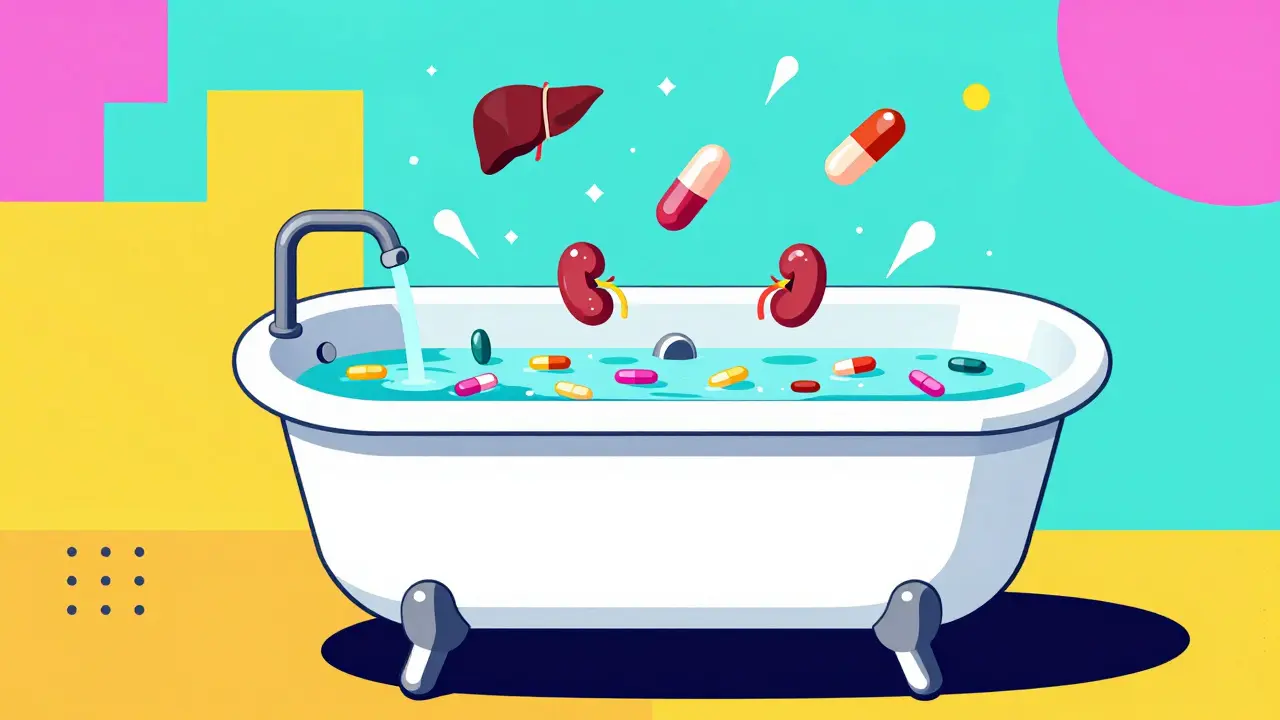
Cumulative drug toxicity happens when a drug builds up in your body over time because it’s being absorbed faster than your body can get rid of it. Think of it like filling a bathtub with the drain half-closed. Even if the water comes in slowly, it eventually overflows. That’s what happens with certain medications.
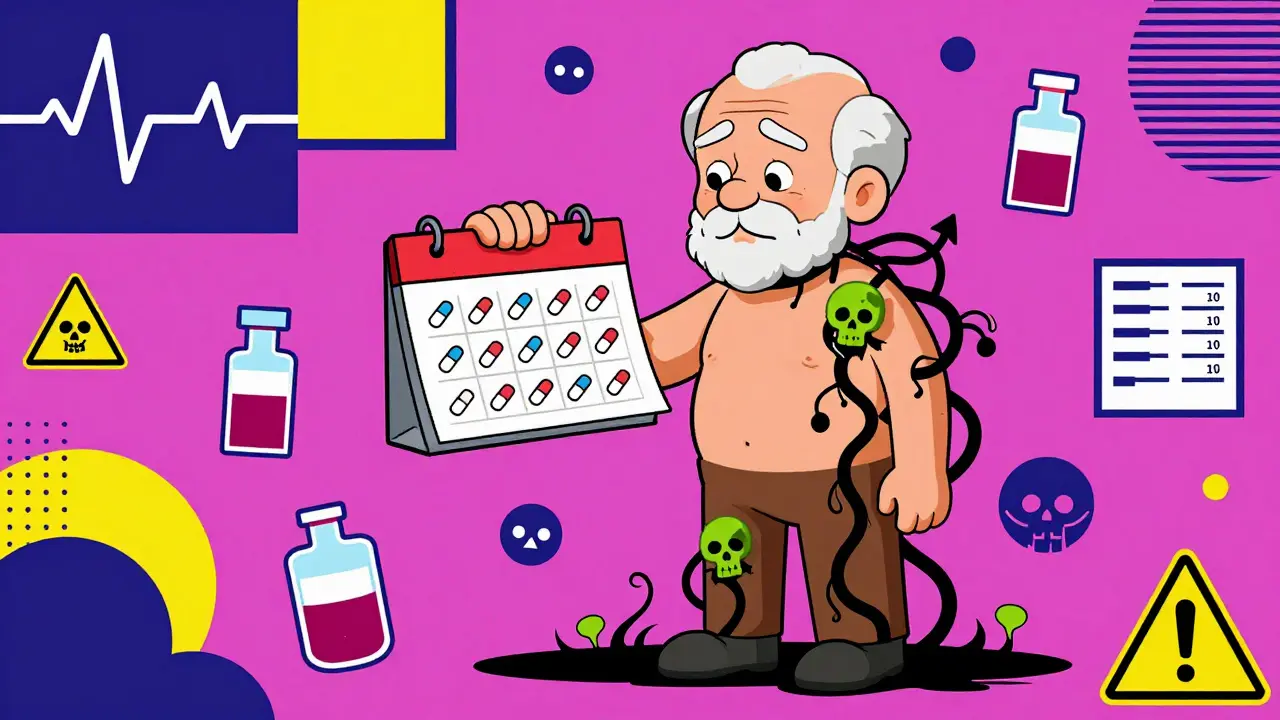
It’s not the same as an acute reaction - like an allergic rash after one pill. Cumulative toxicity creeps in. You take your daily pill for months or years. At first, nothing seems wrong. Then, out of nowhere, you’re dizzy, your liver enzymes are high, or your lungs start to scar. By then, the damage is already done.
Drugs with long half-lives are the biggest culprits. A half-life is how long it takes for half the drug to leave your system. If a drug has a half-life longer than 24 hours, it starts stacking up. Some fat-soluble drugs - like amiodarone, vitamin A, or certain chemotherapy agents - can stick around for months. One study found that amiodarone can linger in tissues for up to 100 days after stopping it.
Who’s at Risk?
Anyone on long-term meds is at risk, but some groups face higher danger.
- Elderly patients: As we age, our kidneys and liver slow down. By age 70, many people clear drugs 30-50% slower than younger adults. That means even a normal dose can become toxic over time.
- People with chronic conditions: If you have liver disease, kidney failure, or heart failure, your body’s ability to process drugs drops. A dose that’s fine for someone healthy could be dangerous for you.
- Patients on multiple medications: The more drugs you take, the more likely they’ll interfere with each other’s metabolism. One drug might block the enzyme your body uses to break down another, causing it to pile up.
According to the Journal of the National Cancer Institute, 68% of adverse drug reactions in older adults are tied to cumulative effects - not mistakes or overdoses. Just taking the right dose, every day, for years, can still lead to harm.
Common Medications That Build Up
Not all drugs accumulate the same way. Here are the big ones doctors watch closely:
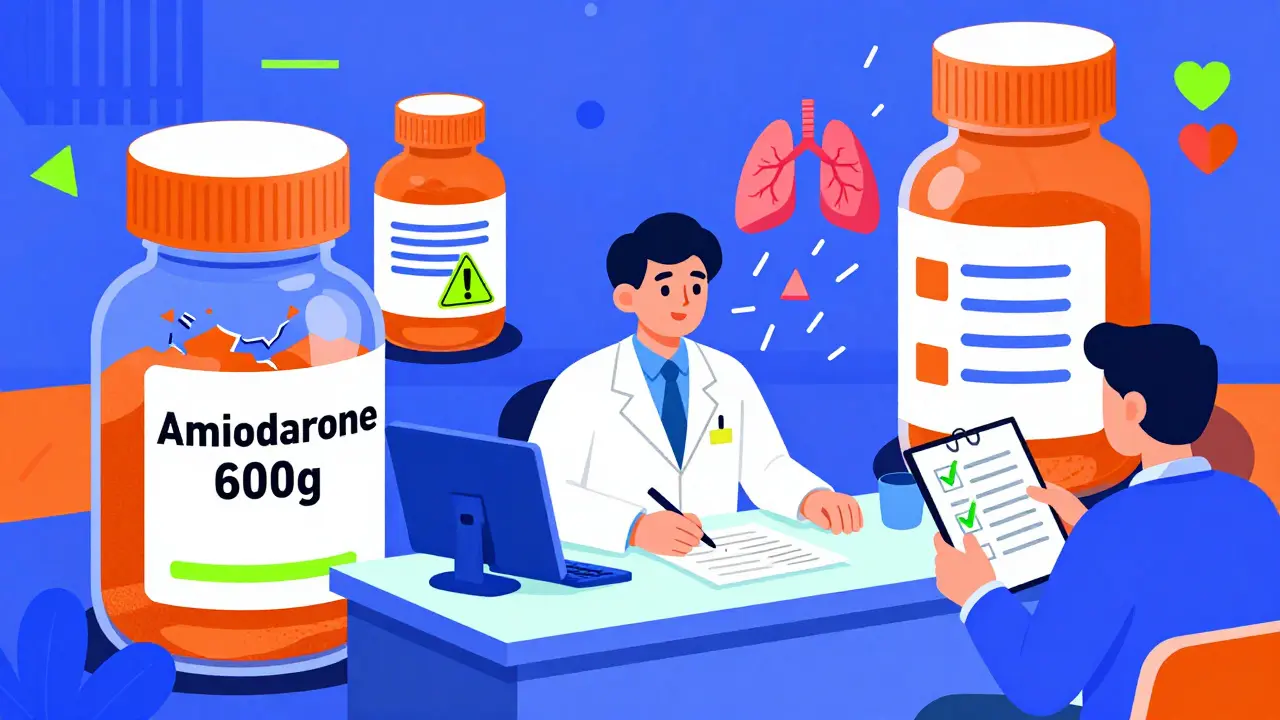
- Amiodarone: Used for irregular heart rhythms. Cumulative doses over 400-600 grams can cause lung scarring, liver damage, and thyroid issues. One oncologist on Reddit described a patient who developed severe pulmonary fibrosis after hitting 600g - even though their blood levels looked normal every checkup.
- Digoxin: A heart medication with a very narrow safety window. Too little does nothing. Too much causes nausea, confusion, and dangerous heart rhythms. Toxicity often builds slowly over weeks.
- Lithium: Used for bipolar disorder. It’s eliminated by the kidneys. Even small drops in kidney function - from dehydration, NSAIDs, or aging - can push lithium into toxic range.
- Anthracyclines (like doxorubicin): Chemo drugs that can permanently damage the heart. The lifetime dose limit? 450 mg/m². Exceed it, and the risk of heart failure jumps sharply.
- Aminoglycosides (like gentamicin): Antibiotics used for serious infections. They can wreck your hearing and kidneys over time, even with normal daily doses.
The FDA now requires cumulative dose warnings on 78% of new oncology drugs approved since 2022 - up from just 52% in 2017. That’s a clear sign: this isn’t rare. It’s becoming standard to track.
Why Don’t We See It Coming?
Because the symptoms are vague. Fatigue? “You’re getting older.” Numbness in your hands? “Maybe you slept funny.” A cough that won’t go away? “Allergies.”
And here’s the kicker: many patients don’t connect their symptoms to their meds. One nurse on AllNurses shared that patients often say, “I’ve been taking this for five years - why is it doing this now?”
Even doctors can miss it. A 2022 Medscape survey found that 67% of physicians had seen at least one case of serious cumulative toxicity in the past year. And 82% blamed patient non-adherence to monitoring - like skipping blood tests or not reporting mild symptoms.
But the problem isn’t just patients forgetting. It’s systems failing. Only 38% of electronic health records in the U.S. automatically track cumulative drug doses. That means doctors are often calculating by hand - or worse, guessing.
How It’s Measured and Managed
Therapeutic drug monitoring (TDM) is the gold standard for catching buildup before it’s too late. It means regularly checking blood levels of certain drugs to make sure they’re in the safe zone.
For drugs like lithium, digoxin, and aminoglycosides, TDM is routine. But for others - like amiodarone or methotrexate - it’s often overlooked. That’s changing. A 2021 study in the Journal of Clinical Pharmacy and Therapeutics showed that when a rheumatology clinic started tracking cumulative methotrexate doses, adverse events dropped by 37%.
Pharmacists are stepping in too. The American Pharmacists Association reports that pharmacist-led monitoring programs cut hospital admissions for drug toxicity by 29% across 45 healthcare systems. They’re the ones checking the math: “You’ve taken 120 pills of this over the last 18 months. That’s 1.5 times the safe lifetime limit.”
The American Geriatrics Society’s Beers Criteria (2023 update) lists 34 medications with high cumulative risk for seniors - and gives clear maximum dose limits. For example:
- Amiodarone: Avoid if cumulative dose > 600g
- Chlorpromazine: Limit to 1000g lifetime
- Fluoxetine: Avoid long-term use in elderly due to serotonin buildup
These aren’t suggestions. They’re evidence-based thresholds from dozens of clinical trials.
What You Can Do
If you’re on long-term meds, here’s what to ask:
- “Is this drug known to build up in the body?” If yes, ask for the safe cumulative limit.
- “What blood tests should I have, and how often?” Don’t wait for symptoms. Ask for scheduled labs.
- “Could any of my other meds or supplements make this worse?” Even OTC painkillers or herbal teas can interfere.
- “What are the early warning signs I should never ignore?” Is it fatigue? Tingling? Shortness of breath? Get a list.
Keep a personal log. Write down each pill you take, the date, and any new symptoms - no matter how small. Bring it to every appointment. You’re not just a patient. You’re the only one tracking your own body’s story.
The Bigger Picture
This isn’t just about individual pills. It’s about how medicine is changing. We’re living longer. More people are on five, six, even ten medications. The system wasn’t built for that.
The global market for therapeutic drug monitoring is expected to hit $4.7 billion by 2028. Why? Because hospitals and clinics are finally realizing: catching toxicity early saves lives - and money. In the U.S. alone, cumulative toxicity causes $1.2 billion in extra healthcare costs every year from missed doses, hospitalizations, and treatment delays.
Europe is ahead of the U.S. Starting in January 2024, the European Medicines Agency requires all new drugs meant for chronic use to include cumulative toxicity assessments in their approval data. The FDA is catching up, but slowly.
And research is moving fast. AI models at Memorial Sloan Kettering are now predicting individual toxicity risk with 82% accuracy by analyzing 27 different factors - from genetics to kidney function to diet. Soon, your doctor might not just check your blood levels. They’ll predict your risk before you even feel sick.
Final Thought: Slow Poison, Slow Solution
Cumulative toxicity isn’t dramatic. It doesn’t make headlines. But it’s quietly harming people who trusted their prescriptions. It’s the reason someone on statins develops muscle weakness after five years. The reason a woman on antidepressants starts having memory lapses. The reason a man with arthritis can’t walk after a decade of NSAIDs.
The solution isn’t stopping meds. It’s smarter use. Better monitoring. More awareness. You don’t have to fear your medicine. But you do need to understand it - not just today, but five years from now.
Ask the questions. Track the doses. Speak up when something feels off. Your body is keeping score. Make sure someone else is watching it too.
Can cumulative drug toxicity be reversed?
Sometimes, yes - but not always. If caught early, stopping the drug and supporting your liver and kidneys can let your body clear the buildup. For example, stopping amiodarone early can prevent permanent lung damage. But if the damage is advanced - like heart scarring from anthracyclines or nerve damage from long-term lithium - it may be irreversible. Early detection is everything.
Do over-the-counter drugs cause cumulative toxicity?
Absolutely. Long-term use of NSAIDs like ibuprofen or naproxen can lead to kidney damage and stomach bleeding that builds up over months. Acetaminophen (Tylenol) can cause liver toxicity if taken daily at high doses - even if you’re not overdosing. Many people think OTC means safe forever, but that’s not true. Always check the daily limits and talk to your pharmacist.
Why don’t doctors always check for cumulative toxicity?
Time, cost, and system gaps. Many clinics don’t have automated tools to track cumulative doses. Doctors see dozens of patients a day and may not know the lifetime limits for every drug. Also, some drugs don’t have clear thresholds - so monitoring isn’t standardized. But that’s changing. More hospitals are adopting pharmacist-led programs and EHR alerts to catch this before it’s too late.
Are natural supplements safe from cumulative toxicity?
No. Fat-soluble vitamins like A, D, E, and K can build up to toxic levels. Vitamin A toxicity can cause liver damage and bone pain. High-dose vitamin D can raise calcium levels to dangerous levels. Herbal supplements like kava or comfrey have been linked to liver failure after long-term use. Just because something is “natural” doesn’t mean it’s safe in large or prolonged doses.
How often should I get blood tests if I’m on long-term medication?
It depends on the drug. For lithium or digoxin, monthly checks are common. For amiodarone, liver and lung tests every 6 months. For methotrexate, blood counts and liver enzymes every 4-8 weeks. Always ask your doctor for a written monitoring schedule. Don’t assume “no news is good news.” If you’re on a drug for more than 6 months, assume you need regular tests - even if you feel fine.


clifford hoang
January 20, 2026 AT 20:02So let me get this straight - the government and Big Pharma are letting us slowly poison ourselves with 'safe' doses because it's cheaper than monitoring us? 😏 I've been on statins for 7 years and my liver enzymes are 'fine'... but what if they're just not checking the right markers? 🤔 They don't want you to know this is a $1.2B problem because it means admitting the system is broken. Wake up, sheeple. 🚨
Arlene Mathison
January 20, 2026 AT 21:38I was diagnosed with thyroid issues last year and my endo just said, 'Oh, it's probably stress.' Then I dug into my meds - turns out I’d been on amiodarone for 4 years and hit 620g. I didn’t even know that was a thing. 😳 I’m alive because I asked for a second opinion. If you’re on long-term meds, don’t wait for symptoms. Ask for the numbers. Now. 💪
Emily Leigh
January 22, 2026 AT 17:03Ugh. Another 'you're getting older' article. So what? I'm 68. I've been on lisinopril since 2008. I feel fine. My doctor checks my labs. I'm not gonna stop taking my heart med because some guy on Reddit says 'cumulative toxicity' is a thing. 😴
Carolyn Rose Meszaros
January 23, 2026 AT 01:13This is so important. I’m a nurse and I’ve seen patients come in with irreversible damage because they trusted their meds without question. 🙏 I always tell my patients: 'Your body doesn't lie - but your doctor might not have time to listen.' Keep a log. Bring it. Even if it’s just a sticky note. It saves lives. ❤️
Greg Robertson
January 24, 2026 AT 16:15Great breakdown. I’m on lithium for bipolar and my doc just said 'take it daily' - never mentioned kidney checks or cumulative risk. I’m going in next week to ask for a full panel. Thanks for the push to be proactive. 👍
Nadia Watson
January 25, 2026 AT 10:02It is a profound and deeply concerning observation that the medical infrastructure in many jurisdictions remains woefully unprepared to address the insidious nature of cumulative pharmacological burden. The absence of automated cumulative dose tracking in electronic health records is not merely an administrative oversight - it is a systemic failure of ethical stewardship. One must ask: if we monitor cholesterol, blood pressure, and glucose with such rigor, why are we not applying the same diligence to the very substances we introduce into the human organism over decades? This is not paranoia. It is prudence. And it is long overdue.
Courtney Carra
January 26, 2026 AT 10:04Think about it - we track calories, steps, screen time… but not drug accumulation? 🤷♀️ It’s like tracking your water intake but never checking if your bathtub is overflowing. Amiodarone lingering for 100 days? That’s wild. I’m gonna start logging my meds like a journal. Maybe I’ll call it ‘My Silent Poison Diary.’ 📓🩺
thomas wall
January 27, 2026 AT 20:41How dare we allow such negligence to persist? This is not a 'personal responsibility' issue - it is a moral abdication by the medical-industrial complex. Patients are being treated as disposable data points while executives profit from lifelong dependency. The fact that only 38% of EHRs track cumulative doses is not an accident. It is complicity. And those who continue prescribing without monitoring are not healers - they are enablers of slow, silent murder.
Paul Barnes
January 28, 2026 AT 23:41Correction: The FDA requires cumulative dose warnings on 78% of new oncology drugs approved since 2022 - not '78% of all new drugs.' The original post misrepresents the scope. Precision matters.
pragya mishra
January 29, 2026 AT 16:45My mom took Tylenol daily for 15 years for arthritis. Liver transplant at 72. This isn’t theory. It’s my family’s tragedy. If you’re on any OTC med long-term, get your liver checked. Now. Don’t wait.