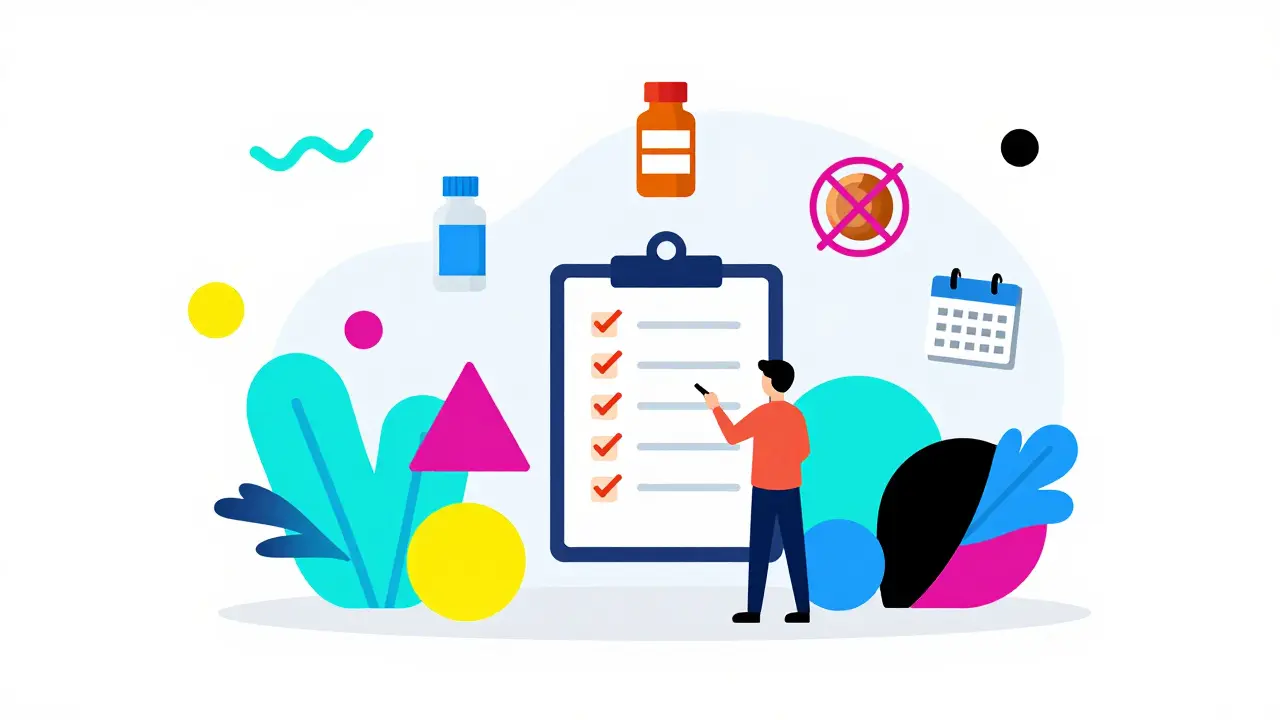
Medication errors are not just statistics; they are real risks that happen every day in pharmacies across the globe. While pharmacists work tirelessly to prevent mistakes, the final line of defense often rests with you. You might think your role ends at paying for your prescription, but active participation in the dispensing process can save lives. Creating and using a personal safety checklist transforms you from a passive recipient into an active partner in your healthcare.
Professional checklists exist for pharmacists, focusing on regulatory compliance and technical verification. However, no standardized tool exists for patients. This gap means you have to build your own system. By adapting professional safety principles into simple, actionable steps, you can catch discrepancies before they become dangerous situations. This guide walks you through building that checklist, ensuring every visit is safe, accurate, and transparent.
Understanding the Risks: Why You Need a Checklist
Dispensing errors can occur at any stage of the medication journey. These aren't always catastrophic, but even small mistakes can lead to adverse drug events, hospitalizations, or worse. Common issues include look-alike/sound-alike (LASA) drug mix-ups, incorrect dosages, wrong strength formulations, and packaging errors where the label doesn't match the bottle.
The Institute for Safe Medication Practices (ISMP) highlights that human error is inevitable in complex systems. Pharmacists deal with high volumes, interruptions, and similar-looking medications daily. A personal checklist acts as a cognitive aid, forcing you to pause and verify critical details when fatigue or distraction might otherwise cause you to overlook them. It shifts the burden from memory alone to a structured verification process.
Building Your Pre-Visit Preparation Protocol
Safety starts before you step foot in the pharmacy. Preparation reduces stress and ensures you have all the necessary information to verify your prescriptions accurately. Rushing into a pickup without context increases the likelihood of missing subtle errors.
- Gather Your Current Medication List: Bring a physical or digital list of every medication, supplement, and over-the-counter product you take. Include dosages and frequencies. This allows for quick comparison if new prescriptions interact with existing ones.
- Know Your Allergies: Have a clear, written record of your allergies. Verbal communication can be misunderstood, especially in noisy environments. A written note ensures the pharmacist sees exactly what triggers reactions.
- Confirm Prescription Details: Before going, call the pharmacy or use their app to confirm the prescription is ready. Ask specific questions like, "Is this the generic equivalent?" or "What strength is it?" This primes your brain to notice discrepancies upon arrival.
- Prepare Questions: Write down any concerns about side effects, timing, or administration methods. Having these ready encourages a deeper consultation rather than a rushed handoff.
This preparation phase aligns with the concept of Medication Reconciliation, which is the process of creating the most complete list possible of all medications a patient is taking and comparing it to the physician's admission, transfer, or discharge order. While traditionally done by professionals, doing a mini-reconciliation yourself empowers you to spot omissions or duplications immediately.
The In-Store Verification Process
When you arrive at the pharmacy counter, the environment can be chaotic. Lines move quickly, and pharmacists are busy. This is where your checklist becomes crucial. Do not assume the bag contains what you expect. Verify every element systematically.
- Check the Label First: Look at the name on the bottle. Does it match what your doctor prescribed? Pay attention to brand vs. generic names. If you expected "Lisinopril" and see "Prinivil," ask for clarification. They might be the same, but you need to know for sure.
- Verify Dosage and Strength: Read the milligram (mg) amount carefully. A common error involves dispensing 10mg instead of 5mg, or vice versa. Compare this number directly with your prescription slip or your pre-visit notes.
- Inspect the Packaging: Ensure the seal is intact. Check the expiration date. If the pills look different from what you remember-different color, shape, or imprint-do not ignore it. Manufacturers change suppliers, but you should still feel comfortable asking why they look different.
- Count the Pills (If Possible): For cash purchases or small quantities, count the tablets. For larger scripts, trust the automated counting machines but remain vigilant if the bottle feels unusually light or heavy.
This step mirrors the professional practice of Patient Identity Verification, which is a protocol used by healthcare providers to ensure that the right medication is given to the right person by confirming name, date of birth, and other identifiers. By verifying the label against your identity and expectations, you participate in this critical safety net.
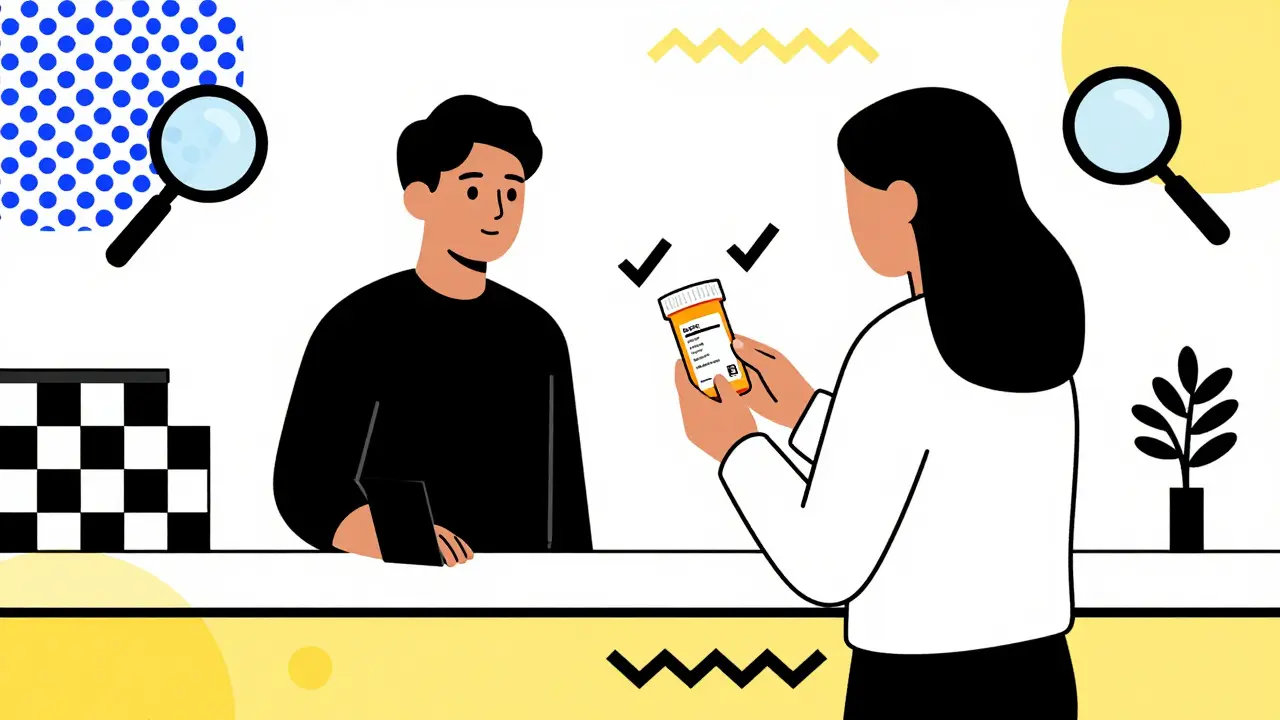
Engaging in Effective Pharmacist Consultation
Many patients skip the counseling session because they are in a hurry or feel embarrassed to ask "stupid" questions. This is a missed opportunity. The pharmacist is the medication expert, and their review is your last chance to catch errors before leaving the store.
Ask specific questions based on your checklist:
- "What is this medication for?" Confirm the indication matches your condition.
- "How do I take it?" Clarify frequency, timing (with food or empty stomach), and method (swallow whole, chewable).
- "Are there interactions with my other meds?" Point to your medication list and ask them to double-check for conflicts.
- "What side effects should I watch for?" Knowing what’s normal versus what requires immediate medical attention prevents panic and ensures timely care if needed.
If the pharmacist rushes you, politely insist. Say, "I want to make sure I understand this correctly so I don't make a mistake." Most pharmacists appreciate engaged patients who prioritize safety. This interaction supports the broader goal of Therapeutic Review, which is an evaluation by a pharmacist to ensure the medication is appropriate, effective, and safe for the specific patient's health status and needs.
Post-Visit Confirmation and Home Storage
Your safety checklist doesn't end at the register. Once home, perform a final verification. Open the bottle in good lighting. Compare the pills to the description provided by the pharmacist or online resources (like the FDA's Pill Identifier). Store medications properly, away from heat, moisture, and direct sunlight, unless the label specifies otherwise.
Update your personal medication list immediately. Add the new prescription, noting the start date, dosage, and pharmacy name. Remove discontinued medications. This keeps your records current for future visits and emergency situations.
Consider taking a photo of the open bottle and the label. This creates a visual record that can help if you later forget what the pill looks like or if you need to show a doctor or another pharmacist exactly what you were dispensed. This simple habit adds a layer of accountability and clarity.

Comparison: Professional vs. Patient Safety Checks
| Aspect | Professional Pharmacy Checklist | Personal Safety Checklist |
|---|---|---|
| Focus | Regulatory compliance, technical accuracy, inventory control | Patient understanding, label verification, personal history alignment |
| Verification Method | Barcode scanning, electronic health record checks, peer review | Visual inspection, verbal confirmation, comparison with personal lists |
| Error Detection | Catches systemic issues, dosage calculations, drug-drug interactions via software | Catches labeling mismatches, unexpected appearance changes, forgotten allergies |
| Role of Patient | Recipient of care, source of medical history | Active verifier, questioner, advocate |
While professional systems are robust, they are not infallible. Your personal checklist complements these systems by adding a human layer of scrutiny focused on your unique context. Together, they create a comprehensive safety net.
Troubleshooting Common Issues
What happens if you find an error? Stay calm but firm. Politely inform the pharmacist or technician. Show them the discrepancy-whether it's the wrong pill, wrong dose, or confusing instructions. Most pharmacies have protocols for correcting errors quickly, including retrieving the correct medication and documenting the incident.
If you suspect a serious error that has already been taken, contact your doctor or seek medical advice immediately. Report the incident to the pharmacy manager and consider filing a report with your state's board of pharmacy or the ISMP. Reporting helps improve systems and prevents future errors for others.
For ongoing management, keep a binder or digital folder with copies of all prescriptions, insurance cards, and allergy lists. Update it after every visit. This organization reduces anxiety and makes verification faster and more efficient over time.
Why is a personal safety checklist necessary if pharmacists are trained professionals?
Pharmacists are highly trained, but they work in fast-paced environments prone to distractions and fatigue. Human error is universal. A personal checklist adds a second layer of verification, catching mistakes that might slip through professional screens due to similar drug names, packaging issues, or miscommunication.
What should I do if the medication looks different than usual?
Do not assume it is wrong. Manufacturers often change suppliers, altering the color, shape, or imprint of generic drugs. However, always ask the pharmacist to explain the difference. If they cannot provide a satisfactory explanation, return the medication and request a different brand or supplier.
How can I prepare for a pharmacy visit to minimize errors?
Bring an updated list of all current medications, supplements, and allergies. Know the name and dosage of the new prescription. Prepare specific questions about usage and side effects. This preparation enables effective communication and easier verification at the counter.
Is it rude to ask the pharmacist many questions?
Not at all. Pharmacists are medication experts and are legally required to counsel patients on new prescriptions. Asking questions ensures you use the medication safely and effectively. Most pharmacists appreciate engaged patients who prioritize their health.
What are the most common types of dispensing errors?
Common errors include wrong drug selection (especially look-alike/sound-alike drugs), incorrect dosage strength, wrong quantity dispensed, and labeling errors. Less common but serious errors include giving the wrong medication to the wrong patient due to identity confusion.