
Medication Nausea Prevention Planner
Answer a few questions about your medication experience to receive customized prevention strategies.
Starting a new medication should feel like a step toward better health, not the beginning of a battle with your own stomach. Yet, for millions of people, medication-induced nausea is an unpleasant side effect where drugs trigger feelings of sickness or vomiting becomes the primary reason they stop taking their prescriptions. It happens more often than you might think. Whether it’s a simple antibiotic for an infection, a daily multivitamin, or aggressive chemotherapy, the result is the same: a churning stomach that makes you question if the cure is worse than the disease.
The good news? You don’t have to just "tough it out." Modern medicine has moved beyond telling patients to simply endure these symptoms. We now understand the specific biological pathways that cause this reaction, and we have targeted strategies-both medical and lifestyle-based-to block them before they start. This guide breaks down exactly why medications make you sick and gives you actionable steps to prevent it, so you can stay on track with your treatment plan without the misery.
Why Do Medications Make You Sick?
To fix the problem, you first need to understand the mechanism. Your body has a built-in alarm system designed to expel toxins. When certain medications enter your system, they can accidentally trip this alarm through three main routes.
First, some drugs cause direct irritation to the lining of your stomach. Common culprits here include non-steroidal anti-inflammatory drugs (NSAIDs) like ibuprofen or aspirin, as well as many antibiotics. These substances can create inflammation in the gastric mucosa, sending pain signals that your brain interprets as nausea.
Second, some medications stimulate the chemoreceptor trigger zone (CTZ). This is a small area in your brainstem that monitors your blood for toxic substances. If the CTZ detects something it perceives as harmful-or even just potent-it sends a signal to the vomiting center to purge the system. Chemotherapy agents are famous for this, but even some heart medications and opioids can trigger it.
Third, there is the psychological component known as anticipatory nausea. If you’ve had a bad experience with a drug before, your brain can learn to associate the sight, smell, or even the thought of taking that medication with feeling sick. This conditioned response can cause nausea before the drug even enters your bloodstream.
Prevention Strategies Before You Take the Pill
The most effective way to handle medication nausea is to stop it before it starts. Prevention is always easier than relief. Here are practical, evidence-based steps you can take immediately.
- Take it with food: Unless your doctor specifically says "take on an empty stomach," always pair your medication with a small snack. Food acts as a buffer, reducing direct irritation to the stomach lining. A few crackers, a piece of toast, or a small yogurt works wonders for antibiotics and NSAIDs.
- Adjust the timing: If a medication makes you dizzy or nauseous shortly after ingestion, try taking it right before bed. This allows you to sleep through the peak absorption period when side effects are usually strongest. This is particularly common advice for selective serotonin reuptake inhibitors (SSRIs).
- Start low, go slow: For chronic conditions, ask your provider if you can start at a lower dose. Gradually increasing the dosage over weeks allows your body to build tolerance. This "titration" method significantly reduces the shock to your system.
- Stay hydrated, but sip slowly: Dehydration worsens nausea. However, gulping large amounts of water can fill your stomach too quickly and trigger vomiting. Instead, take small sips of clear fluids throughout the day. Cold water, ice chips, or diluted sports drinks are often better tolerated than warm beverages.

Natural Remedies That Actually Work
Before reaching for prescription anti-nausea drugs, consider these natural interventions. They are backed by both clinical studies and widespread patient reports.
Ginger is a root spice widely used for its anti-inflammatory and anti-emetic properties remains the gold standard for natural relief. Studies have shown that ginger can reduce nausea severity by up to 50% in various contexts. You don’t need expensive supplements; fresh ginger tea, ginger chews, or candied ginger work effectively. Aim for about 1 gram of ginger per day, split into doses every two hours if needed.
Acupressure is a technique applying pressure to specific points on the body to relieve symptoms is another powerful tool. The P6 point, located on the inner wrist about three finger-widths below the palm crease, between the two tendons, is clinically proven to reduce nausea. Wristbands designed to apply constant pressure to this point are available over the counter and are especially popular among cancer patients and those undergoing surgery.
Environmental changes also matter. Strong smells-like cooking odors, perfume, or smoke-can trigger the gag reflex. Keep your environment cool and ventilated. Opening a window or using a fan to blow cool air directly on your face can provide immediate, albeit temporary, relief by distracting the nervous system.
When Natural Isn't Enough: Medical Interventions
If lifestyle changes and ginger aren't cutting it, it’s time to talk to your doctor about pharmacological support. Anti-emetic medications target different parts of the nausea pathway, and choosing the right one depends on what is causing your sickness.
| Drug Class | Common Examples | How It Works | Best For |
|---|---|---|---|
| Serotonin Antagonists | Ondansetron (Zofran), Granisetron | Blocks 5-HT3 receptors in the gut and brain | Chemotherapy, post-surgery nausea |
| NK-1 Receptor Antagonists | Aprepitant (Emend), Rolapitant | Blocks substance P binding in the brain | Severe chemotherapy-induced nausea |
| Dopamine Antagonists | Metoclopramide (Reglan), Prochlorperazine | Blocks dopamine signals in the CTZ | Gastroparesis, general nausea |
| Antihistamines | Dimenhydrinate (Dramamine), Meclizine | Calms the inner ear and vestibular system | Motion sickness, vertigo-related nausea |
Ondansetron is a widely prescribed serotonin receptor antagonist used to treat nausea and vomiting is often the first line of defense for moderate cases. It blocks serotonin receptors in the gastrointestinal tract and the brain, preventing the signal from triggering the vomiting center. It is highly effective for post-operative nausea and mild chemotherapy side effects.
For severe cases, such as those associated with highly emetogenic chemotherapy, doctors may prescribe a combination therapy. This often includes an NK-1 receptor antagonist like Aprepitant is a prescription medication that blocks neurokinin-1 receptors to prevent severe nausea, combined with ondansetron and a steroid like dexamethasone. This triplet approach has been shown to achieve complete control of nausea in up to 85% of patients, far superior to single-drug regimens.
Note: Always discuss cost concerns with your pharmacist. Newer agents like aprepitant can be expensive ($150-$300 per dose without insurance). Generic alternatives or older drugs like metoclopramide may be equally effective for your specific case and much more affordable.
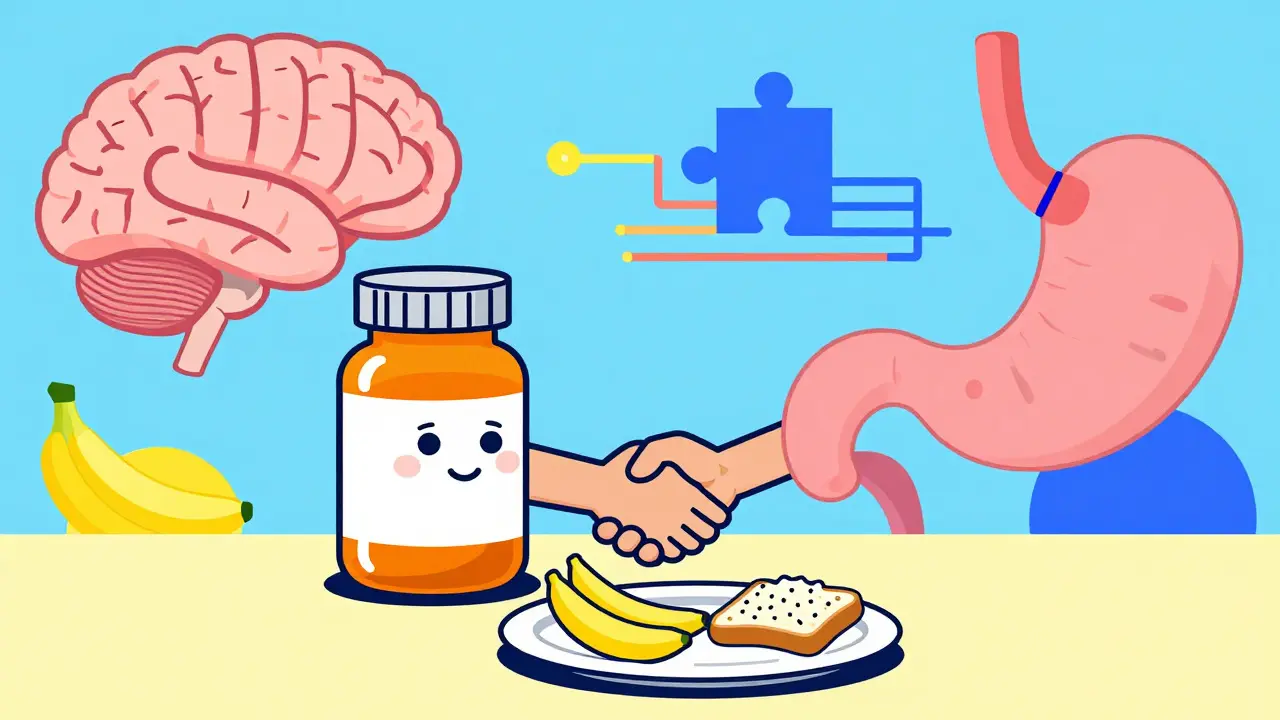
Dietary Adjustments During Nausea
What you eat matters just as much as what you take. When your stomach is sensitive, heavy, fatty, or spicy foods are enemies. They sit in the stomach longer, increasing the likelihood of reflux and nausea.
Stick to the BRAT diet basics: Bananas, Rice, Applesauce, and Toast. These bland, low-fiber carbohydrates are easy to digest and help bind stools if diarrhea is also present. Crackers and dry toast are excellent morning choices; keep a box by your bed and eat a few before getting up.
Avoid strong flavors. Even foods you normally love can become triggers if you associate them with feeling sick. This is called conditioned taste aversion. If coffee makes you queasy during treatment, switch to decaf or herbal tea until you recover. Don’t force yourself to eat "healthy" superfoods if they upset your stomach; calories from plain pasta or white rice are perfectly fine during this acute phase.
Finally, separate eating from drinking. Drinking large volumes of liquid with meals fills your stomach rapidly. Try to drink fluids between meals, not during them, to give your digestive system room to process solid food.
When to See a Doctor
While occasional nausea is manageable at home, persistent vomiting can lead to dangerous dehydration and electrolyte imbalances. Seek immediate medical attention if you experience:
- Inability to keep down any liquids for more than 24 hours.
- Signs of dehydration: dark urine, dizziness when standing, dry mouth, or confusion.
- Blood in your vomit (which may look like coffee grounds or bright red).
- Severe abdominal pain accompanying the nausea.
- Unintentional weight loss due to inability to eat.
Your doctor may need to adjust your dosage, switch medications entirely, or administer intravenous fluids and stronger anti-emetics. Never stop taking essential life-saving medications without consulting your provider, even if the side effects are tough. There is almost always an alternative or a mitigation strategy available.
How long does medication-induced nausea last?
It varies by drug. For antibiotics or NSAIDs, nausea usually subsides within a few days as your body adjusts or once the course is finished. For chronic medications like SSRIs, nausea often peaks in the first week and resolves within 2-4 weeks as tolerance builds. Chemotherapy-induced nausea can last for days after treatment, requiring ongoing prophylactic medication.
Can I take Zofran with food?
Yes, ondansetron (Zofran) can be taken with or without food. Taking it with a small amount of bland food may help if the pill itself irritates your stomach, but it is not required for absorption. Oral dissolving tablets are often preferred because they act faster and bypass the stomach lining initially.
Is ginger safe to take with all medications?
Ginger is generally safe for most people, but it has mild blood-thinning properties. If you are taking anticoagulants like warfarin or high-dose aspirin, consult your doctor before consuming large amounts of ginger supplements. Dietary amounts (like in tea or chews) are typically safe.
Why do vitamins make me nauseous?
Multivitamins, especially those containing iron or zinc, can be harsh on the stomach lining. Iron is particularly notorious for causing gastrointestinal distress. Try taking your vitamins with a full meal rather than on an empty stomach, or switch to a "gentle" or buffered formula designed for sensitive stomachs.
Should I lie down or sit up when feeling nauseous?
Sit upright or recline slightly with your head elevated. Lying completely flat can increase acid reflux, which worsens nausea. Prop yourself up with pillows. Avoid sudden movements, which can aggravate the vestibular system and trigger more nausea.