
G6PD Risk Assessment Tool
Disclaimer: This tool provides an educational estimation of risk based on population statistics. It is not a medical diagnosis. Always consult your healthcare provider before taking medication.
You have a burning sensation when you pee. Your doctor prescribes Nitrofurantoin is a common antibiotic used to treat uncomplicated urinary tract infections (UTIs). It’s been around since the 1940s and remains a go-to medication because bacteria haven’t developed much resistance to it yet. For most people, it works like a charm. But for a specific group of people-those with G6PD deficiency, this standard treatment can trigger a dangerous condition called hemolytic anemia.
This isn't just a theoretical risk found in old textbooks. It’s a real, acute medical event that requires immediate attention. If you or someone you know has been prescribed nitrofurantoin, understanding your genetic makeup regarding glucose-6-phosphate dehydrogenase (G6PD) could prevent a hospital visit. Let’s break down why this happens, who is at risk, and what you should do.
What Is G6PD Deficiency?
To understand the danger, we first need to look at the enzyme itself. Glucose-6-phosphate dehydrogenase, or G6PD, is an enzyme found in red blood cells. Its job is to protect these cells from damage caused by oxidative stress. Think of it as a shield. When your body fights off infections or processes certain drugs, reactive oxygen species are produced. In a healthy person, G6PD helps neutralize these threats, keeping red blood cells intact.
In people with G6PD deficiency, this shield is weak or missing entirely. This is an X-linked genetic disorder, meaning it affects males more frequently and severely than females. According to the World Health Organization, approximately 400 million people worldwide carry this gene mutation. It is particularly common in populations originating from Africa, the Mediterranean, the Middle East, and Southeast Asia. The CDC notes prevalence rates of 10-14% in Black African populations and 4-7% in Mediterranean groups.
| Region/Ethnicity | Estimated Prevalence | Risk Level |
|---|---|---|
| Black African / African American | 10-14% | High |
| Mediterranean / Middle Eastern | 4-7% | Moderate to High |
| Southeast Asian | 2-5% | Moderate |
| European / Northern Asian | <1% | Low |
How Nitrofurantoin Triggers Hemolysis
Nitrofurantoin works by interfering with bacterial DNA and ribosomal proteins. To do this, it undergoes chemical reduction in the acidic environment of the urine, creating reactive intermediates. While this kills the bacteria causing your UTI, these same reactive compounds can leak into the bloodstream.
In a person with normal G6PD levels, the body handles this oxidative load easily. However, in a G6PD-deficient individual, the red blood cells cannot regenerate reduced glutathione fast enough to neutralize the oxidative stress. The result? The cell membranes become damaged, hemoglobin denatures, and the red blood cells burst prematurely. This process is called hemolysis.
A comprehensive review by Recht et al. (2022) analyzed 318 episodes of hemolytic anemia linked to nitrofurantoin. Of those, 42 cases were confirmed or highly probable in patients with G6PD deficiency. While rare compared to the millions of prescriptions written annually, the consequences are severe. The study documented 10 fatalities associated with nitrofurantoin-induced hemolytic anemia, all reported in pharmacovigilance databases. These deaths highlight that this is not a minor side effect like nausea; it is a life-threatening reaction.
Recognizing the Symptoms
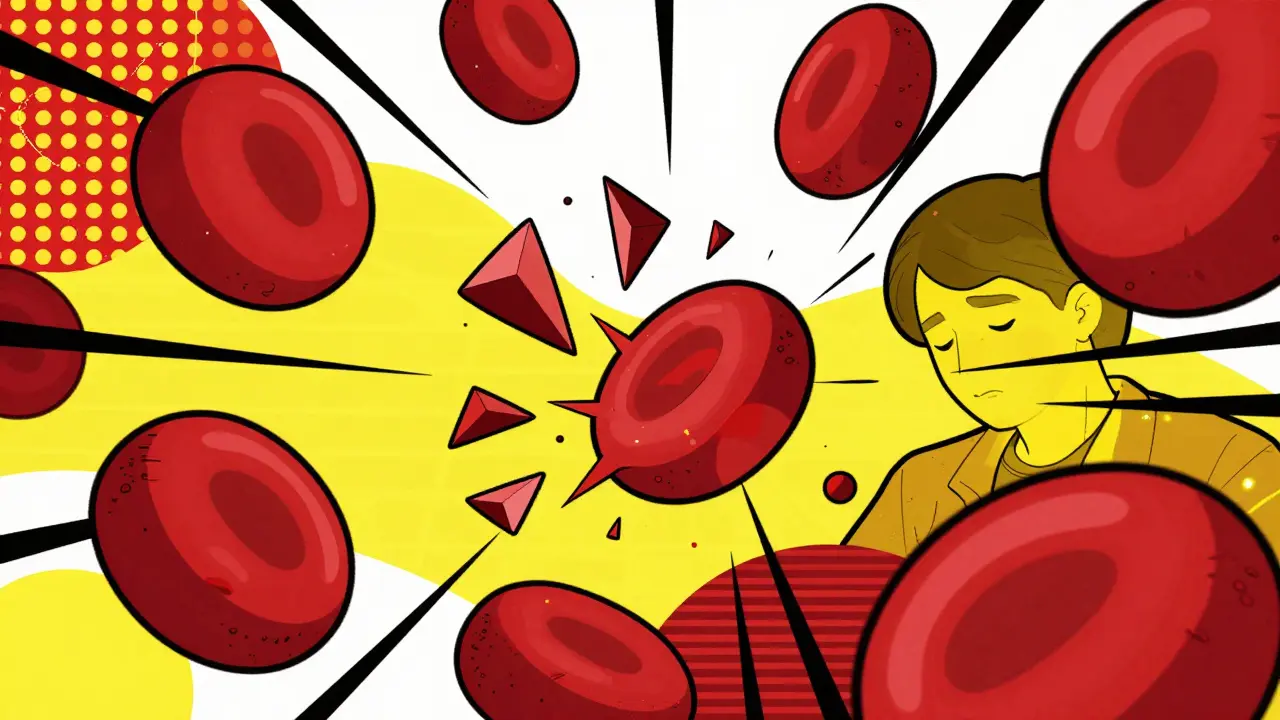
If you start taking nitrofurantoin and have undiagnosed G6PD deficiency, symptoms usually appear quickly. They typically onset within 24 to 72 hours of starting the medication. You might feel fine initially, but then things change rapidly.
- Fatigue and Weakness: As red blood cells destroy, your body struggles to carry oxygen.
- Jaundice: Yellowing of the skin and eyes due to high bilirubin levels from broken-down blood cells.
- Dark Urine: Often described as tea-colored or cola-colored, indicating hemoglobinuria.
- Shortness of Breath: Due to anemia and reduced oxygen-carrying capacity.
- Rapid Heart Rate: Your heart pumps faster to compensate for low oxygen.
In severe cases, patients may experience fever, confusion, vomiting, hypotension, and tachycardia. A 2023 case report by Dr. C. Bhatt detailed a patient who presented with these exact symptoms. His hemoglobin dropped significantly, while LDH and bilirubin levels spiked. Haptoglobin, a protein that binds free hemoglobin, decreased-a classic laboratory sign of hemolysis. Fortunately, after stopping the drug and receiving intravenous saline, he recovered fully within 48 hours without needing a blood transfusion. But this recovery was only possible because he sought immediate care.
Who Should Avoid Nitrofurantoin?
The Clinical Pharmacogenetics Implementation Consortium (CPIC) provides clear guidelines on this issue. Their 2023 annotation states that nitrofurantoin requires caution in G6PD-deficient patients who do not have chronic non-spherocytic hemolytic anemia (CNSHA). However, it must be completely avoided in G6PD-deficient patients who already have CNSHA.
For clinicians, this creates a diagnostic challenge. Many people with G6PD deficiency are asymptomatic until they encounter a trigger like nitrofurantoin, fava beans, or sulfonamides. The American Society of Hematology explicitly recommends avoiding nitrofurantoin in patients with known G6PD deficiency. Instead, they suggest alternatives such as fosfomycin for UTI treatment.
Pregnant women are another vulnerable group. The literature review identified 8 cases of hemolytic anemia in pregnant women who were G6PD deficient. Additionally, there were reports of infants affected by maternal exposure or overdose. If you are pregnant and of high-risk ethnicity, discussing your G6PD status with your provider before accepting any antibiotic prescription is crucial.
Screening and Testing
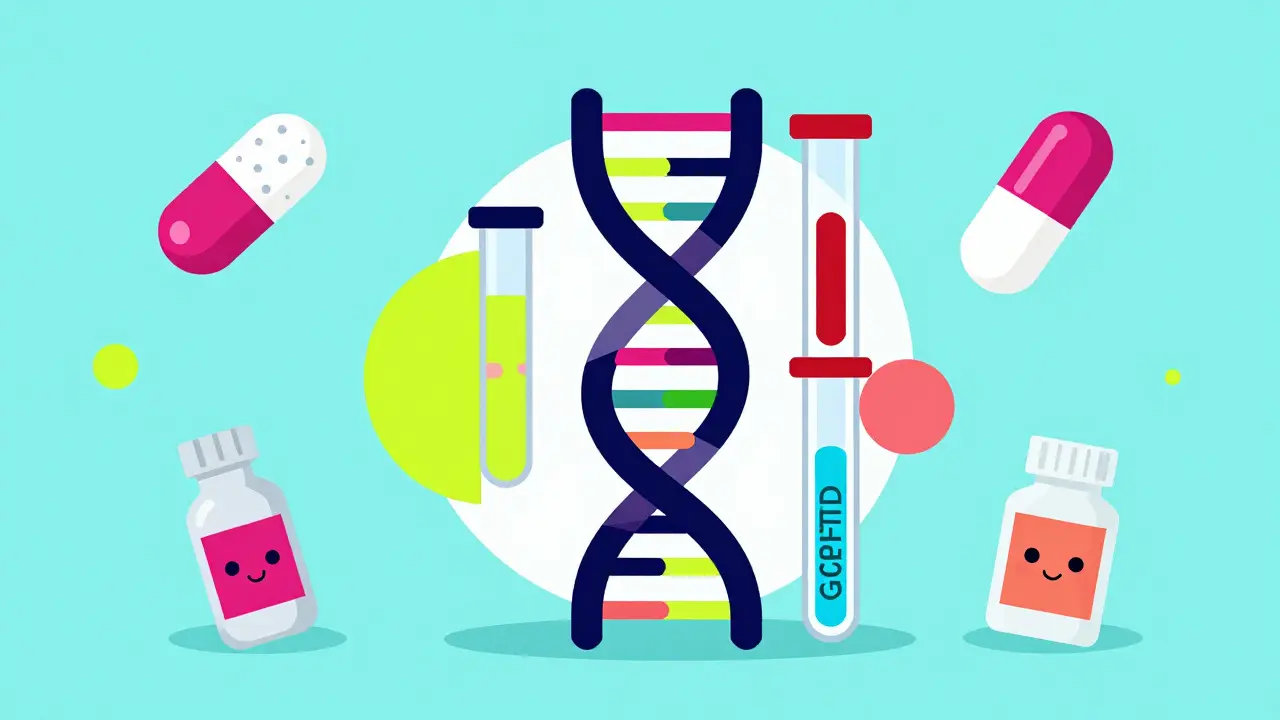
Should everyone get tested for G6PD deficiency before taking nitrofurantoin? Currently, the FDA labeling does not mandate pre-treatment screening. However, experts argue that universal screening is impractical and costly. Instead, targeted screening is recommended for individuals from high-prevalence ethnic backgrounds.
A G6PD test costs approximately $35-$50 per test under Medicare reimbursement rates in 2023. Compare this to the average hospitalization cost for untreated hemolytic anemia, which ranges from $8,500 to $12,000 per episode according to HCUP data. From a cost-benefit perspective, testing high-risk patients makes economic sense.
Despite this, adoption remains uneven. A 2022 survey of 350 primary care physicians revealed that only 32% routinely screen for G6PD deficiency before prescribing nitrofurantoin. This gap in practice leaves many patients at unnecessary risk. Electronic health record systems are beginning to incorporate clinical decision support alerts for high-risk populations, but human oversight remains essential.
Alternatives to Nitrofurantoin
If you have G6PD deficiency or are unsure of your status, several effective alternatives exist for treating uncomplicated UTIs. The choice depends on local resistance patterns and individual patient factors.
- Fosfomycin: A single-dose oral antibiotic often recommended for G6PD-deficient patients. It has a broad spectrum and low resistance rates.
- Cephalexin: A cephalosporin antibiotic that is generally safe for G6PD-deficient individuals, though some cephalosporins can cause immune-mediated hemolysis in rare cases.
- Trimethoprim-Sulfamethoxazole (TMP-SMX): Effective, but resistance among E. coli is higher (20-25%) compared to nitrofurantoin (10-15%). Also, sulfonamides themselves can trigger hemolysis in G6PD deficiency, so this is not always a safe alternative.
- Pivmecillinam: Used commonly in Europe, this penicillin derivative is safe for G6PD-deficient patients.
Always consult your healthcare provider to determine the best option based on your medical history and local antibiogram data.
What To Do If You Suspect a Reaction
If you start feeling unwell after taking nitrofurantoin, do not wait. Stop the medication immediately and seek medical attention. Tell your doctor you suspect a hemolytic reaction. They will likely order a complete blood count (CBC), reticulocyte count, LDH, bilirubin, and haptoglobin levels to confirm hemolysis. Supportive care includes hydration and monitoring. In severe cases, blood transfusions may be necessary.
Once recovered, ensure your G6PD status is documented in your medical records. Consider wearing a medical alert bracelet if you have confirmed G6PD deficiency. This simple step can save your life in future emergencies.
Can nitrofurantoin cause anemia in people without G6PD deficiency?
Yes, but it is rare. Nitrofurantoin can occasionally cause immune-mediated hemolytic anemia in individuals with normal G6PD levels, though this mechanism is different from the oxidative stress seen in G6PD deficiency. Cephalosporins are actually a more common cause of drug-induced immune hemolytic anemia overall.
How long does it take for symptoms to appear?
Symptoms typically appear within 24 to 72 hours of starting nitrofurantoin therapy. The hemoglobin level usually reaches its lowest point (nadir) within 3 to 5 days after onset. Early recognition is key to preventing severe complications.
Is G6PD testing covered by insurance?
Coverage varies by insurer and region. In the US, Medicare reimburses approximately $35-$50 per test. Private insurers may cover it if deemed medically necessary, especially for patients of high-risk ethnicities. Check with your provider and insurance company beforehand.
Can I take nitrofurantoin if I am pregnant and have G6PD deficiency?
Generally, no. Nitrofurantoin is contraindicated in G6PD-deficient patients due to the risk of severe hemolytic anemia. Pregnant women with G6PD deficiency should discuss safer alternatives like fosfomycin with their obstetrician and urologist.
What are the signs of hemolytic anemia?
Key signs include fatigue, jaundice (yellow skin/eyes), dark urine (tea-colored), shortness of breath, rapid heartbeat, and back pain. Laboratory findings show low hemoglobin, high LDH, high bilirubin, low haptoglobin, and elevated reticulocyte count.


Wendy Engelmann
May 30, 2026 AT 21:27It is fascinating how a single enzyme deficiency can turn a routine prescription into a medical emergency. The fact that G6PD deficiency affects hundreds of millions yet remains undiagnosed in so many people speaks volumes about our healthcare system's blind spots. We often assume standard treatments are universally safe, but biology rarely works in such neat packages. This post highlights the critical need for personalized medicine rather than one-size-fits-all approaches. It makes you wonder how many other common drugs have hidden risks for specific genetic groups. The economic argument for screening high-risk populations is compelling when you consider the cost of hospitalization versus a simple blood test. Perhaps we should be advocating for mandatory genetic screening at birth for more conditions than just the standard panel. Until then, patients must remain vigilant and proactive about their health history.
Lisa Thomas
May 31, 2026 AT 15:31I had no idea this was such a big deal until now 😱
My cousin actually got really sick after taking some antibiotics for a UTI and we never knew why
She turned super yellow and had to go to the ER
Turns out she might have had this deficiency all along
Doctors didn't even think to check because she looked fine before
It's scary how little we know about our own bodies sometimes
We really need better education on this stuff
Nicholas Bowling
June 1, 2026 AT 05:07Everyone is panicking over nothing again
Yes it's rare but nitrofurantoin has been around forever and saved countless lives
You're making it sound like everyone who takes this drug is going to die
The stats show it's extremely uncommon
Why are we always focusing on the worst case scenario instead of the millions of successful treatments
People need to stop reading medical blogs and getting scared of every little thing
If you have a problem with your meds you'll feel it and stop taking them
Simple as that
Jay Foreman
June 1, 2026 AT 07:21Nicholas Bowling is completely missing the point here and it shows his lack of basic empathy for those suffering from preventable conditions. Just because something is statistically rare doesn't mean it isn't devastating for the individual experiencing it. You don't get to dismiss the trauma of hemolytic anemia just because it happens to a small percentage of people. It is morally reprehensible to suggest that patients should 'just feel it and stop' when the damage can be irreversible or fatal within hours. The article clearly outlines the rapid onset of symptoms which leaves very little time for reaction. Doctors have a duty of care to screen high-risk groups and ignoring that duty is negligence plain and simple. We should be demanding better standards not mocking those who seek information about their health risks. Your attitude is exactly why patient safety issues persist in our healthcare system today.
Adelaide Motata
June 1, 2026 AT 08:29u guys are so naive if u think doctors are gonna start testing everyone for this
it costs money and insurance companies wont pay for it unless ur already dying
i work in admin and i see the denials every day
if u want to stay healthy u gotta take responsibility for urself not rely on the system
also fosfomycin is hard to find in the us so good luck with that alternative
most ppl just suffer through it or switch to something else without asking questions
typical american ignorance
Mike Crump
June 1, 2026 AT 17:17This is a brilliant breakdown of a complex topic, thank you for sharing! 🌟 I've always been curious about pharmacogenomics and how our DNA influences drug metabolism. It's incredible to think that an enzyme like G6PD acts as a shield against oxidative stress, protecting our red blood cells from damage. The comparison to a shield is perfect for visualizing this biological mechanism. I'm particularly interested in the prevalence rates across different ethnicities, which underscores the importance of cultural competence in healthcare. Providers need to be aware of these demographic risks to offer equitable care. The mention of fosfomycin as an alternative is helpful, though I agree with Adelaide that access can be tricky depending on where you live. Has anyone here experienced difficulty getting prescriptions filled due to formulary restrictions? I'd love to hear more stories about navigating these medical hurdles.
Samantha Arbuckle
June 2, 2026 AT 20:38Wow this is super important info ✨
I am mixed race so I always worry about my genetics
Never thought about antibiotics triggering anything though
Going to ask my doctor next time I get a UTI
Thanks for posting this!! 💖
Stephanie Francis
June 4, 2026 AT 05:01The author presents a compelling case for targeted screening, yet fails to address the systemic barriers that prevent implementation. While the cost-benefit analysis suggests testing is economical, the reality of fragmented healthcare systems means many patients fall through the cracks. It is unacceptable that only 32% of primary care physicians routinely screen for G6PD deficiency. This statistic indicates a profound failure in medical education and clinical practice guidelines. Patients deserve consistent, evidence-based care regardless of their provider's personal habits. Furthermore, the reliance on electronic health record alerts is insufficient without human oversight and proper training. We must hold institutions accountable for ensuring that high-risk populations are protected from preventable harm. Ignorance is not an excuse for negligence in modern medicine.
Jonathan Paul
June 4, 2026 AT 17:58why do u ppl trust doctors so much?
they dont know anything about ur body
u should just listen to ur gut and avoid all western meds
natural remedies are safer anyway
this whole g6pd thing is just another way to scare u into buying tests u dont need
keep ur money and ur health in ur own hands
big pharma wants u dependent on them
Cathy N
June 5, 2026 AT 23:33I appreciate the detailed explanation of the symptoms
Especially the part about dark urine
That is such a clear sign that people can look for
Too often we ignore early warning signs
This could save someone from going to the hospital late
Thank you for writing this so clearly