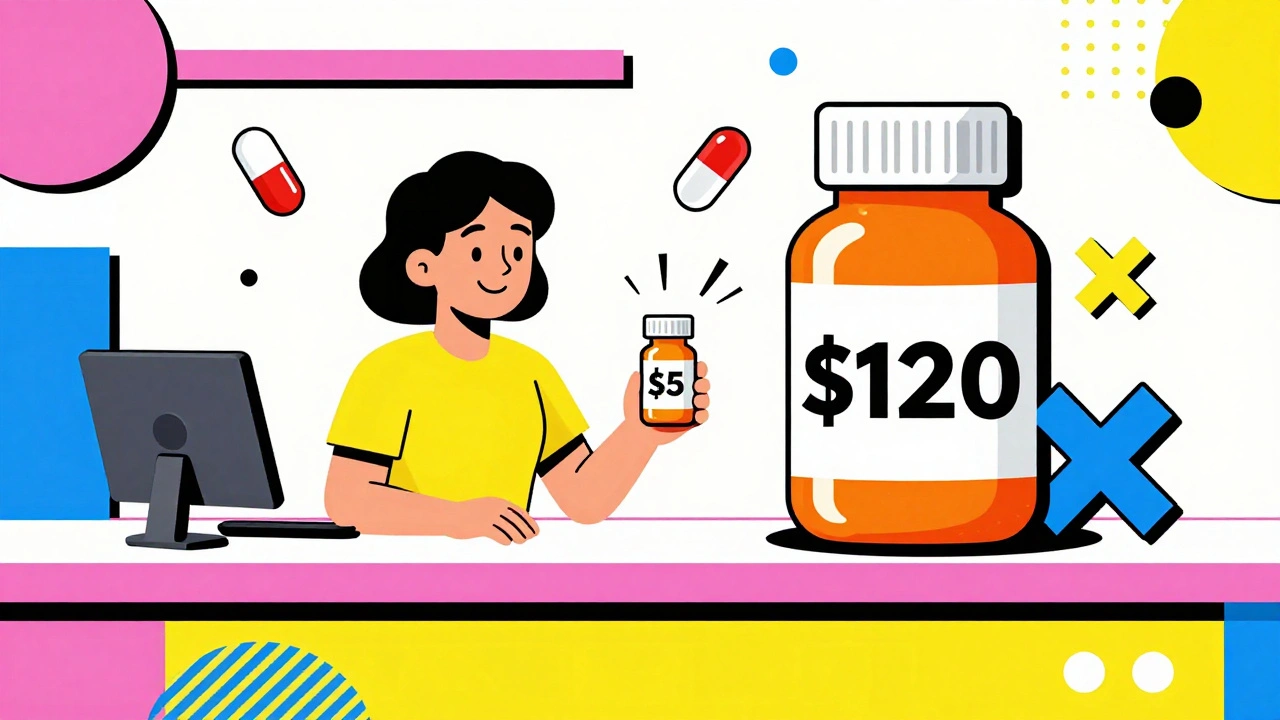
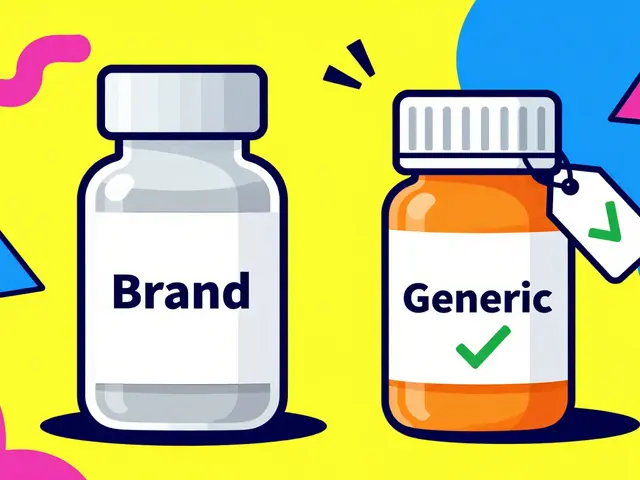
When you fill a prescription for high blood pressure or cholesterol, you might not think about why your copay is $5 instead of $50. But behind that simple number is a complex system designed to save billions-generic drugs are the quiet engine of cost control in U.S. health insurance. Health plans don’t just allow generics; they actively push them. And the numbers don’t lie: in 2022, 91.5% of all prescriptions filled in the U.S. were generics, yet they made up only 22% of total drug spending. That’s the power of smart benefit design.
How Generics Became the Default Choice
The modern system started in 1984 with the Hatch-Waxman Act. Before then, generic drugs faced legal and financial barriers that made them rare. The law changed that by creating a clear path for companies to prove their versions of brand-name drugs were just as safe and effective-without repeating expensive clinical trials. The result? Generics flooded the market. Today, they’re typically 80-85% cheaper than their brand-name equivalents. For a drug like lisinopril, a generic blood pressure pill, you might pay $4 for a 30-day supply, while the brand version could cost $120. That’s not a small difference-it’s life-changing for people on fixed incomes.
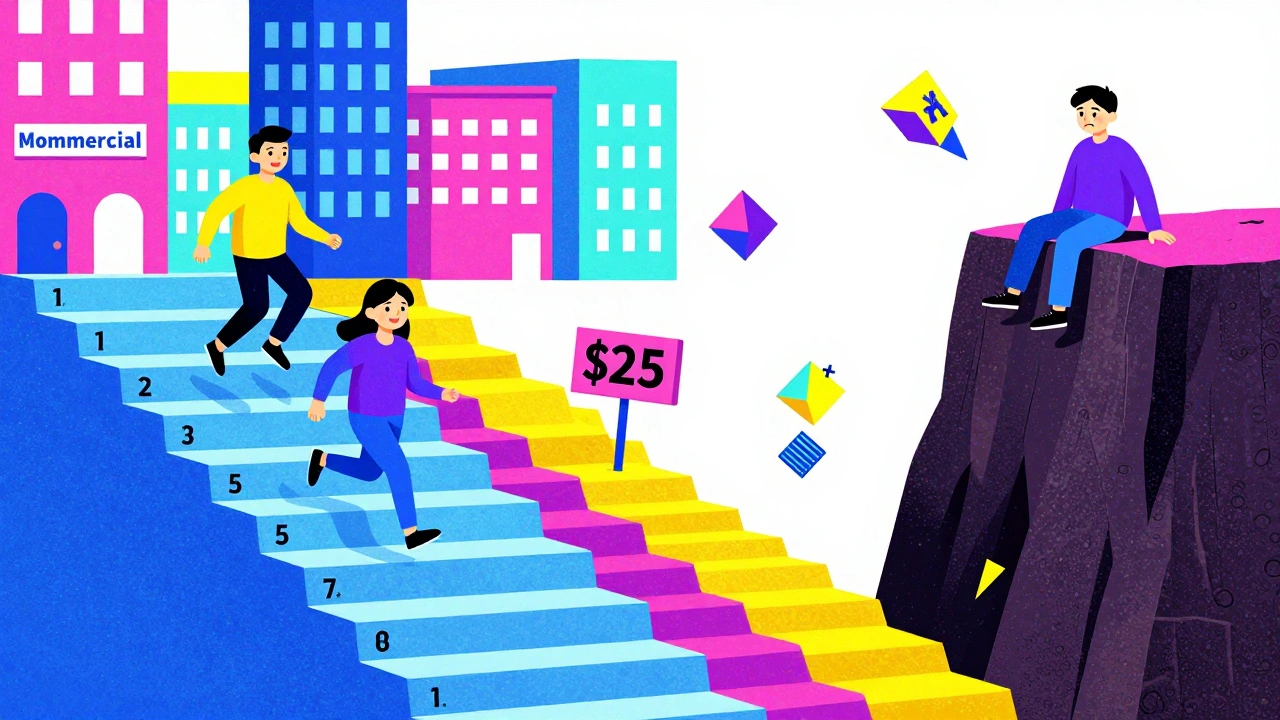
Insurance plans didn’t just wait for generics to appear. They built systems to make them the easiest, cheapest option. The most common tool? Tiered formularies. These are drug lists divided into cost levels. Tier 1 is almost always generics. Tier 2 is preferred brand-name drugs. Tier 3 and above are non-preferred brands, often with much higher copays. In 2024, commercial plans had generic copays as low as $0-$10 for a 30-day supply. Brand-name drugs? $25-$100. The math is clear: choose the generic, save money.
The Tools Plans Use to Push Generics
It’s not enough to just list generics as cheap. Plans need to make them the default. That’s where five key tools come in:
- Mandatory substitution: In 49 states, pharmacists can swap a brand-name drug for a generic without asking the doctor-unless the doctor specifically says ‘do not substitute.’
- Step therapy: You can’t get the expensive brand drug until you’ve tried the generic first. As of 2023, 92% of Medicare Part D plans require this.
- Closed formularies: Some plans won’t cover the brand drug at all if a generic exists. One Medicare HMO saw brand-name use drop 28.7% after switching to this model.
- Copay differentials: The gap between generic and brand copays has widened. Between 2010 and 2020, generic copays rose just 12%, but brand copays jumped 47%. That’s not an accident-it’s intentional design.
- Prior authorization: If your doctor wants to prescribe a brand drug when a generic is available, they have to jump through hoops. Many patients report multiple appeals just to get the drug their doctor recommended.
These aren’t theoretical policies. They’re standard practice. Nearly every major insurer-Medicare Part D, Medicaid, and commercial plans-uses them. In fact, 98.7% of commercial health plans and 100% of Medicare Part D plans have tiered formularies that favor generics as of 2024.
Who Saves? And Who Gets Left Behind?
On paper, everyone wins. Patients pay less. Insurers save money. The system saves billions. The IQVIA Institute estimates generics saved the U.S. healthcare system $3.7 trillion between 2013 and 2022. That’s more than the entire GDP of Australia.
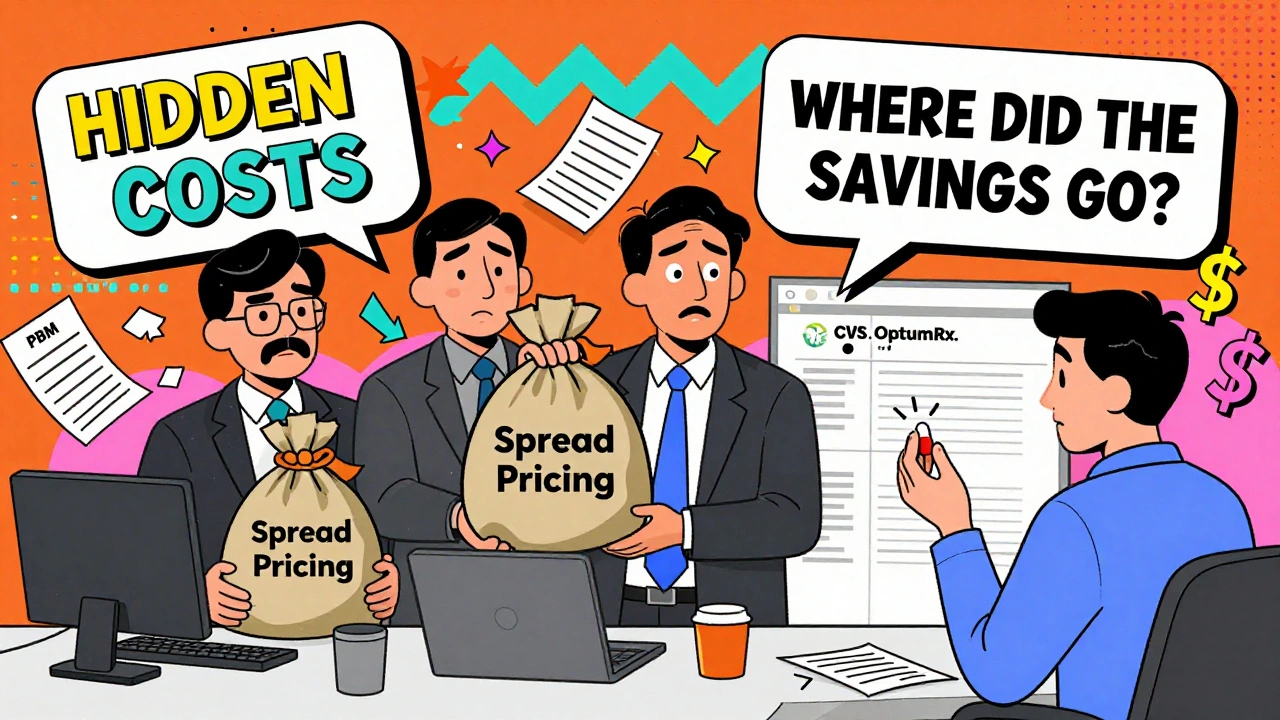
But the story gets messy when you look at who actually pockets the savings. Pharmacy Benefit Managers (PBMs)-companies like CVS Caremark, OptumRx, and Express Scripts-act as middlemen between insurers, pharmacies, and drug makers. They negotiate discounts and rebates. In 2022, they secured $195 billion in savings for health plans. Sounds great, right?
Not so fast. A 2022 study from the USC Schaeffer Center found that patients often pay more than they should. Why? Spread pricing. PBMs charge the insurer one price for a generic drug, pay the pharmacy another, and keep the difference. That gap can be $10-$15 per prescription. If your copay is $5, but the PBM paid the pharmacy $2 and kept $3, you’re not saving as much as you think. And if your plan uses a coinsurance model (you pay a percentage of the drug’s cost), you might end up paying more because the inflated price is the basis for your calculation.
Medicaid programs, which cover low-income patients, had a 89.3% generic dispensing rate in 2022-slightly higher than commercial plans. But even there, reimbursement rules vary by state. Some cap payments at 250% of the average manufacturer price. Others use reference pricing, which sets a fixed payment amount. The result? Patients in some states get true savings. In others, the savings disappear into administrative layers.
Real People, Real Confusion
Patients aren’t stupid. They notice when their $5 copay suddenly becomes $15. Or when their doctor says, ‘I prescribed this brand, but your plan won’t cover it unless you try the generic first.’
On Reddit’s r/healthinsurance, a post asking if anyone else’s generic copay dropped to $0 got 142 comments. Most were happy. But 13% said they couldn’t get the generic they needed because it wasn’t on the formulary. Others reported being switched to a generic that caused side effects-something 31% of physicians told Medscape they’d seen in patients.
A Kaiser Family Foundation survey in early 2024 found 68% of Medicare Part D beneficiaries were satisfied with their generic coverage. But 22% had trouble getting prior authorization for brand drugs, and 14% said their doctors had to appeal multiple times. That’s not just bureaucracy-it’s stress, delays, and sometimes worse health outcomes.
And then there’s the hidden cost: the time it takes to understand your plan. A Commonwealth Fund study found only 38% of Medicare beneficiaries could correctly explain how their generic drug coverage worked. That’s not your fault. It’s the system’s failure. Insurance documents are long, legalistic, and full of jargon. If you don’t know how your copay is calculated, you can’t make smart choices.
The New Players Changing the Game
Not everyone’s happy with how PBMs control pricing. Enter Mark Cuban Cost Plus Drug Company (MCCPDC). Launched in 2022, it sells generics directly to consumers at transparent prices: cost of the drug + 15% + $3 pharmacy fee. No rebates. No spreads. No middlemen. In 2023, a study found patients saved $4.96 per prescription on average-especially those without insurance. Medicaid patients saw no savings, because the program already pays a fixed rate. But for the uninsured, it’s a game-changer.
Other innovations are coming. The Inflation Reduction Act, which took full effect in 2025, caps out-of-pocket drug costs for Medicare Part D beneficiaries at $2,000 per year. That’s huge. It means seniors can’t be priced out of their meds-even if they’re on expensive brand drugs. But it also changes the incentive for plans to push generics. If the cap is $2,000, does it matter if a drug costs $100 or $1,000? Maybe not. That’s forcing insurers to rethink their strategies.
And then there’s the GENEROUS Model, set to launch in 2026. This CMS initiative will let Medicaid programs negotiate directly with drugmakers for lower generic prices. If successful, it could cut Medicaid drug spending by $40 billion over ten years. It’s the first time the government has taken direct control over generic pricing at this scale.
What’s Next?
The future of generic-driven benefit design is clear: more transparency, more competition, and more pressure on intermediaries. Starting January 1, 2025, all insurance plans must show detailed breakdowns of drug costs on Explanation of Benefits (EOB) statements. No more hidden spreads. No more mystery pricing.
But the biggest question remains: will patients actually benefit? Or will savings continue to flow to PBMs, manufacturers, and insurers while patients are left guessing?
One thing’s certain: generics aren’t going away. They’re the most powerful cost-control tool we have. But if we want them to work for patients-not just for balance sheets-we need to fix the system that’s been hiding the real savings for too long.


Emma Sbarge
December 13, 2025 AT 07:44Generics aren't some magic fix-they're a corporate loophole dressed up as patient care. The system's rigged to make PBMs rich while patients scramble to afford the meds they actually need. This isn't healthcare. It's a profit-driven shell game.
Richard Ayres
December 13, 2025 AT 23:46It's impressive how much systemic efficiency has been achieved through generics-$3.7 trillion in savings over a decade is staggering. The real challenge now is ensuring those savings translate into real relief for patients, not just corporate balance sheets.
Michael Gardner
December 14, 2025 AT 23:02Wait-so we're celebrating generics like they're a gift from the gods? What about the people who get switched to a generic that gives them migraines and nausea? The system doesn't care about side effects-it cares about cost per pill.
Willie Onst
December 16, 2025 AT 09:36Man, I love how this post breaks it down. It's wild to think that something as simple as a pill can have this much politics behind it. Honestly? I'm just glad I can get my blood pressure meds for $3. But yeah, the PBM stuff? That's sketchy as hell.
Jennifer Taylor
December 18, 2025 AT 07:15THEY’RE LYING TO YOU. PBMs aren’t just keeping the difference-they’re manipulating the entire supply chain. Big Pharma pays them to keep brand drugs on the formulary so they can charge more. It’s a conspiracy. Your doctor doesn’t know. Your insurer doesn’t care. You’re the sucker.
Shelby Ume
December 19, 2025 AT 02:53As someone who works in patient advocacy, I see this every day. A woman came in last week because her insulin copay went from $10 to $25. She didn’t know why. The formulary changed. No one told her. This isn’t about savings-it’s about transparency, and we’ve failed.
Jade Hovet
December 19, 2025 AT 14:58OMG YES!! 😭 I switched to a generic last year and my anxiety went through the roof. My dr said "it's the same chemical" but noooo it's not the same when your body's been on the brand for 8 years. Also why does my EOB say "cost: $120" but I paid $5?? 🤯 #PBMscams
nina nakamura
December 19, 2025 AT 16:32You're all naive. The entire system is designed to exploit the vulnerable. Generics are a distraction. The real issue is that drug manufacturers collude with PBMs to inflate list prices so the "savings" look impressive while patients pay more in coinsurance. Stop praising the machine
Hamza Laassili
December 20, 2025 AT 18:53AMERICA NEEDS TO STOP LETTING THESE PBMs STEAL FROM US!! I paid $15 for a generic that cost $2 to make!! That’s not capitalism-that’s robbery!! We need to burn the whole system down!!
Rawlson King
December 22, 2025 AT 10:54Canada doesn’t have this mess. We pay $12 CAD for a 30-day supply of lisinopril. No tiered formularies. No prior authorizations. No spread pricing. Just a single, fair price negotiated by the government. You’re all being played.
Constantine Vigderman
December 23, 2025 AT 06:03Guys, I just found out Mark Cuban’s drug company sells my meds for $3.99!!! No insurance needed!! I’m telling everyone!! We don’t need PBMs-we need transparency!! 🚀 #CostPlusDrugs #ChangeTheGame
Cole Newman
December 23, 2025 AT 17:23Let me explain how this actually works because clearly nobody else gets it. PBMs don't make money on the spread-they get paid by pharma to push certain brands. The generic copay is low to trick you into thinking you're saving. But the real profit? It's in the rebate kickbacks. You're not a patient-you're a data point.
Casey Mellish
December 23, 2025 AT 23:38Interesting how the U.S. treats healthcare like a market while other developed nations treat it like a right. The fact that we’re still debating whether generics are a good thing shows how far behind we are. Australia’s system isn’t perfect, but at least we don’t have to hire a lawyer to understand our prescription costs.
Tyrone Marshall
December 25, 2025 AT 00:55I’ve worked with seniors who skip doses because they can’t afford the brand even after the generic switch. The system isn’t broken-it’s intentionally designed to make people choose between meds and groceries. We need policy that puts people first, not spreadsheets. This isn’t just about drugs-it’s about dignity.