Imagine waking up feeling like the room is spinning, yet having no headache. Or perhaps you get a pounding migraine but feel perfectly stable. For millions of people, these two symptoms don't go together. This disconnect is exactly what makes Vestibular Migraine so confusing and frustrating to live with. It is not just a bad headache or a simple ear infection; it is a neurological condition where your brain's pain centers and balance centers misfire simultaneously. If you have been told you have "inner ear issues" but nothing seems to work, this might be why.
The good news? You are not stuck with endless dizziness and pain. With the right mix of lifestyle changes, targeted medications, and physical therapy, most people find significant relief. This guide breaks down how to actually manage VM without getting lost in medical jargon or ineffective treatments.
What Is Vestibular Migraine and Why Is It Hard to Spot?
Vestibular Migraine (VM) is a neurological disorder characterized by recurrent episodes of vertigo, dizziness, and imbalance that occur alongside or without typical migraine symptoms. Unlike a standard migraine, which is defined by throbbing head pain and light sensitivity, VM is defined by how it affects your sense of balance. The International Headache Society officially recognized it as a distinct subtype in 2013, but many doctors still struggle to diagnose it because there is no single blood test or scan that says "you have VM."
Here is the tricky part: the dizziness can last from just seconds to three days. Some patients experience classic vertigo (the world spinning), while others feel unsteady or lightheaded. Women are affected 3.5 times more often than men, and it accounts for 7-10% of all referrals to dizziness clinics. Because the symptoms overlap with other conditions like BPPV (Benign Paroxysmal Positional Vertigo) or Ménière's disease, misdiagnosis is common. In fact, studies show that about 40% of VM cases are initially mistaken for BPPV, leading to treatments that don't address the root cause.
To confirm the diagnosis, clinicians look for a specific pattern:
- At least five moderate-to-severe vestibular episodes lasting between 5 minutes and 72 hours.
- A history of migraines (with or without aura).
- A clear time link between the dizziness and migraine features like light sensitivity or nausea.
Understanding the Root Cause: It’s Not Just Your Ears
A common misconception is that VM comes from the inner ear. While the ears play a role in balance, VM is primarily a brain issue. The problem lies in abnormal cortical excitability and the activation of the trigeminovascular system. Think of it as a wiring error in the brainstem where pain signals and balance signals cross-talk. When one fires, the other follows.
Genetics also play a role. Research suggests that mutations in the CACNA1A gene contribute to about 25% of familial cases. This means if you have a family history of migraines, your risk is higher. Understanding this helps shift the focus away from "fixing the ear" and toward managing neural sensitivity. This distinction is crucial because treating it like an ear infection (with antibiotics or diuretics) often fails. For example, while diuretics help 60% of people with Ménière's disease, they only work for 20% of those with VM.
Step One: Lifestyle Changes That Actually Work
Before popping pills, experts recommend starting with behavioral modifications. This isn't about being perfect; it's about identifying your triggers. A six-to-eight-week symptom diary is the gold standard here. What does the data say about common triggers?
- Stress: Identified by 82% of patients as a major trigger.
- Sleep Disruption: Cited by 76% of sufferers.
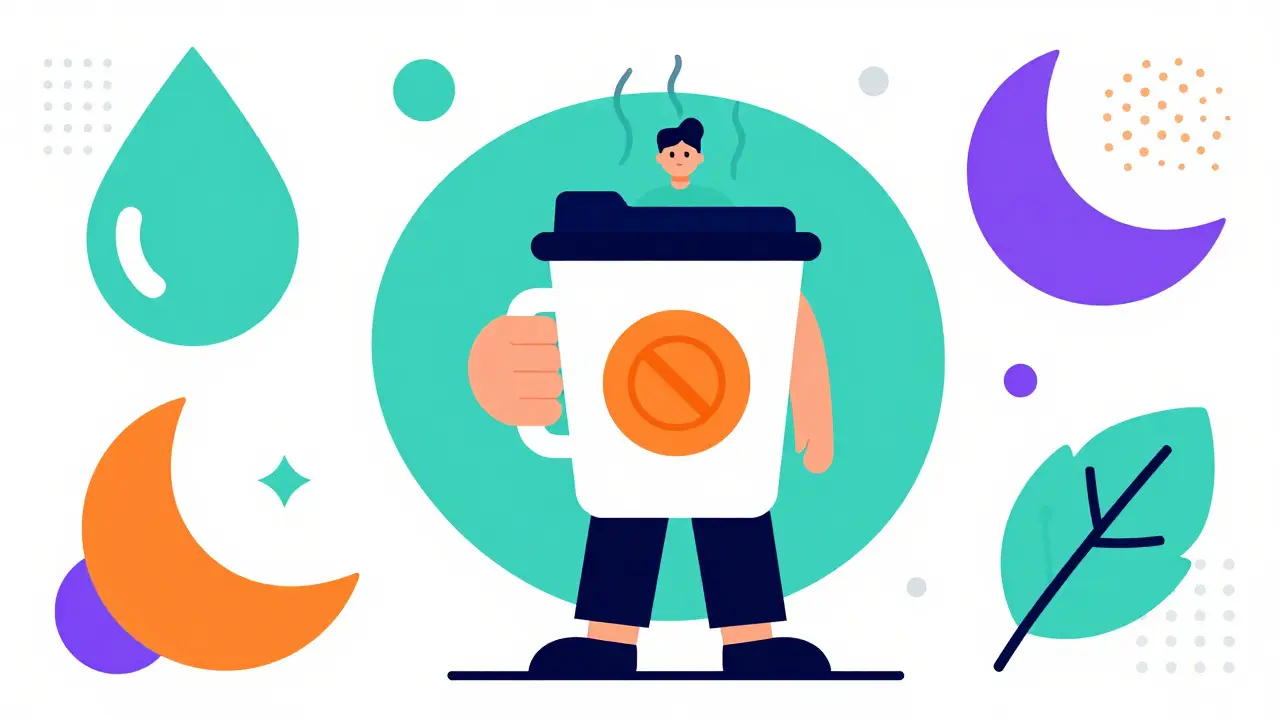
- Caffeine: Linked to attacks in 54% of cases. Interestingly, both too much and too little caffeine can trigger VM.
- Alcohol and Aged Cheese: Common dietary triggers for nearly half of patients.
One surprising finding from the 2017 CAF-VM study is that simply stopping caffeine reduced attack frequency by 35% in many participants. If you drink coffee daily, try tapering off slowly over two weeks rather than quitting cold turkey, which can itself trigger a rebound headache. Additionally, maintaining consistent sleep schedules and staying hydrated (aiming for 2 liters of water during an attack) can significantly lower symptom severity.
Managing Acute Attacks: Stop the Spin Now
When an attack hits, speed matters. The goal is to stop the vertigo and relieve the pain before it becomes overwhelming. Treatment depends on whether you have a headache or just dizziness.
- If you have a headache: Triptans like sumatriptan (50-100 mg) are highly effective. Studies show they provide 70% pain relief within two hours for nearly 60% of patients. NSAIDs like ibuprofen (400-800 mg) are a good alternative if triptans aren't available.
- If you have severe vertigo: Vestibular suppressants like prochlorperazine can help calm the spinning sensation. In the 2019 VESTIBULE trial, 68% of patients saw their vertigo resolve within two hours. Benzodiazepines like diazepam are another option, but use them sparingly due to dependency risks.
- For nausea: Antiemetics such as ondansetron (4-8 mg) effectively manage nausea in 75% of acute attacks. This is often overlooked but critical for recovery.
Non-medical steps are just as important. Resting in a dark, quiet room reduces symptom severity by 35%. Avoiding screen time and rapid head movements gives your brain a chance to reset. Don't push through an attack; listen to your body.
Preventive Strategies: Stopping Attacks Before They Start
If you have more than four attacks a month, acute treatment isn't enough. You need prevention. The 2021 International Headache Society guidelines emphasize starting preventive medication early, ideally within three months of diagnosis. Delaying prevention can lead to chronicity in 30% of cases within two years.
Common preventive medications include:
- Beta-blockers: Propranolol (40-160 mg daily) is a first-line choice. It reduced attack frequency by 50% in 62% of patients in recent studies.
- Tricyclic Antidepressants: Amitriptyline (10-75 mg nightly) shows 40-60% efficacy in reducing vertigo frequency. However, be aware of side effects like drowsiness, which 65% of users report.
- Antiepileptics: Topiramate (25-100 mg daily) helped 54% of patients achieve a >50% reduction in attacks in the PREMIUM II trial. Watch out for cognitive slowing, reported by 58% of users.
- Nutraceuticals: Magnesium (600 mg daily), riboflavin (400 mg daily), and coenzyme Q10 (300 mg daily) showed 30-40% reduction in attack frequency with minimal side effects in the CHARM study.
It’s important to note that finding the right medication is a process. On average, 75% of patients require 2-3 medication trials before finding one that works well for them. Be patient with your doctor and keep tracking your progress.
The Power of Vestibular Rehabilitation Therapy
Medication manages the chemistry, but physical therapy trains the brain. Vestibular Rehabilitation Therapy (VRT) is strongly recommended by the European Academy of Neurology based on Level A evidence. It involves specific exercises designed to improve balance and reduce dizziness.
In the 2018 DIZZINESS trial, patients who completed eight weeks of VRT showed a 40% improvement in their dizziness handicap index scores. More recently, 78% of patients in the 2020 VRT-VM study reported more than 50% symptom reduction after just 12 sessions. The key is consistency. A full course usually requires 8-12 supervised sessions followed by daily home exercises. It’s not a quick fix, but it teaches your brain to compensate for the instability, making attacks less disabling even when they do occur.

Comparing VM Treatments to Other Conditions
Why does it matter to distinguish VM from other vestibular disorders? Because the treatments are different. Here is a quick comparison to help you understand why your current treatment might not be working:
| Condition | Primary Symptom | Effective Treatment | Response Rate |
|---|---|---|---|
| Vestibular Migraine | Vertigo + Headache/Light Sensitivity | Migraine preventives, Beta-blockers, VRT | ~65% with comprehensive care |
| Ménière's Disease | Vertigo + Hearing Loss + Tinnitus | Diuretics, Low-salt diet | ~60% response to diuretics |
| Vestibular Neuritis | Sudden severe vertigo (no hearing loss) | Corticosteroids, Short-term steroids | ~75% recovery rate |
| BPPV | Short bursts of vertigo with head movement | Epley Maneuver (physical repositioning) | ~80-90% success with maneuver |
Notice that diuretics, which help Ménière's, only work for 20% of VM patients. Similarly, steroids help neuritis but are rarely useful for VM. This table highlights why accurate diagnosis is the foundation of successful management.
Future Directions and New Hope
The landscape for VM treatment is evolving rapidly. New drugs targeting CGRP (calcitonin gene-related peptide) pathways are showing promise. The FDA approved atogepant for migraine prevention in 2023, with a 56% responder rate in VM patients. Additionally, non-invasive vagus nerve stimulation devices like gammaCore demonstrated a 45% reduction in vertigo in the 2021 PRECISION-VM trial. These options offer hope for those who don't respond to traditional medications.
Research is also focusing on better diagnostic tools. Vestibular-evoked myogenic potentials (VEMPs) showed 82% sensitivity for diagnosing VM in recent trials. As these tools become more widespread, the average diagnostic delay-which is currently around 11.3 months-should decrease, allowing patients to start effective treatment sooner.
Frequently Asked Questions
Can vestibular migraine cause permanent hearing loss?
Typically, no. Vestibular migraine primarily affects balance and pain pathways. While some patients may experience temporary tinnitus or mild hearing fluctuations during an attack, permanent hearing loss is rare. If you notice significant or persistent hearing changes, see an ENT specialist to rule out other conditions like Ménière's disease.
How long does a vestibular migraine attack last?
Attacks vary widely. They can last from a few seconds to 72 hours. The duration depends on the individual and the severity of the episode. Shorter episodes are often confused with BPPV, while longer ones mimic labyrinthitis. Keeping a log of duration helps your doctor identify patterns.
Is it safe to drive with vestibular migraine?
Only when you are symptom-free. Driving during an active attack or while taking sedating medications like benzodiazepines or amitriptyline is dangerous. Always assess your stability and reaction times before getting behind the wheel. If you have frequent attacks, consider using public transport or ride-sharing services until your condition is stable.
Do I need to see a neurologist or an ENT?
Ideally, you need both. A neurologist specializes in the migraine aspect, while an ENT (otolaryngologist) evaluates the ear and balance systems. In 70% of effective treatment cases, coordination between these two specialists leads to better outcomes. If possible, seek a multidisciplinary clinic that handles both aspects.
Can stress alone cause vestibular migraine?
Stress is a trigger, not the sole cause. It lowers the threshold for an attack in people who are genetically predisposed. Managing stress through mindfulness, exercise, or therapy can reduce frequency, but it usually needs to be combined with medication and lifestyle changes for full control.